Traffic Dropping After Google’s Latest Core Update? Fix These eCommerce SEO Gaps Fast
December 19, 2025
Insights

Kishan Mehta
Google’s latest core update reshaped eCommerce rankings, exposing gaps in category pages, product content, trust signals, and internal linking that directly impact search traffic globally.
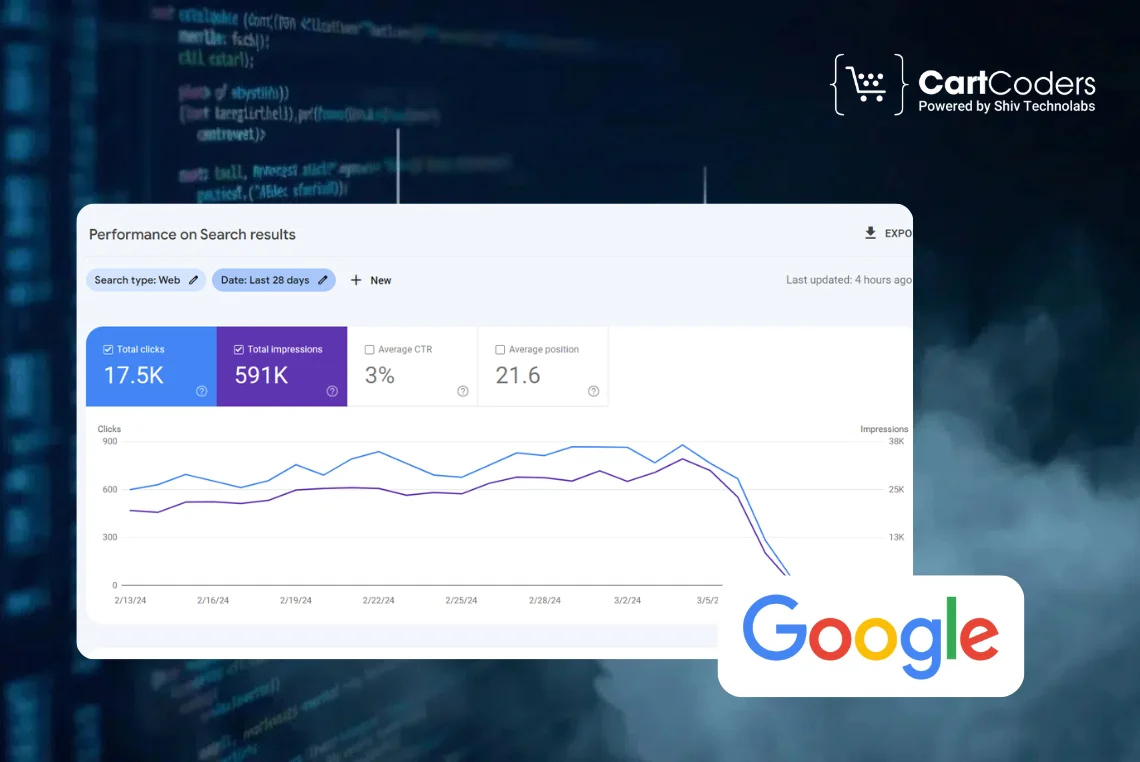
If your eCommerce traffic dropped after Google’s latest core update, the cause is rarely a penalty. The drop usually comes from intent mismatch, thin money pages, weak trust signals, or structural SEO gaps. Recovery starts by fixing category and product pages that fail to answer buyer questions clearly.
What changed with Google’s latest core update
Google rolled out a broad core ranking update in December 2025. This type of update does not target one tactic. It reassesses content usefulness, intent match, and trust signals across the web.
During rollout, rankings move often. Some pages gain visibility. Others lose it. Many sites see mixed results across page types.
This update affected:
- Category pages
- Product pages
- Comparison and “best” content
- Commercial blogs supporting purchases
The key shift is how Google evaluates page value for real buyers, not how well pages repeat keywords.
First step: confirm the drop is real and related
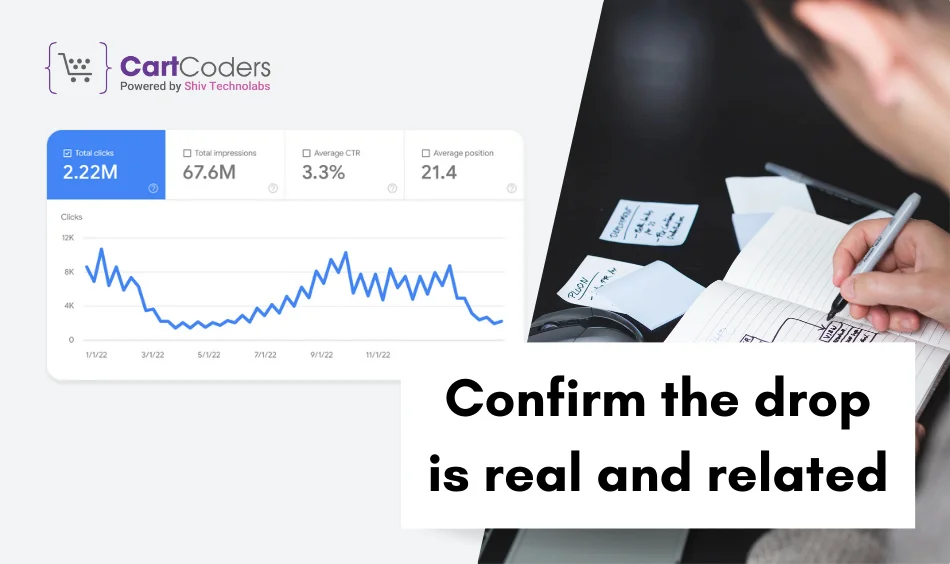
Before fixing anything, validate the data. Many sites react too fast.
Use this exact comparison method
Google recommends waiting until rollout stabilizes. Then compare:
| Metric | Compare This | With This |
| Clicks | 7 days after rollout ends | 7 days before rollout started |
| Queries | Non-brand only | Same previous period |
| Pages | Landing pages | Revenue pages first |
Focus on click loss, not impressions. Impressions fluctuate easily during volatility.
Separate ranking loss by page type
Not all pages drop for the same reason. Segment your data early.
Common loss patterns
- Category pages lose positions first
- Product pages lose long-tail queries
- Blogs lose featured snippets
- Filters start ranking instead of core URLs
This table helps identify the problem faster.
| Page type | Common issue | Why Google reacts |
| Category pages | Thin or generic intro | Weak intent clarity |
| Product pages | Similar content | Low differentiation |
| Blogs | Shallow advice | Low decision support |
| Filter URLs | Index bloat | Crawl and relevance dilution |
The biggest eCommerce SEO gaps exposed by this update
1. Category pages fail intent matching
Many category pages rank because of authority, not usefulness. Google now checks intent alignment more closely.
Symptoms
- Category pages drop
- Competitors’ collections replace them
- Informational pages outrank transactional pages
Why this happens
Category pages often:
- Open with vague copy
- Lack buyer guidance
- Push products without context
Fix direction
Your category page must answer:
- Who is this for?
- What problem does it solve?
- How do buyers choose among options?
Required category page blocks
- Purpose-driven intro (3–4 lines)
- Use-case sections
- Subcategory paths
- Buyer checklist
- Short FAQ
2. Product pages look the same to Google
Google compares pages across your own site, not just competitors.
If ten products share similar copy, Google struggles to rank them.
Symptoms
- Only one product ranks from a group
- Long-tail traffic drops
- Variants compete with each other
Why this happens
- Reused descriptions
- Specs buried in paragraphs
- No decision context
Fix direction
Each product page must justify its existence.
Product content priority order
- Scannable specs
- Compatibility details
- Use-case clarity
- Comparison with nearby models
- Buyer questions
3. Weak trust signals on money pages
Core updates often impact pages tied to spending decisions.
Google checks whether users can trust the seller, not just the product.
Missing trust signals
- Clear company identity
- Policies easy to find
- Support details visible
- Shipping clarity
- Warranty info
Fix direction
Trust signals must appear on the page, not only in footers.
4. Internal linking does not support buying journeys
Many sites link for SEO, not for users.
Google follows paths users take.
Symptoms
- Blogs rank but do not convert
- Products feel isolated
- Crawl depth stays high
Fix direction
Create clear paths:
- Blog → category
- Category → product
- Product → related product
Use anchors that reflect buyer intent, not keywords only.
5. Faceted URLs steal authority
Filters often create thousands of crawlable URLs.
This weakens ranking signals.
Symptoms
- Filter URLs appear in search
- Main category URL loses stability
- Crawl stats spike
Fix direction
- Block non-value filter URLs
- Keep one canonical category URL
- Use static landing pages for major filters
Fix priority: where to act first
Not all fixes deliver equal impact.
High-impact order
- Top revenue categories
- Top selling products
- Supporting blog content
- Technical cleanup
Why categories come first
Categories:
- Carry buying intent
- Control internal linking
- Feed product rankings
Category page repair checklist
| Element | What to change | Why it matters |
| Intro copy | State buyer purpose | Clarifies intent |
| Subcategories | Visible links | Improves crawl flow |
| Use cases | Industry or need based | Adds relevance |
| Product highlights | Top picks | Supports decisions |
| FAQs | Buying questions | Helps snippets |
Product page repair checklist
| Section | Required improvement |
| Title | Clear product purpose |
| Specs | Bullet format |
| Compatibility | Explicit list |
| Use cases | Real scenarios |
| Comparison | Nearby models |
| FAQs | Shipping, returns, install |
How this supports AI answers and snippets
Google and answer engines prefer pages that:
- Answer questions fast
- Use clear structure
- Avoid filler text
- Support decisions
Add:
- Short summary blocks
- Bullet checklists
- Decision rules
- Clean tables
These elements help your pages get cited, not just indexed.
Strengthen pages for answer engines and AI summaries
Search behavior changed. Users expect direct answers before scrolling. Google and AI systems reward pages that respond fast and clearly.
Add answer-first sections to key pages
Place short answer blocks near the top of pages. Keep them factual and concise.
Effective formats
- 2–3 line summary
- Bullet checklists
- Clear definitions
- Decision rules
Example: category page answer block
- Who should buy this product type
- When this category fits best
- What to check before choosing
This helps AI systems extract context quickly. It also improves on-page engagement.
Use structured data with intent in mind
Structured data does not push rankings alone. It helps systems understand page meaning.
Priority schema for eCommerce
| Schema type | Where to use | Purpose |
| Product | Product pages | Price, availability |
| Offer | Product pages | Commercial signals |
| AggregateRating | Where valid | Trust reinforcement |
| FAQPage | True FAQs only | Snippet eligibility |
| Breadcrumb | Categories | Page hierarchy |
| Organization | Site-wide | Seller identity |
Avoid fake FAQs. Use only real buyer questions.
Content support that protects rankings long term
Core updates often expose missing support content. Not filler blogs. Decision content.
Build support articles per category
Each major category should have supporting pages that help buyers choose.
Recommended types
- How to choose guides
- Sizing or compatibility guides
- Common buying mistakes
- Installation basics
- Maintenance or usage tips
These pages feed authority into categories and products through internal links.
How to track recovery the right way
Daily checks create false conclusions. Follow a structured timeline.
Monitoring framework
| Time window | What to check | What to avoid |
| During rollout | Indexing, crawl errors | Content rewrites |
| Week after rollout | Click trends | URL changes |
| Weeks 3–6 | Query recovery | Panic edits |
| Weeks 6+ | Stable gains | Over-tuning |
Track by page type, not only keywords.
Common mistakes that slow recovery
Many sites damage recovery through rushed actions.
Avoid these actions
- Deleting large content sections
- Changing URLs without redirects
- Rewriting pages based on single-day drops
- Publishing low-quality filler pages
- Refreshing publish dates without real changes
Core updates reward clarity and usefulness. They do not reward speed.
Soft strategic note for growing eCommerce brands
Recovering from a core update often needs cross-team alignment. SEO alone cannot fix structural issues.
Teams that move faster:
- Audit by revenue impact
- Fix category intent first
- Improve product differentiation
- Clean internal linking paths
- Track recovery calmly
CartCoders often sees faster recovery when SEO, content, and platform logic work together, especially across Shopify, Magento, BigCommerce, and hybrid stacks.
FAQs
A core update is a broad ranking change that reassesses page quality, relevance, and usefulness across many industries.
Core updates reshuffle rankings. A drop usually signals intent mismatch or weaker page value, not a violation.
Most improvements appear weeks after rollout ends, once Google reprocesses updated pages.
Small fixes are fine. Large rewrites should wait until rankings stabilize.
Categories carry broader intent. Google tests whether they truly guide buyers.
Yes. Google also runs smaller core adjustments that can reflect changes earlier.
Start with top revenue categories, then best-selling products, then supporting content.
Yes. Clear linking paths help both users and search systems understand page importance.
Final takeaway
Traffic drops after a core update rarely come from one issue. They come from gaps in clarity, intent match, and page usefulness.
Focus on:
- Strong category purpose
- Clear product differentiation
- Visible trust signals
- Clean internal paths
- Answer-focused content blocks
These changes help rankings stabilize and grow over time.