

Building a high-performing Shopify marketplace requires more than just listing products from multiple sellers. To stay ahead in the competitive digital commerce space, marketplace owners must adopt tools that simplify operations for vendors while providing a smooth journey for buyers. Technology is shifting toward automation, deep data integration, and intelligent interfaces.
The following features represent the most effective ways to upgrade a Shopify marketplace. These additions focus on operational efficiency, vendor satisfaction, and modern buyer expectations.
High-Performance Shopify Marketplace Features
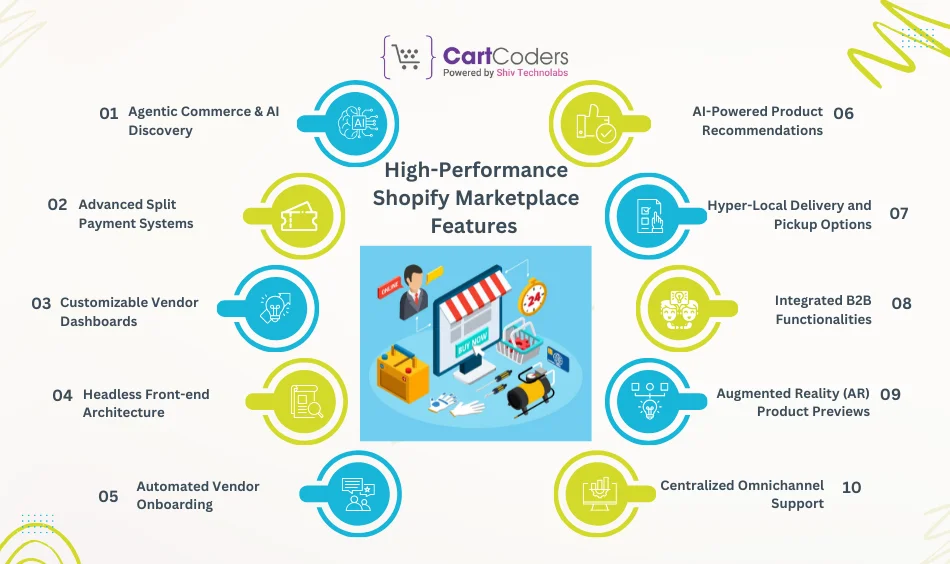
Modern digital commerce relies on a mix of precision, speed, and discoverability. To capture traffic from AI-driven search engines and conversational bots, your platform must provide machine-readable data and direct answers to complex buyer questions.
1. Agentic Commerce and AI Discovery
The way people find products is changing. Instead of traditional search bars, many buyers use AI assistants to ask specific questions. Agentic commerce allows your marketplace catalog to be discoverable inside AI platforms.
By structuring your product data to be “AI-ready,” your marketplace items can appear in conversations where shoppers are actively seeking advice. This feature moves beyond simple keywords, allowing the AI to act as a matchmaker between a buyer’s complex needs and your vendors’ specific products.
2. Advanced Split Payment Systems
Managing finances in a multi-vendor environment is a major hurdle. An automated split payment system is a non-negotiable feature for a growing marketplace. This technology automatically calculates the commission for the marketplace owner and the payout for the vendor at the moment of purchase.
A robust system handles:
- Real-time tax calculations across different regions.
- Automated shipping fee distribution.
- Instant payout scheduling to reduce manual accounting errors.
3. Customizable Vendor Dashboards
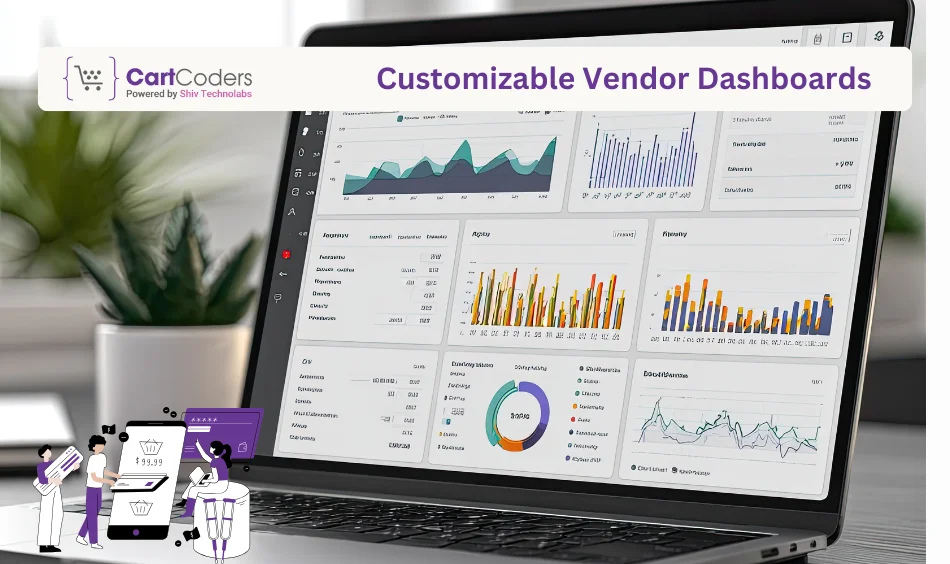
Vendors need to feel in control of their mini-stores. Providing a dedicated dashboard where they can manage their own inventory, track individual sales performance, and handle customer queries is vital.
The best dashboards allow sellers to view heatmaps of their product pages and track minute-level sales data during peak periods. This transparency helps vendors improve their own listings, which ultimately benefits the entire marketplace.
4. Headless Front-end Architecture
Speed is a primary factor in conversion. A headless approach separates the front-end design from the back-end Shopify commerce engine. This allows for nearly instant page loads and total design freedom.
Using frameworks like Hydrogen and Remix, you can build a unique interface that doesn’t feel like a standard template. This is particularly useful for marketplaces that need complex filtering or high-resolution media that might typically slow down a traditional theme.
5. Automated Vendor Onboarding
Manually vetting and setting up every new seller is a bottleneck for growth. Implementing an automated onboarding flow allows vendors to sign up, submit their business documents, and connect their existing product feeds through CSV or API without constant intervention from your team.
This feature should include automated compliance checks to verify seller identities and business credentials, keeping the marketplace secure and professional.
6. AI-Powered Product Recommendations
Personalization is a standard expectation. Using machine learning to analyze buyer behavior allows your marketplace to show “Frequently Bought Together” items or “Recommended for You” sections that are specific to each visitor.
In a marketplace, this is even more powerful because it can suggest complementary products from different vendors, increasing the average order value for the platform while helping smaller sellers get discovered.
7. Hyper-Local Delivery and Pickup Options
Modern buyers often want their items immediately. Integrating local pickup and scheduled delivery windows makes your marketplace more attractive for regional commerce.
This feature allows customers to see which vendors are nearby and choose a pickup time that fits their schedule. SMS alerts can notify them the moment their order is ready, bridging the gap between digital browsing and physical fulfillment.
8. Integrated B2B Functionalities
Marketplaces are no longer just for individual consumers. Many businesses now use Shopify to create wholesale hubs. Features like volume-based pricing, “request a quote” buttons, and quick-order forms allow vendors to sell to both retail and business clients from one account.
Providing net-payment terms or store credit options for B2B buyers can significantly increase the transaction volume on your platform.
9. Augmented Reality (AR) Product Previews
For marketplaces selling furniture, fashion, or home decor, AR is a game-changer. It allows buyers to see how a product looks in their own space or on their own person using a smartphone camera.
By offering AR-ready product pages, you reduce the likelihood of returns. This builds trust in the marketplace, as buyers feel more confident that the product they receive will match their expectations.
10. Centralized Omnichannel Support
A marketplace involves three-way communication: Buyer, Seller, and Platform Owner. A centralized support system that integrates email, WhatsApp, and live chat into a single inbox is essential.
AI-driven support agents can handle up to 80% of routine questions regarding order status or shipping updates. This leaves complex issues for human staff, ensuring that neither buyers nor vendors feel neglected during the transaction process.
Make Your Marketplace Stand Out with CartCoders
Building a successful multi-vendor marketplace on Shopify requires a deep understanding of both the platform’s limitations and its vast potential.
At CartCoders, we specialize in high-end Shopify development, focusing on custom solutions that go far beyond standard app installations. Our team brings technical precision to complex challenges like custom API integrations, headless commerce builds, and sophisticated automated payment systems.
We don’t just build stores; we build scalable business engines. By focusing on clean code and user-centric design, we help marketplace owners reduce their technical debt and focus on growth.
Whether you are starting from scratch or looking to transition a large-scale operation to a more efficient framework, our expertise in the Shopify ecosystem makes us a trusted partner for brands that demand performance and reliability.
Conclusion
Building a high-performance multi-vendor platform is a journey that requires a focus on both the buyer and the seller. By choosing to integrate smart tools like automated payments, AI-driven search, and headless designs, you create a foundation that stays strong as your traffic grows. Success in the coming years will belong to the marketplaces that prioritize speed, clarity, and ease of use.
The transition from a simple shop to a massive multi-vendor hub is complex, but the right features make that growth manageable. As commerce continues to move toward more intelligent and localized experiences, staying ahead of these trends will keep your platform at the top of the list for shoppers everywhere.
Ready to build a marketplace that leads the industry? Contact CartCoders to start your project today.
Frequently Asked Questions
Yes, it can. While standard Shopify stores are for single brands, you can grow a marketplace to include thousands of vendors by using the right technical setup. Using a “headless” design helps keep the site fast even as your list of sellers and products grows larger.
To be visible to AI assistants and “answer engines,” your site needs structured data. This is a special way of organizing your product information so computer programs can read it easily. Having a clear FAQ section and using simple, direct descriptions also helps AI bots recommend your products to shoppers.
Modern systems do this automatically. When a customer buys an item, the software calculates your commission and the vendor’s share right away. The money is then sent to the correct bank accounts based on the rules you set, which removes the need for manual math or spreadsheets.
In most cases, the individual vendors handle their own shipping and returns. However, the marketplace owner sets the main rules that everyone must follow. You can also use tools that allow customers to track their entire order in one place, even if the items are coming from different sellers.
It can if you use too many basic apps. To keep your site running fast, it is better to use custom code or a “headless” approach. This keeps the backend powerful while making sure the part the customer sees stays quick and responsive on both phones and computers.
Yes. You can set up your platform to offer wholesale pricing, bulk discounts, and special payment terms for business clients. This allows your vendors to reach both regular shoppers and professional buyers from the same account.


