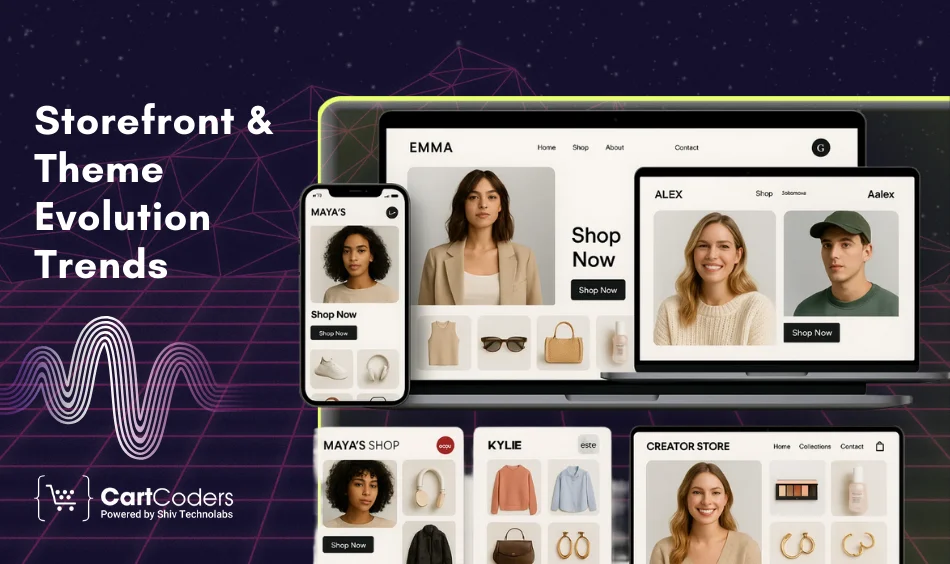
Shopify store planning for 2026 is being shaped by major changes in how buyers discover products, compare options, and move toward purchase. Many Shopify eCommerce Trends are no longer limited to storefront visuals or basic features. They are closely tied to AI-driven discovery, data structure, and how Shopify is extending commerce beyond the traditional website.
This first part focuses on Shopify eCommerce Trends influencing store decisions at the platform, storefront, and architecture levels. These trends are setting the foundation for how stores are built, structured, and prepared for newer buying paths.
Plan Stronger Shopify Stores
Make store decisions based on how buying behavior, AI discovery, and platform changes are shaping eCommerce.
Platform & AI-Driven Commerce Trends
Shopify’s platform direction is increasingly aligned with AI-led discovery and intent-based buying. Stores are being planned around how products surface, how buyers ask questions, and how decisions happen before a page visit.
1. AI Conversation Commerce Becoming a Sales Channel
Product discovery is moving into AI conversations where buyers ask questions and receive shortlists. Shopify is aligning its systems to support purchases that originate from these interactions.
This trend affects store planning by requiring:
Clear product titles and attributes
Consistent variant and pricing data
Descriptions written to answer common buyer questions
AI conversations are treated as a new entry point, not just a support tool.
2. Product Discovery Starting Inside AI Assistants
Many buyers begin research with AI tools instead of search engines. Shopify stores are preparing product data so it can be interpreted correctly by these systems.
This influences:
How product benefits are written
How specifications are structured
How similar products are differentiated
Discovery is shifting earlier, before storefront visits.
3. Product Catalogs Acting as AI Distribution Sources
Shopify catalogs are becoming distribution layers for AI-led shopping. Product data entered once can surface across multiple discovery environments.
Stores are adjusting:
Attribute naming consistency
Variant grouping logic
Image ordering and clarity
Catalog structure directly affects visibility and accuracy.
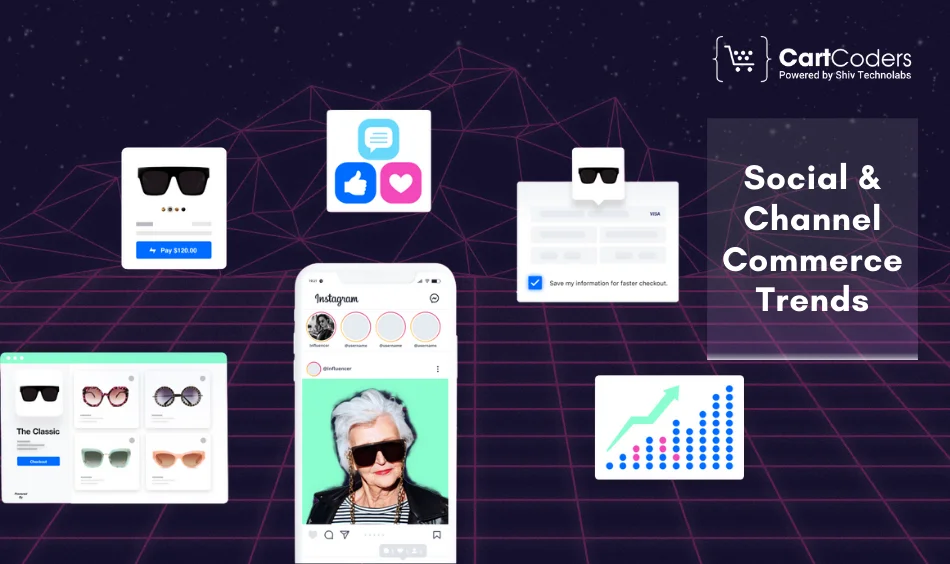
Buying journeys increasingly begin and mature outside the main storefront. Social platforms and partner channels are becoming decision spaces where buyers compare products, review pricing, and expect quick paths to purchase.
20. Social Platforms Acting as Full Buying Environments
Buyers are no longer using social platforms only for discovery. They compare options, review offers, and form purchase intent before visiting a store. Shopify stores are being structured to support this behavior.
This trend affects store planning by requiring:
Product data prepared for social-first evaluation
Inventory visibility aligned with social demand
Check out paths that support fast decisions
Social platforms are treated as transaction-ready environments, not traffic sources.
21. Channel-Specific Pricing Rules Becoming Common
Stores are moving away from uniform pricing across all channels. Pricing logic is increasingly adjusted based on where the buyer originates and how intent is formed.
This trend affects store planning by requiring:
Separate pricing logic for social and direct traffic
Channel-level discount control
Clear promotion boundaries
Pricing strategy is aligned with channel context rather than a single global rule.
22. Channel-Based Inventory Allocation
Inventory decisions are now influenced by channel performance. Stores are reserving stock for channels that convert faster or carry higher intent.
This trend affects store planning by requiring:
Channel-aware inventory visibility
Stock reservation rules
Fulfillment logic tied to channel priority
Inventory planning becomes part of the channel strategy.
23. Product Feeds Prepared for Social Checkout
Product feeds are structured to support fast decisions without deep browsing. Buyers often see limited product context before choosing to proceed.
Traffic from short-form content expects immediate answers. Shopify stores are building focused landing pages rather than routing visitors through full navigation paths.
This trend affects store planning by requiring:
Single-intent landing page design
Clear product comparison sections
Reduced navigation depth
Landing pages are built for intent, not exploration.
Customer accounts are becoming active control spaces rather than passive order-history pages. Shopify stores are planning post-purchase experiences that reduce support effort, support repeat buying, and give buyers more visibility and control after checkout.
26. Account-First Buying Journeys for Repeat Buyers
Many stores are designing flows where returning buyers log in before browsing products. This allows pricing, availability, and product access to adjust immediately.
This trend affects store planning by requiring:
Account-based pricing visibility
Product access rules applied on login
Faster buying paths for returning customers
Accounts act as entry points, not only post-purchase areas.
27. Customer Accounts Acting as Shopping Dashboards
Account pages are evolving into dashboards where buyers manage active orders, saved items, and repeat actions.
This trend affects store planning by requiring:
Clear visibility of current and past orders
Easy access to saved or frequently purchased products
Centralized access to post-purchase actions
Accounts reduce the need for repeated storefront browsing.
28. Self-Service Order Management Inside Accounts
Buyers expect to manage common order actions without contacting support. Shopify stores are enabling controlled self-service features inside accounts.
This trend affects store planning by requiring:
Address update rules after checkout
Clear order status timelines
Defined limits for post-order changes
Support load decreases as clarity and control improve.
29. Returns and Exchanges Managed Through Accounts
Returns are moving away from email-based handling toward guided account workflows. Buyers expect transparency and faster resolution.
This trend affects store planning by requiring:
Structured return reason selection
Exchange-first flows before refunds
Real-time return and exchange status
Returns become part of the buyer experience, not a backend task.
30. Reorder Tools Embedded in Account Views
Repeat purchases are a major revenue driver. Shopify stores are embedding reorder options directly inside customer accounts.
This trend affects store planning by requiring:
One-click reorder functionality
Saved order lists for frequent purchases
Quick access to previously bought items
Accounts support faster repeat buying without friction.
31. Subscription Controls Centralized After Purchase
For subscription-based products, account pages are becoming control centers for plan management.
This trend affects store planning by requiring:
Delivery schedule adjustment options
Quantity and frequency controls
Payment method management
Clear control improves long-term customer retention.
32. Account-Based Personalization After Login
Personalization is extending into logged-in experiences. Shopify stores are adjusting what buyers see based on account activity.
This trend affects store planning by requiring:
Personalized product recommendations
Relevant add-ons shown post-login
Account-specific offers and messages
Personalization is driven by behavior rather than static segments.
33. Post-Purchase Upsell Paths Inside Accounts
Upselling is moving beyond checkout screens into post-purchase account views.
This trend affects store planning by requiring:
Timely add-on suggestions after delivery
Refill or replacement prompts
Upgrade options tied to purchase history
Upsells feel relevant when aligned with the buyer context.
B2B buying on Shopify is becoming more structured and closer to procurement-style workflows. Stores are planning features that support repeat bulk orders, access control, and pricing logic built for business buyers rather than retail shoppers.
34. B2B Accounts Designed for Procurement Workflows
Business buyers expect account views that support purchasing at a company level rather than an individual level.
This trend affects store planning by requiring:
Company-wide order history visibility
Centralized purchasing records
Faster repeat ordering for business accounts
Accounts are structured for operational buying, not casual browsing.
35. Role-Based Access for Business Buyers
Different users within the same company require different permissions when placing orders.
This trend affects store planning by requiring:
Buyer and approver role definitions
Controlled access to pricing and checkout
Clear accountability within business accounts
Role-based access reduces purchasing errors.
36. Approval Workflows for Large Orders
High-value or bulk orders often require internal review before submission.
This trend affects store planning by requiring:
Approval steps before checkout completion
Spend visibility for approvers
Order controls tied to company rules
Approval workflows support compliance and budget control.
37. Tiered Pricing Managed Through Native Features
Stores are managing pricing tiers using built-in Shopify capabilities instead of external tools.
Checkout planning focuses on flexibility, clarity, and buyer confidence. Shopify stores are adjusting payment logic and checkout behavior to support different buyer types, order values, and regional expectations.
40. Flexible Payment Options Becoming Standard
Buyers expect multiple ways to complete payments based on order size and preference.
This trend affects store planning by requiring:
Support for multiple payment options
Clear payment method presentation at checkout
Consistent payment behavior across devices
Payment flexibility improves completion rates.
41. Partial and Deferred Payments for Large Orders
Higher-value orders often require payment flexibility rather than full upfront payment.
Inventory and fulfillment planning is closely tied to buyer expectations around availability, delivery speed, and order accuracy. Shopify stores are structuring inventory logic to support multiple locations, channels, and fulfillment paths without creating stock conflicts.
Search and merchandising decisions are increasingly driven by buyer intent rather than keyword matching. Shopify stores are planning data and discovery systems that respond to how buyers search, compare, and interact with products.
Store planning in 2026 is focused on long-term stability rather than short-term fixes. Shopify stores are making clearer decisions around rebuilds, migrations, and cost control to support future changes without repeated rework.
52. Store Rebuilds Preferred Over Patch-Based Fixes
Many stores are choosing full rebuilds instead of stacking fixes on outdated setups.
This trend affects store planning by requiring:
Clean store architecture reviews
Removal of unused or conflicting features
Fresh setup aligned with current platform direction
Rebuilds reduce long-term maintenance issues.
53. Migration Planning Focused on Data Structure
Migrations are planned around data quality rather than only visual replication.
This trend affects store planning by requiring:
Clean product and customer data mapping
SEO-safe URL and metadata handling
Careful transfer of historical records
Data-first migration reduces post-launch issues.
54. Multi-Store Operations Managed Centrally
Brands operating across regions are managing multiple storefronts under one system.
This trend affects store planning by requiring:
Centralized catalog management
Shared operational rules
Region-specific storefront control
Central management supports consistent growth.
55. Long-Term Support Models Replacing One-Time Builds
Stores are shifting from one-time development projects to ongoing support arrangements.
This trend affects store planning by requiring:
Regular updates and reviews
Planned improvement cycles
Predictable resource allocation
Ongoing support keeps stores stable.
56. Cost Planning Based on Feature Lifespan
Feature decisions are evaluated based on how long they remain useful.
How do these Shopify eCommerce Trends Guide Store Planning?
Understanding these Shopify eCommerce trends helps businesses move from reactive updates to structured planning. Store success depends on how well teams prepare for AI-driven discovery, account-based buying, multi-channel sales, and long-term operational stability.
Each trend covered in this blog highlights a decision point that affects store structure, data readiness, checkout logic, and post-purchase experience.
Rather than treating trends as isolated ideas, businesses should evaluate how they connect across the store lifecycle. Platform choices influence discovery.
Storefront structure affects editing speed. Account design shapes repeat buying. Operational planning controls cost and scalability. When these areas are planned together, Shopify stores are better positioned to handle change without repeated rebuilds.
Planning and implementing these trends often requires technical clarity and experienced execution. CartCoders supports Shopify businesses at different stages, from early planning to complex rebuilds and long-term support.
Store rebuilds, migrations, and ongoing technical support
AI-ready Shopify setups that support structured product data & AI-driven discovery
If you’re planning updates or a new build for 2026, working with a Shopify-focused team helps turn these trends into practical, maintainable solutions.
Conclusion
Shopify eCommerce trends in 2026 reflect a shift toward smarter discovery, structured data, and buyer-led experiences. Stores that plan with these changes in mind gain better control over growth, cost, and long-term stability.
Instead of chasing every new feature, successful teams focus on building stores that adapt well as buyer behavior and platform capabilities evolve.
By aligning store architecture, data structure, and operational workflows with these trends, Shopify businesses can make informed decisions that support future expansion without unnecessary complexity.
Shopify eCommerce trends for 2026 focus on AI-led product discovery, structured catalog data, account-based buying, and multi-channel sales planning. These trends influence how stores manage discovery, checkout, post-purchase experience, and long-term operations.
2. Why do Shopify eCommerce trends matter for store planning?
These trends guide decisions around store structure, data setup, checkout logic, and operational workflows. Planning based on current trends helps businesses avoid repeated rebuilds and prepare for future platform changes.
3. How does AI affect Shopify store discovery in 2026?
AI tools influence how products are discovered, compared, and shortlisted before buyers visit a store. Shopify stores must prepare clear product data, structured attributes, and accurate descriptions so AI systems can present products correctly.
4. Are Shopify customer accounts more important in 2026?
Yes. Customer accounts are becoming active control areas where buyers manage orders, returns, subscriptions, and repeat purchases. This reduces support load and improves repeat buying behavior.
5. How do Shopify eCommerce trends impact B2B and wholesale stores?
B2B trends focus on account-based pricing, approval workflows, quick order forms, and procurement-style buying. Shopify stores selling to businesses must plan access control, pricing rules, and order logic differently than retail stores.
6. Should Shopify stores plan rebuilds instead of small fixes?
Many businesses prefer rebuilds when existing stores have outdated structure or heavy technical issues. Rebuilds allow cleaner architecture, better data structure, and easier adoption of newer Shopify capabilities.
7. How do multi-channel trends affect Shopify inventory planning?
Inventory planning must consider channel priority, stock allocation, and real-time sync. Shopify stores manage inventory differently for storefronts, social channels, and wholesale orders to avoid overselling.
8. What role does checkout play in Shopify trends for 2026?
Checkout trends focus on flexibility, buyer type, and location. Shopify stores plan region-aware checkout behavior, local payment methods, and different rules for retail and business buyers.
9. How do Shopify eCommerce trends help reduce long-term costs?
Planning around structured data, native features, and maintainable logic helps reduce dependency on multiple apps. This leads to lower maintenance effort and clearer cost control over time.
10. Who should use this Shopify eCommerce trends guide?
This guide is useful for store owners, ecommerce managers, product teams, and businesses planning new Shopify stores, rebuilds, migrations, or major updates for 2026.
As the CTO at Shiv Technolabs & CartCoders, I am liable for instigating, planning, integrating, and implementing the organization's strategic orientation.
I gather the most significant tech news in addition to sharing the information I gained while serving as the CTO of Shiv Technolabs, a renowned web and mobile app development company. I am pleased to answer questions as a most valuable expert for Shiv Technolabs Private Limited and to share my experience. I offer a keen insider's perspective on technical advancements.
 eCommerce
Solution
eCommerce
Solution







 INDIA
INDIA


 USA
USA
 CANADA
 AUSTRALIA