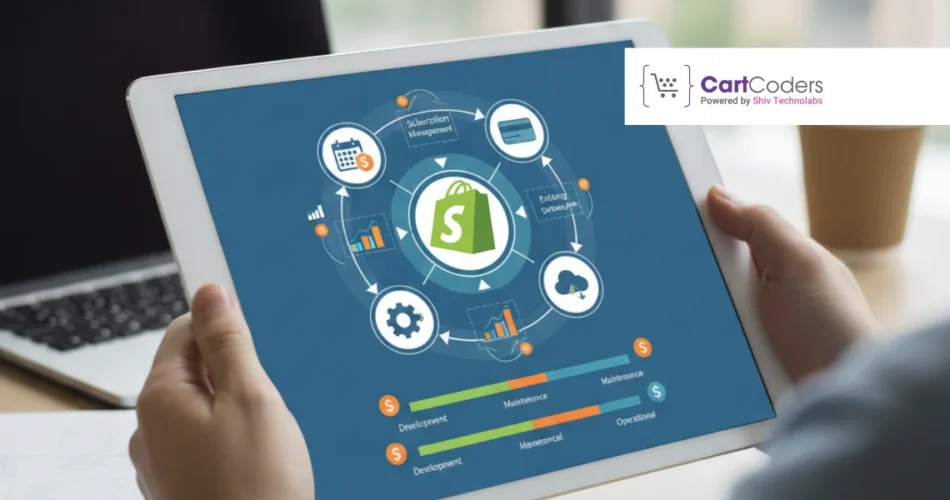
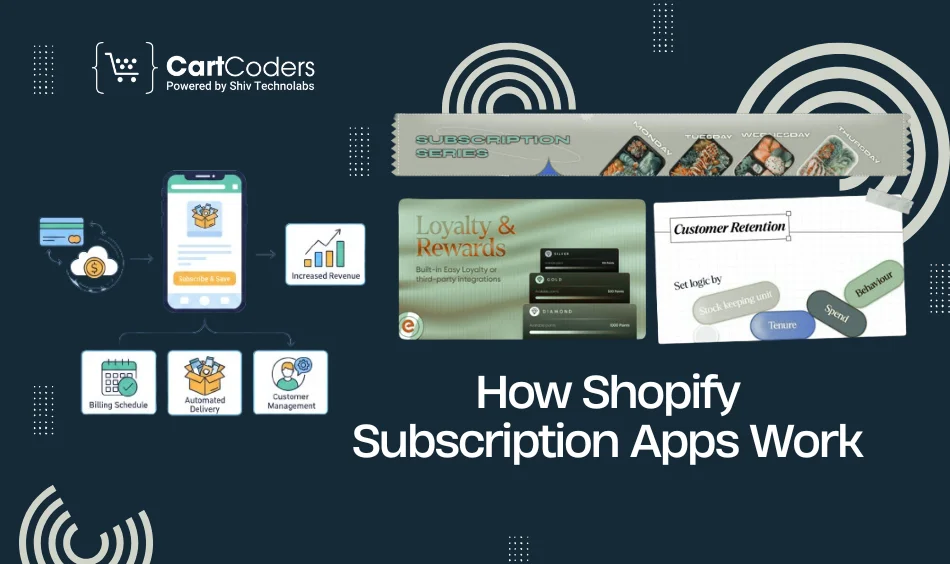
The subscription business has been expanding exponentially, and 2026 is shaping up to be the most successful year for recurring revenue brands. Business owners of stores in the United States, the United Kingdom, Europe, and Asia are embracing subscription applications to earn a reliable revenue, repeat client value, and stabilize cash flow.
A report suggested that subscription-based ecommerce has expanded by over 52% by 2030. The current trend is that more Shopify stores are interested in the price of the Shopify subscription app, the cost of Shopify subscription development, and the criteria for setting prices when outsourcing a Shopify subscription developer.
This article covers all the layers of costs, integration levels, application comparisons, development schedules, and real pricing, so you can plan your subscription strategy for 2026.
Why More Stores Want Subscription Models in 2026
The subscription model is not a fad; it has become a fundamental business concept for D2C and B2B brands. Recurring payments help stabilise revenue and make cash flows more predictable.
Higher Lifetime Value
The subscriptions drive LTV growth through repeat orders, consistent billing cycles, and retention-focused workflows.
Improved Inventory Projections
Brands can anticipate demand, schedule inventory flows, and minimize product waste when they subscribe to customers.
Better Stability of Cash Flow
A recurring revenue will also smooth out the seasonal lows and will guarantee steady business growth over the year.
Stronger Customer Loyalty
The long stay of customers who are subscribers is due to the advantages such as discounts, loyalty benefits, and improved services.
How Shopify Subscription Apps Work in 2026
Today, the subscription system at Shopify has advanced significantly since a few years ago. The vast majority of applications are integrated with Shopify’s native checkout and billing logic.
Native vs. Third-Party Subscription Logic
Native subscription functionality is also available in Shopify, though more advanced features still require apps such as Recharge, Skio, or Loop.
A Fitness Brand Offering Both Subscription and One-Time Items
Cost: $800–$2000
App: Skio
Needs: Hybrid cart, addons, upsells.
A Large D2C Brand Moving from Recharge to Skio
Cost: $2500–$6000
Includes: Migration, API sync, and custom portal.
How Subscription Integrations Affect Revenue
Below we have put together possible ways subscription integrations affect revenue:
Repeat Order Value: Repeating orders enhance foreseeable income.
Customer Life Cycle Change: Subscriptions prolong the average time buyers remain retained.
Embarkation Retention Subscription UX: Enhanced user experience will decrease the churn rates and boost subscription upgrades.
How to Pick the Right Subscription App for Your Shopify Store
Here is our top checklist to follow to choose a reliable Subscription App for Your Shopify Store:
Store Size and Type of Order
Large stores need a Recharge. Expanding brands usually choose between Skio and Loop.
Check Needed Workflows
Meal kits, beauty boxes and curated boxes require superior workflows.
Check Billing Needs
Subscription apps are advanced enough to operate on prepaid plans.
Check Multi-Market Support
Recharge possesses the most desirable multi-market characteristics.
Check Checkout Limits
Your application should support Shopify’s native checkout.
Checklist Before Starting Subscription Integration
Here are the checklist you need to keep in mind while getting started with Subscription integration:
Rules for Products and Delivery Logic: Establish delivery cycles and SKU regulations.
Shipping and Carrier Setup: New shipping regulations may be required for subscriptions.
Multi-Currency Rules: Multi-currency is needed in global stores.
Customer Portal Needs: Decide whether you require a custom or an application portal.
How Long Does Subscription Integration Take in 2026
Here we have prepared a table that gives a clear glimpse of long does subscription integration time:
Setup
Timeline
Basic Setup
2 to 4 days
Mid-Level Setup
7 to 15 days
Advanced Setup
20 to 45 days
Subscription Migration Costs
Below is a clear glimpse of the subscription migration cost for each migration:
Migration
Cost
Recharge to Skio
$1500 to $3500
Recharge to Loop
$1200 to $3200
Native Subscription to an Entire Application
$700 to $2000
Moving Existing Subscribers
$500 to $4000
When to Hire a Subscription App Developer
Here are the following scenarios where hiring a Subscription App Developer is an ideal choice:
When default app settings are not enough
When you need custom billing flows
When you run multi-region operations
When your theme blocks subscription logic
Estimated Developer Charges for Subscription Integration
Here are quick glance at estimated developer charges for subscription integration:
Hourly Cost Ratings (India, USA, UK, UAE)
Country
Developer Hourly Cost
India
$20 to $60
USA
$80 to $200
UK
$70 to $160
UAE
$50 to $120
Fixed-Price Package Examples
Setup
Developer Cost
Basic setup
$400 to $800
Mid-level setup
$900 to $2500
Advanced build
$3000 to $10,000
Get Started With Shopify Subscription App Integration Specialist
CartCoders is a leading Shopify development company, where we have a team of Shopify subscription experts, providing your store with clean integrations, correct billing policies, and a subscription user experience that enhances retention. CartCoders focuses on Shopify subscription customisation, API integration, UI configuration, and sophisticated billing policies. If you are struggling with Subscription App Integration, hire Shopify subscription developer from us.
Here’s what our team of Shopify subscription integration experts brings to the table:
API or webhook setup
Custom subscription UI
Billing and workflow rules
Automated renewal logic
Full testing and QA
Ongoing support
Hiring a Shopify subscription migration process expert will save time and money on future restructuring.
Conclusion
Subscriptions will be the most prominent form of e-commerce by 2026, and selecting the appropriate subscription application and the appropriate development team is key to the future growth. As much as you may desire Recharge, Skio, Loop, or a native subscription system, your integration should be accurate, reliable, and streamlined to avoid failed payments or churn.
CartCoders is the best Shopify subscription integration company that provides complete integration, subscription UI optimization, API workflow, migration, and checkout updates.
Our team of Shopify subscription API developers will help you complete the integration process, subscription app configuration, and recurring payment processes. If you need a trusted partner for Shopify subscription integration, subscription app development, or recurring payment integration, we are here to assist you.
Visit us today and let our team of experts do the needful to provide professional assistance and help you build a strong subscription-driven store.
Frequently Asked Questions (FAQs)
What does a Shopify subscription app do?
Shopify subscriptions app processes recurring payments, renewals, billing cycles, customer portals and subscription workflows. It provides the opportunity to subscribe to weekly, monthly, or personal delivery plans and automate payment and order creation.
How much does subscription integration cost in 2026?
Integration fees range from $300 for simple workflows to over $10,000 for complex workflows, depending on the integration type and complexity (multi-market rules, ERP syncing, or migration). The price is based on the app choice, UI customization, and billing specifics.
Which subscription app is best for Shopify stores?
Large stores should be recharged; modern D2C brands should use Skio; and Loop is suitable when building a workflow on a limited budget. The correct option will depend on your billing cycles, product complexity, and retention objectives.
Is Recharge better than Skio or Loop for D2C brands?
Recharge has more features, but Skio is easier to migrate to and perform with. Loop offers the most value to small and mid-size stores. All the apps are suited to various business models.
Can I add both one-time and recurring items to the same cart?
Yes, the hybrid subscription will enable the customer to purchase both one-time and recurring products. Certain apps require custom configuration to use mixed-cart logic.
How long does Shopify subscription setup take?
Premediated setups require 2 to 4 days, intermediate setups require 7 to 15 days, and developed integrations require 20 to 45 days, depending on the complexity of the apps and the UI requirements.
Do subscription apps work with Shopify’s native checkout?
Yes. By 2026, every large subscription application will use Shopify’s native checkout to enable seamless recurring billing and faster conversions.
Can I migrate subscribers from another platform?
Yes. It is possible to migrate subscribers from Recharge, Skio, Loop, or external systems. The cost of migration is determined by the size of the data and the billing policies.
Are there any monthly charges in addition to the developer cost?
Yes. Apps are paid monthly, and the payment gateways also charge for recurring billing.
How do I fix subscription sync issues on Shopify?
Check API permission, webhook, theme conflicts, and billing credentials. A skilled Shopify subscription programmer can quickly fix the sync issue.
Do I need a developer for subscription integration?
When you require high-level subscription code, UI customization, migrations, or API workflows, you must contract a Shopify subscription developer to prevent technical failures.
As the CTO at Shiv Technolabs & CartCoders, I am liable for instigating, planning, integrating, and implementing the organization's strategic orientation.
I gather the most significant tech news in addition to sharing the information I gained while serving as the CTO of Shiv Technolabs, a renowned web and mobile app development company. I am pleased to answer questions as a most valuable expert for Shiv Technolabs Private Limited and to share my experience. I offer a keen insider's perspective on technical advancements.
 eCommerce
Solution
eCommerce
Solution







 INDIA
INDIA


 USA
USA
 CANADA
 AUSTRALIA