Shopify stores face tougher competition in 2026 as search results shift toward AI Overviews, richer snippets, and stronger ranking signals from Google. Shopify SEO is no longer limited to writing product descriptions and adding keywords. Brands now need sharper technical structure, strong content frameworks, cleaner code, and pages built for both search engines and AI-driven assistants such as ChatGPT, Perplexity, and Gemini.
This updated guide sets the right base for Shopify merchants who want stable ranking growth and higher visibility. The goal is not only to reach Google’s first page but to secure positions where users click with confidence—featured snippets, AI-generated answer boxes, and product panels.
What Is Shopify SEO? (2026 Definition)
Shopify SEO refers to the work done to help Shopify stores appear higher on Google and AI-driven search tools. Since Shopify runs on a fixed structure, ranking depends heavily on how well store owners shape their pages, meta tags, internal links, and speed settings.
The platform gives a clean base, but it requires correct adjustments to compete in tight product niches.
Common questions users ask include:
- Is Shopify good for SEO in 2026?
- Does Shopify need extra tools for better ranking?
- How long does ranking improvement take for Shopify stores?
- What factors matter the most for a new Shopify store?
With changes in Google’s algorithm, Shopify SEO now focuses strongly on:
- Quality of content
- Page experience
- Schema accuracy
- Product data completeness
- Clean structure for crawling
- Answer-focused formatting for AI summaries
Merchants who follow outdated SEO tactics often see drops because AI-overview-based search prefers concise answers, clean structure, and high authority signals.
How do Shopify Stores Rank on Google?
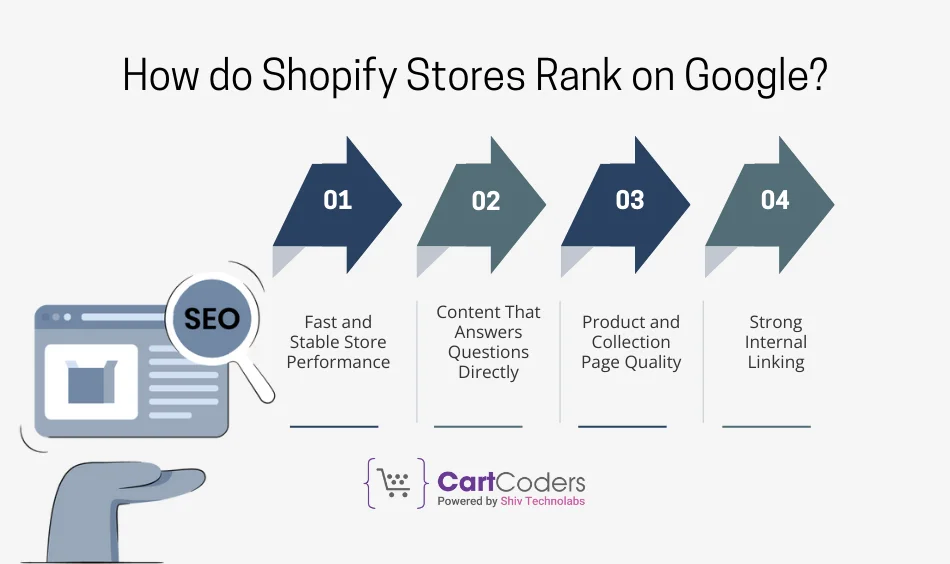
Ranking signals changed significantly over the past year. Google now values content depth, credibility signals (reviews, real product images, and brand activity), and page performance metrics such as LCP and INP.
Key factors that matter include:
1. Fast and Stable Store Performance
Visitors expect smooth browsing. Google measures:
- Largest Contentful Paint (LCP)
- Interaction to Next Paint (INP)
- Page Stability
Heavy themes and unused apps slow stores down, causing ranking issues. A faster Shopify storefront sends strong quality signals and secures better positions in AI search results.
2. Content That Answers Questions Directly
AI tools show short answers and summaries. Pages that provide:
- clear headings
- short punchy answers
- structured bullet points
- FAQ sections
…get picked more often for AI-generated responses.
Search queries used on AI tools are growing, including:
- Which Shopify store ranks the fastest?
- Best SEO plan for new Shopify brands
- How to fix slow Shopify pages?
- How to appear in AI Overviews?
Formatting for these queries helps pages stand out.
3. Product and Collection Page Quality
Google wants to show stores that provide genuine value. This includes:
- descriptive product titles
- detailed features
- comparison notes
- high-quality images
- real FAQs
- clean schema data
Thin content or duplicated variant pages struggle against stronger competitors.
4. Strong Internal Linking
Internal links guide crawlers. Shopify stores that form clear pathways from collections → product pages → related blogs gain stronger authority.
Shopify SEO Checklist (Priority-Based)
Priority 1 — SEO Foundation
- Write product-focused titles
- Keep URLs short
- Add unique descriptions
- Improve image naming
- Add helpful alt text
- Add internal links between related products and blogs
Priority 2 — Technical Setup
- Fix indexing issues
- Strengthen canonical settings
- Remove unused apps
- Upgrade to faster themes
- Improve Core Web Vitals
- Keep the schema clean and conflict-free
Priority 3 — Content and AI Visibility
- Add FAQ blocks
- Include question-style headings
- Add comparison notes
- Build long-form category introductions
- Target conversational queries
On-Page SEO for Shopify (2026 Framework)
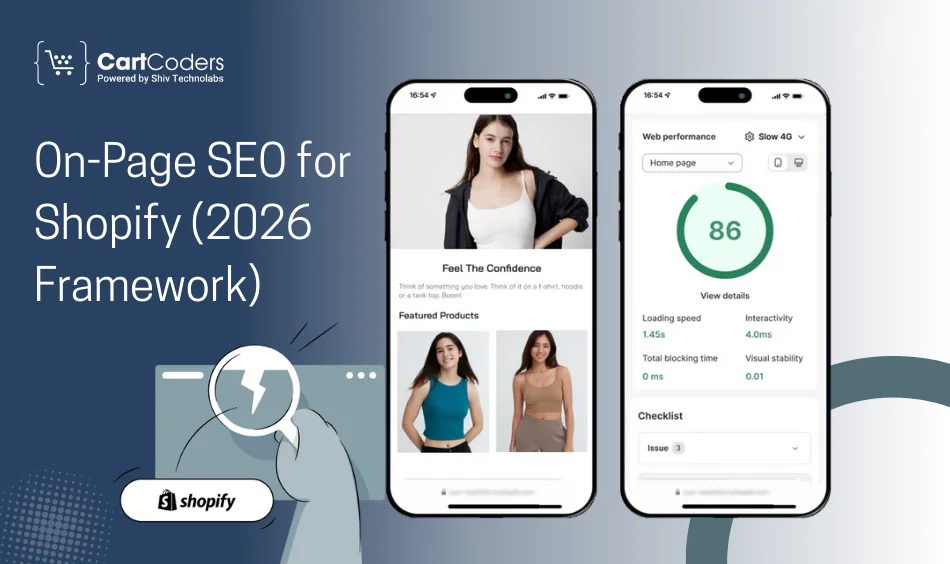
On-page SEO shapes how each product, collection, and content page sends signals to Google. When done correctly, it leads to higher visibility, richer snippets, and better AI-based recommendations.
Product Page SEO Rules
Product pages are strong ranking assets. In 2026, the highest-ranking Shopify stores follow these guidelines:
1. Product Titles With Search Intent
A strong title includes:
- Main keyword
- Variant or specification
- Use-case or primary attribute
Example: “Men’s Running Shoes – Lightweight | Road Training”
Google responds well to clarity and structured naming.
2. Descriptions That Answer Questions
Users on Google, ChatGPT, and Perplexity often ask:
- What is the best option for…?
- How does this product compare?
- Who is this item ideal for?
Adding short answer-blocks increases page authority and supports AI snippet selection.
3. Image SEO
Image naming and alt text help with both ranking and accessibility. Use descriptive names like: “black-leather-wallet-men-front-view.jpg”
4. FAQ Blocks
FAQ sections help capture high-intent queries.
Examples:
- Does this product support daily use?
- What material is used?
- How long is the warranty?
FAQ entries often appear in AI Overviews and rich results.
Collection Page SEO Rules
Collections often rank faster than product pages and influence crawling patterns.
Key requirements:
- Short introduction paragraph
- Use-case and comparison notes
- Internal links to top products
- Strong filtered navigation
- Clean canonical tags
Adding 100–200 words of helpful content is one of the strongest signals for 2026 ranking improvement.
Blog SEO for Shopify
Content supports authority and helps with internal linking. Blogs rank faster when they include:
- question-style headings
- real examples
- simple action steps
- comparison notes
- internal links to collections/products
Blogs help stores capture broad terms such as:
- “best gifts for new parents”
- “how to choose the right hiking backpack”
- “difference between road shoes and trail shoes”
These keywords convert visitors into buyers.
Technical SEO for Shopify Stores (2026 Standards)
Technical SEO decides whether Google crawls and reads your pages correctly. Shopify’s structure is fixed, so merchants must maintain a clean environment.
Speed + Core Web Vitals
Google checks performance to decide ranking quality. Issues often come from heavy themes, unused apps, oversized images, and scripts running above the fold.
Key targets:
- LCP under 2.5 seconds
- INP under 200 ms
- CLS near zero
Removing old apps and upgrading to a lighter theme can drastically improve these numbers.
Schema Setup for Shopify
Schema helps search engines understand page content. Correct schema increases the chances of appearing in rich snippets and AI summaries.
Important schema types:
- Product
- Breadcrumb
- Collection
- Blog article
- FAQ
Conflicting schemas from apps should be removed to maintain accuracy.
Index Control & Crawl Patterns
Clean indexing is a key 2026 ranking requirement. Shopify stores often index unnecessary URLs such as:
- filter URLs
- tag pages
- duplicate product variants
- test pages
A correct setup includes:
- updated robots rules
- correct canonical settings
- minimal index bloat
- steady internal link routes
This prevents wasted crawl resources and protects ranking consistency.
Keyword Research for Shopify
Keyword planning changed in 2026 due to AI search systems. Users now ask conversational queries, and Google values pages that answer them clearly.
Finding Buyer-Intent Keywords
Buyer-intent terms often include:
- “best”
- “cheap”
- “near me”
- “for beginners”
- “for daily use.”
- “for kids/adults/seniors.”
These terms show clear purchase signals.
Product-Focused Keywords
Effective product keywords include:
- product + material
- product + size
- product + feature
- product + use-case
Example:
- “canvas tote bag with zipper”
- “women’s trail running shoes waterproof”
Long-Form & AI-Search Queries
AI tools produce new keyword patterns:
- Which backpack is good for long travel?
- What’s the right size for a gaming desk?
- Which sunscreen works well for sensitive skin?
Including question-style headings helps capture these searches.
Competitor Keyword Gap Review
Studying ranking competitors gives insight into missed opportunities. Gaps often reveal:
- underused category terms
- profitable long-tail phrases
- missed comparison keywords
These gaps help create stronger content and collection pages.
Content Strategy Built for 2026
Topic Clusters
Clusters help Google understand subject coverage.
Example for a shoe store:
- running shoes guide
- running shoe size guide
- running shoe types
- cleaning instructions
AI-Search Focused Content
Google and AI engines prefer pages with:
- direct answers
- short definitions
- question blocks
- structured comparison notes
These elements increase visibility in AI Overviews.
Backlinks & Authority Building for Shopify
Backlinks remain key ranking signals, but quality outweighs quantity. Shopify stores that grow steadily focus on trusted sources and natural mentions.
Digital Mentions & PR
Brands gain strong ranking signals when they appear in credible publications or niche sites. These mentions help both SEO and AI systems identify trusted stores.
Useful formats include:
- expert commentary
- curated shopping lists
- trend articles
- product comparisons
- launch announcements
A handful of high-authority mentions can improve trust faster than dozens of weak links.
Local Citations & Brand Profiles
Local SEO supports both national and city-based stores. Platforms such as Google Business Profile, Yelp, and specialized industry directories help build brand trust.
Benefits include:
- stronger authority
- more accurate brand data
- better local ranking for “near me” queries
Influencer & Creator Signals
Reviews from influencers or creators strengthen authority. These may not always pass direct link value, but they send strong credibility signals that search engines evaluate.
Creators help a Shopify store by:
- reviewing products
- posting comparison videos
- showing real use cases
- sharing social proof
Common Shopify SEO Mistakes to Avoid
Mistakes in structure and content often hold stores back, even when keyword targeting is correct. Avoiding these issues improves ranking significantly.
Thin Collection Pages
Many stores publish collections with no supporting text. Adding short, helpful content improves indexing and allows Google to understand product categories better.
Duplicate Variant Pages
Variant URLs often get indexed unintentionally. This creates duplication issues and weakens product authority. Canonical settings prevent this problem.
Slow Themes & Script Overload
Heavy themes, unused scripts, and app leftovers cause slow performance. Google measures speed closely, especially LCP and INP.
Common issues include:
- unused app code
- large images
- multiple tracking scripts
- outdated theme versions
Poor Image Formatting
Images need proper compression and structured naming. Large files hurt ranking and conversion.
Weak Internal Linking
Internal links guide crawlers. Missing links or inconsistent structure slow indexing and reduce authority flow.
Shopify SEO Cost in 2026
Pricing varies by store size and SEO goals, but Shopify SEO typically follows a clear structure.
One-Time Setup Cost
Ideal for new stores or those needing a full cleanup.
Includes:
- meta setup
- schema setup
- URL structure
- performance fixes
- initial keyword planning
Estimated range: $600–$2,500
Monthly SEO Cost
Ongoing SEO tasks include content, internal linking, link building, and technical checks.
Estimated range: $300–$1,500 per month
Content Creation Cost
- Short blogs: $40–$80
- Long blogs: $80–$180
- Product rewrite: $10–$25 per product
Technical Fix Cost
Advanced fixes such as performance improvements, code cleanup, and indexing corrections generally range from: $150–$700
Shopify SEO Tools & Apps (2026 Edition)
Useful tools for ongoing improvement include:
- Google Search Console
- Ahrefs / Semrush
- Screaming Frog
- GSC Performance Report
- WebP converters for images
- JSON-LD schema generators
Use apps selectively to avoid script overload.
Professional SEO Support for Stronger Shopify Growth
A successful Shopify SEO plan demands clean structure, fast performance, and consistent improvements across content, indexing, and authority building. Many stores struggle with slow themes, scattered keyword use, and unclear page signals that limit ranking. Professional assistance helps fix these issues faster and supports long-term growth.
A skilled team can refine the store’s technical setup, improve content clarity, and build authority signals that match 2026 search expectations.
Key advantages of expert SEO support include:
- Detailed technical checks for speed, schema, and indexing
- Structured keyword planning that supports both Google Search and AI tools
- Clear internal linking routes for better crawl patterns
- Stable authority-building methods
- Ongoing performance monitoring
With this support, merchants can reduce errors, improve ranking consistency, and build a stronger search presence without changing their daily workflow.
If your store faces slow performance, weak indexing, or unclear product structure, professional guidance can help reshape the store for stronger results and long-term visibility.
Final Thoughts
Shopify SEO in 2026 requires a steady structure, clear content, fast performance, and strong authority signals. Stores that focus on accurate indexing, helpful product and collection pages, refined keyword planning, and responsive layouts gain better visibility across Google Search and AI-driven platforms.
Search engines reward stores that offer clarity, trust, and real value, which means every part of the site must support a smooth experience for both users and crawlers. When these elements work together, a Shopify store builds consistent ranking strength and attracts buyers who are ready to take action.
For merchants who want expert support in shaping this path, CartCoders offers guidance built around current search standards, technical accuracy, and proven Shopify SEO methods that help stores grow with confidence.
FAQs
Yes, Shopify stores rank well when they follow a clean structure, strong content, and proper indexing rules.
Common causes include slow speed, thin content, duplicate URLs, and weak keyword planning.
Early improvements appear within 4–8 weeks. Competitive niches take longer.
Yes. Some apps load heavy scripts that slow down pages. Removing old apps improves performance.
Use question-style headings, short answers, structured lists, and correct schema.


