Operating an online wine store is not comparable to selling clothes, devices, or interior design. The wine eCommerce business operates under stringent information requirements, heightened customer demands and more detailed logistics. Reports estimate that the wine is set to grow 4% by 2034.
Wine consumers require honesty, genuineness and reliability. The age verification is a legal requirement in most areas. Shipping regulations are state and country-specific. Customers are likely to purchase premium bottles but fail to make repeat purchases unless they are addressed.
The guide does not cover generic tools; it only features Shopify apps that address real wine eCommerce issues. It targets DTC wine brands, local wineries, wine clubs and licensed liquor retailers seeking to scale responsibly in 2026. All recommendations align with compliance, retention and profitability, as well as long-term growth, through intelligent Shopify wine eCommerce solutions.
What Does a Wine Store on Shopify Actually Need?
Wine sales on Shopify cannot be achieved by simply listing items and running ads. A wine store has to be legal and offer a high-end purchase experience.
Age Checking and Legal Conformity
Wine retailers are required to ensure that purchasers are of legal drinking age. Shopify does not impose alcohol compliance by default; therefore, store owners need to put in place verification systems to eliminate the risk of legal liability.
Wine Clubs and Repeat Purchases
Wine eCommerce relies on a large number of repeat customers. Single purchases can hardly maintain growth. The wine clubs, subscriptions and curated repeat orders are necessary for stable monthly revenue.
Large Order Value and Low Retention Risk
The average order values in wine stores are usually high. Nevertheless, without appropriate engagement, reminders and individual offers, the rate of repeat purchases may be low.
Weak Shipping and Local Limitations
Wine delivery entails delicate packaging, temperature control and adherence to strict regional delivery regulations. Location-based rules need to be managed effectively through apps.
Developing Goodwill on High-Quality Products
Unless there is evidence, customers will not purchase high-quality wine. Reviews, certifications and transparent policies are essential in conversions.
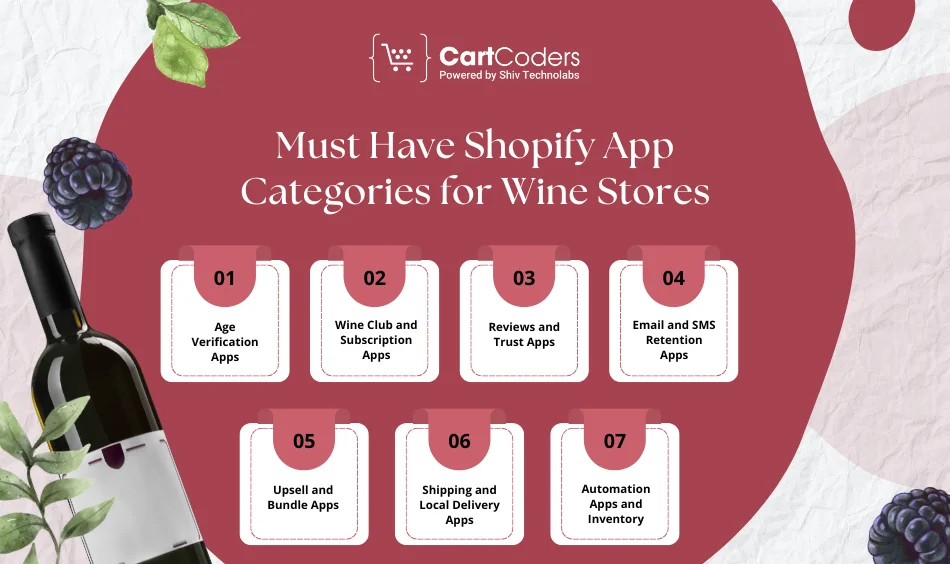
Must Have Shopify App Categories for Wine Stores
An effective wine store employs fewer but more innovative apps. The following categories address specific operational issues.
Age Verification Apps: Ensure compliance with alcohol laws and that the brand is not punished.
Wine Club and Subscription Apps: Drive recurring revenue with memberships and scheduled deliveries.
Reviews and Trust Apps: Develops high pricing bottle credibility and initial purchasers.
Email and SMS Retention Apps: Care about customers by responding to their communications and reminding them to make another purchase.
Upsell and Bundle Apps: Add value to the order with tasting sets, mixed cases and edited bundles.
Shipping and Local Delivery Apps: Manages delicate temperature-sensitive deliveries, domestic regulations and logistics.
Automation Apps and Inventory: Eliminate manual errors and unify stock across sales channels.
Best Age Verification Apps for Shopify Wine Stores
Wine eCommerce cannot negotiate on age verification. Merchants are forced to handle this themselves on Shopify.
Shopify is a universal platform that deals with various product lines. Different countries and regions have different alcohol policies. Given this complexity, Shopify entrusts compliance to merchants.
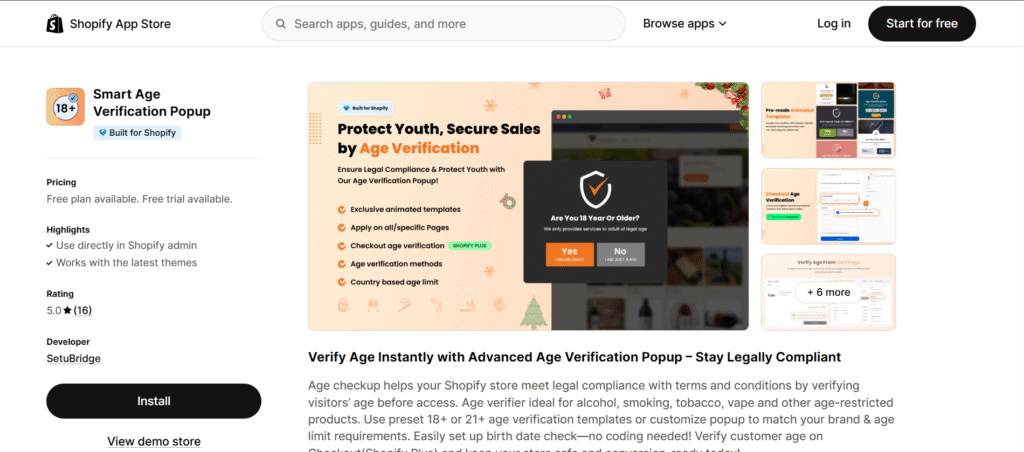
Smart Age Verification Popup provides a clean, customizable way to verify customers’ ages before they can enter your wine store. The app will enable merchants to block underage visitors, customize consent messages and store verification cookies for repeat visitors. It works well with Shopify themes without reducing performance, making it appropriate for both small wineries and large wine retail establishments.
Key Features
Age confirmation to be customised.
Cookie authentication of frequent users.
Location-based age rules
Theme-compatible design
Ideal For
Age-restricted wine brands, liquor retailers and wineries.
Pricing
Standard: $4.99/month
Growth: $9.99/ month
Premium: $14.99/ month
Reviews
4.9/5 (15 reviews)
Best Subscription and Wine Club Apps
Repeat revenue from wine eCommerce is driven by wine clubs.
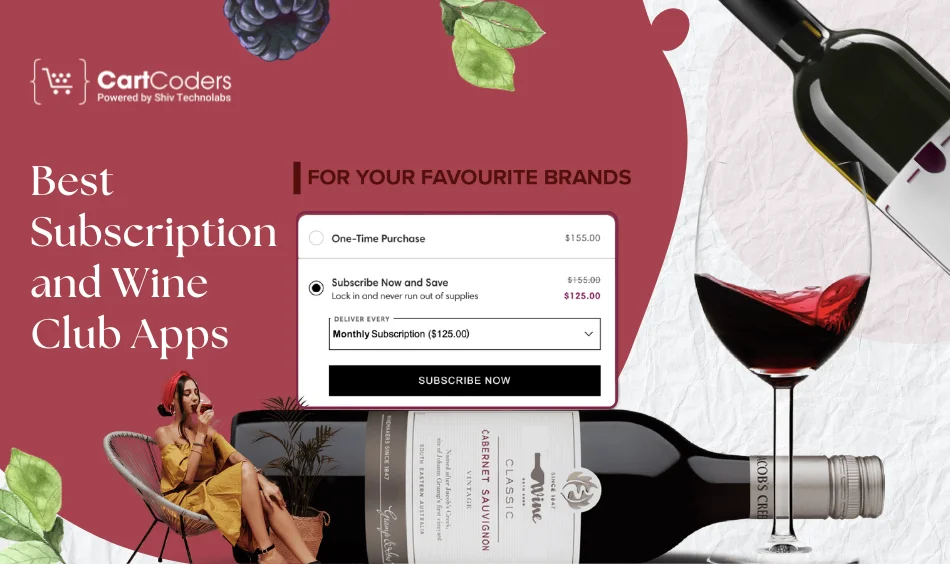
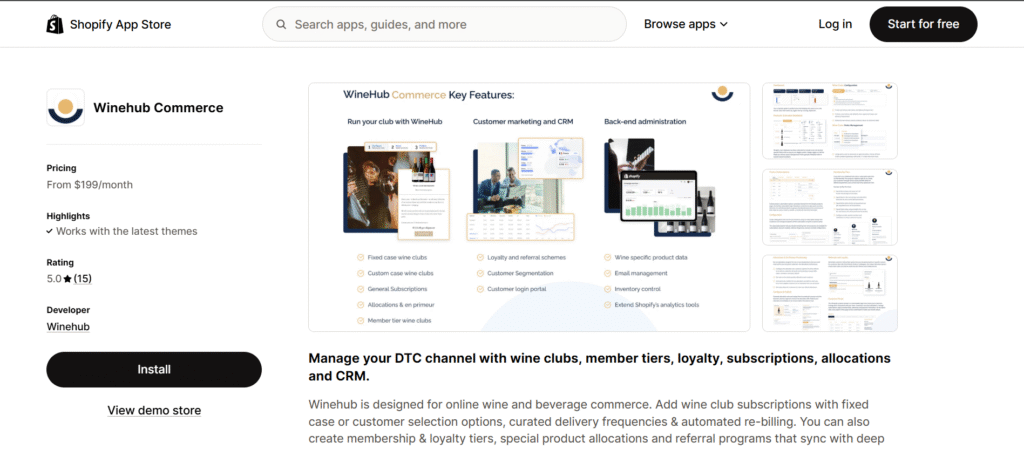
Winehub Commerce is designed with wine clubs and wine sales on a subscription basis. It allows traders to handle subscriptions, repeat payments, bundled deliveries, and promotions. The application offers a high level of flexibility in delivery. It can be fully integrated with the Shopify checkout, which is what most boutique wineries and emerging DTC wine companies need.
Key Features
Wine club membership management
Automated repeated billing.
Custom shipment schedules
Member exclusive pricing
Shopify payment system.
Ideal For: Wine clubs, wine subscriptions and repeat delivery systems.
Pricing
Club Lite: $199/ month
Club Unlimited: $279/ month
Pro Scaler: $299/ month
Pro Unlimited: $499/ month
Reviews
5/5 (15 reviews)
Best Upsell and Bundle Apps for Higher Order Value
Wine packages do better than selling in individual bottles because they enhance value.
Curated experiences are what customers like. Mixed cases, tasting packs, seasonal bundles lower the decision fatigue and boost the order value.
Effective bundles include red and white, tasting packages or event-based ones that are purposeful.
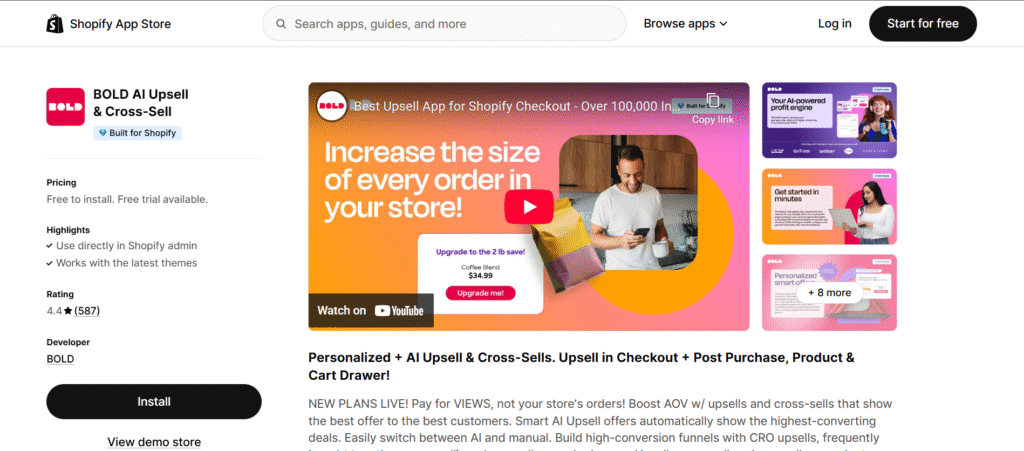
BOLD AI Upsell and Cross Sell applies intelligent suggestions to recommend a shopping journey through relevant wine bundles. It studies customer behaviour and purchase intent to display high-converting offers at the right time. The AI-powered strategy will make upsells helpful, not pushy.
Key Features
AI-powered recommendations
Cart and post-purchase offers
Custom bundle creation
Performance analytics
Theme-friendly integration
Ideal For
Wine shops based on package deals and high-end upsells.
Pricing
Standard: $25/ month
Complete: $50/ month
Reviews
4.4/5(588)
Best Review and Trust Apps for Wine Brands
In the case of premium wine, trust plays a very important role in sales online. Wine customers rely on social proof, tasting notes and peer approval before buying. Photo and video reviews perform better than text alone, as they convey packaging, authenticity and experience.
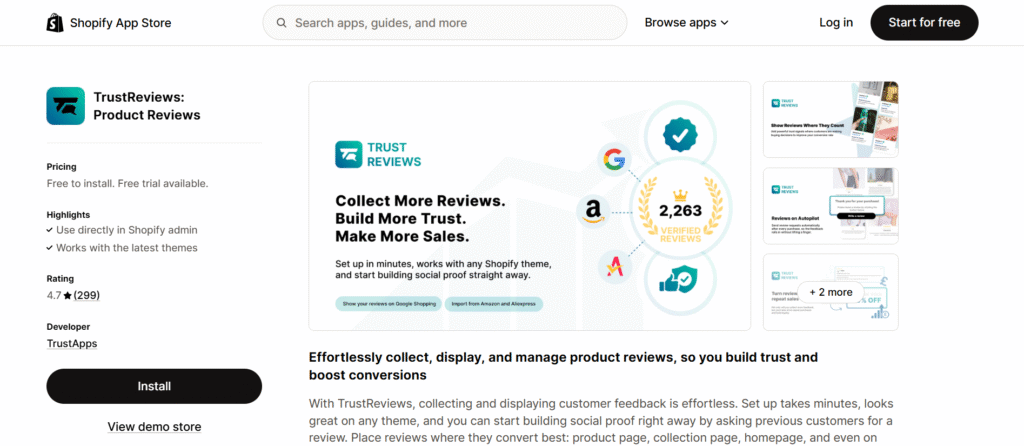
TrustReviews enables wine traders to gather and present verified customer feedback, along with graphical illustrations. The application builds trust by showcasing actual buyer reviews, ratings and photos. It facilitates automatic review requests and conversion-optimized display layouts.
Key Features
Verified customer reviews
Photo and video support
Automated review requests
SEO friendly schema
Custom display widgets
Ideal For
High-end wine brands and new wine shops.
Pricing
Free Plan
Unlimited: $13.99/month
Unlimited +AI: $24.99/month
Reviews
4.7/5(297)
Best Email and SMS Apps for Wine Customer Retention
Profitability of wine eCommerce is fueled by retention. There must be compliance with alcohol marketing and opt-in consent management.
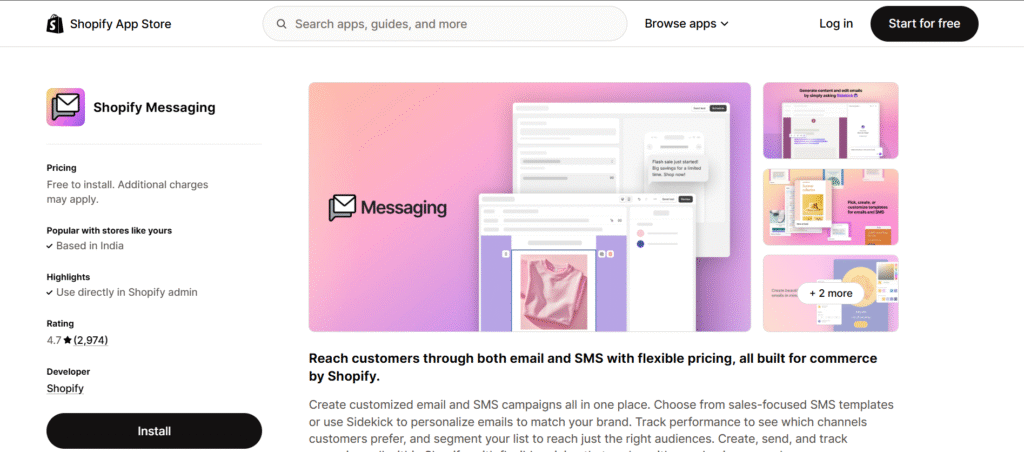
Shopify Messaging consolidates the customer communication on chat, email and messaging platforms. It enables wine brands to interact with customers responsibly without compromising. The instrument makes use of automated responses, order adjustment and customized messages without integration.
Key Features
Unified messaging inbox
Automated responses
Visibility of customer history.
Shopify native integration
Free to use
Ideal For
Small to mid size wine stores.
Pricing
Free
Reviews
4.7/5(2,948)
Best Shipping and Local Delivery Apps for Wine Stores
Below are the best Shipping and Local Delivery Apps for Wine Stores:
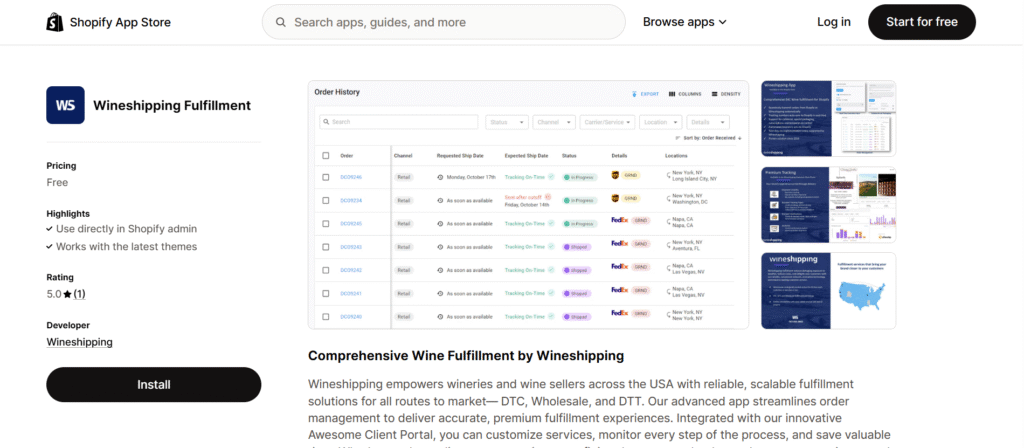
Wineshipping Fulfilment is a wine eCommerce, alcohol-compliant third-party logistics company. The application connects Shopify stores with certified fulfillment facilities that handle temperature control, packaging and state-specific delivery regulations. It streamlines complicated shipping processes and is also compliant.
Key Features
Alcohol compliance fulfillment
Controlled shipping due to temperature.
Regional delivery rules
Real-time order tracking
Shopify integration
Ideal For
Wine retailers that deliver to different areas.
Pricing
Free
Reviews
5/5
Best Automation and Inventory Apps for Growing Wine Stores
Manual processes are not scalable. Automation will minimize human error and delay in fulfillment.
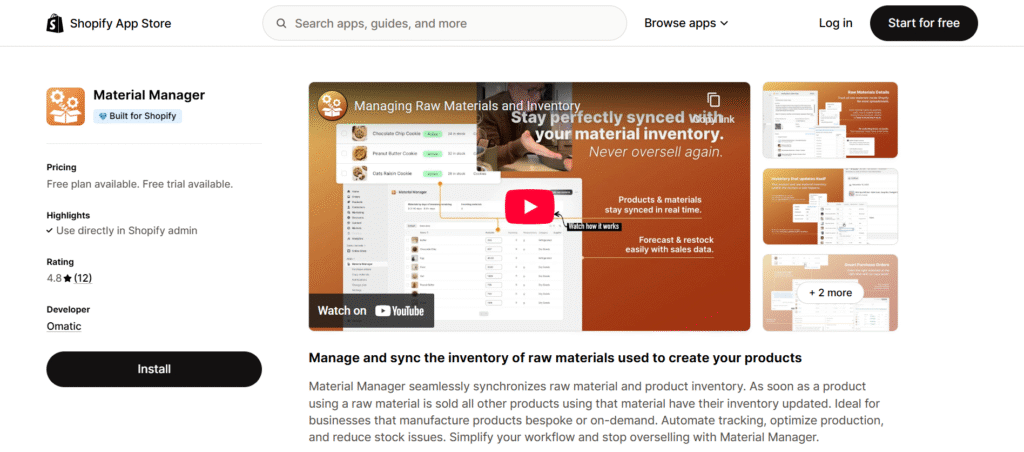
The Material Manager assists wine shops in automating inventory processes and tracking raw material history. It is particularly used in wineries where one has to control production, stock placement and multi-location inventory. The application provides proper inventory flow within sales channels.
Key Features
Inventory automation
Multi-location sync
Production tracking
Low stock alerts
Custom workflows
Ideal For
Increased winery and hybrid sellers.
Pricing
Free
Standard: $19.99/month
Advanced: $29.99/month
Professional: $49.99/month
Reviews
4.8/5(12 reviews)
Comparison Best Shopify Apps for Wine Stores 2026
Choosing the right app mix depends on store size and goals.
App Name
Category
Best For
Ideal Store Size
Smart Age Verification Popup
Compliance
Age checks
All sizes
Winehub Commerce
Subscription
Wine clubs
Medium to large
BOLD AI Upsell
Upsell
Bundle sales
All sizes
TrustReviews
Reviews
Social proof
All sizes
Shopify Messaging
Retention
Customer engagement
Small to medium
Wineshipping Fulfillment
Shipping
Alcohol logistics
Medium to large
Material Manager
Inventory
Automation
Growing stores
Free vs Paid Shopify Apps: What Wine Stores Should Choose
The decision to use free or paid Shopify apps is not only a financial choice for wine stores. It is a long-term operational decision; it affects compliance, performance and customer retention. Wine eCommerce is in a controlled environment where errors may cost more than application charges.
When Free Shopify Apps Work Well for Wine Stores
Free applications are appropriate when a wine shop is in the initial validation phase. Free apps allow new wineries or small DTC brands testing online demand to perform basic age verification, basic reviews, or basic messaging. At this stage, the order volume is low, compliance risk is low and manual oversight is feasible. The availability of free apps will reduce initial costs and demonstrate the business concept.
Where Paid Shopify Apps Save Cost in the Long Term
Paid apps will be critical to order volume. Subscription management, compliant shipping, automation and AI-powered upsells directly influence revenue and minimise operational mistakes. Paid apps are commonly used to replace manual work, avoid overselling and increase repeat purchases. In the long term, these efficiencies save significantly compared to the monthly app fee, particularly in wine stores that handle high-value stock and face legal limitations.
Common Decision Mistakes Wine Sellers Make
Wine merchants prefer free applications for essential tasks such as subscriptions or stock management. It usually results in inaccurate data, compliance gaps, and customer losses. The other popular error is to postpone paid upgrades until the issues are noticed. At that point, revenue leakage has already occurred. Investing at an early stage is a strategy to avoid costly repairs in the future.
Common Shopify App Mistakes Wine Stores Make
Wine eCommerce stores tend to fail not because of poor product quality, but because of an improper app choice. These errors mute the pace, credibility and recurrence of sales.
Too Many Apps Slowing Down the Store
Excessive quantity of apps leads to higher script load, API calls, slowing down of page speed and checkout times. Customers of wine demand high-quality services. Slow store speeds erode trust and conversion rates, particularly when selling a high-value commodity. Every application ought to prove its existence through quantifiable influence.
Redundant Functionality in a Series of Apps
The use of various applications that do not serve different purposes causes conflicts and inefficiencies. Two retention applications, emailing customers, may confuse them and negatively impact brand perception, for example. Access features also complicate maintenance and shorten the troubleshooting period.
Legal Tools and Compliance Ignored.
Other wine stores focus on marketing instruments but ignore compliance applications such as age check or shipment restrictions to specific regions. This puts the business at risk of legal fines, payment gateway and even freezing of the store. Wine eCommerce does not have compliance as an option.
None of the Retention or Loyalty Setups
Numerous wine outlets are interested in getting first time customers and forget about retention. Customers do not repurchase without email, SMS, or subscriptions. This results in excessive acquisition and fluctuating revenues even though the initial sales are high.
How to Choose the Right Shopify Apps for Your Wine Store?
To choose the appropriate Shopify apps, it is necessary to act deliberately. The success of wine eCommerce depends on the consistency of the business model, compliance with legal requirements, and expansion objectives.
Store Size and Growth Stage
Small wine shops need to be about basicness and conformity. Scalable apps are required by growing brands that need automation, subscriptions, and increased volume. The extensive wine retailers at the enterprise level need sophisticated inventory and fulfilment integrations.
Region and Alcohol Laws
Some regulations dictate wine in different countries, states and even cities. They will have to use apps that support regional requirements such as delivery policies, age checks, and taxation. Using apps that are not legally aligned poses the risk of operation.
Sales Model One-Time Purchases vs Wine Clubs
An establishment specializing in selling single bottles requires upsell and review applications. A wine club-based business needs robust subscription management and retention systems. The selection of apps should be aligned with revenue generation.
Planning a Budget with ROI in mind
Wine stores should consider the apps in terms of return on investment rather than cutting costs. The application that will boost repeat rates by 10% will pay off quickly. Budget planning should focus on reducing revenue and risks.
App Testing and Evaluation Checklist
Speed impact, theme compatibility, customer support quality and scalability are some factors to test before committing. Frequency of reviews and merchant reviews. CartCoders and other Professional Shopify partners typically audit the app’s stack to avoid costly errors.
Conclusion
The viability of a wine eCommerce store in 2026 will be determined by stability, compliance and recurring customers. It is not the number of Shopify apps one may select to operate their wine store, but the strategy. The right app stack guarantees legal safety, higher-order values and long-term customer loyalty.
This is where CartCoders will have a difference. CartCoders is a Wine eCommerce Store development company, Shopify customizer and performance optimizer with compliant app integration. Our team of developer offer Shopify wine eCommerce solutions that drive sales, grow, and keep customers by focusing on the app selection process for full-scale Shopify wine eCommerce sites.
Unless you plan to expand your wine shop in 2026, it is time to audit your Shopify app stack. When developing a high-converting wine eCommerce system that complies with shopping laws, collaborate with CartCoders to hire qualified Shopify professionals design a high-converting wine eCommerce ecosystem to help it grow.
Frequently Asked Questions(FAQs)
Is it possible to sell wine legally on Shopify?
Yes, it is possible to sell wine on Shopify if regional alcohol regulations are followed, age verification is implemented and appropriate shipping services are used.
What is the best Shopify app wine clubs should use?
Winehub Commerce is the most appropriate service to operate wine club memberships and repeat shipments.
Should wine shops require age-verification applications?
Yes, age verification applications are necessary to ensure you comply with the law and avoid legal problems for your store.
Can alcohol be subscribed using Shopify?
Yes, alcohol subscriptions can be made, provided that the laws in the area are permissive and the requirements are met.
As the CTO at Shiv Technolabs & CartCoders, I am liable for instigating, planning, integrating, and implementing the organization's strategic orientation.
I gather the most significant tech news in addition to sharing the information I gained while serving as the CTO of Shiv Technolabs, a renowned web and mobile app development company. I am pleased to answer questions as a most valuable expert for Shiv Technolabs Private Limited and to share my experience. I offer a keen insider's perspective on technical advancements.
 eCommerce
Solution
eCommerce
Solution







 INDIA
INDIA


 USA
USA
 CANADA
 AUSTRALIA