Every digital agency reaches a stage where the manner in which they were developing projects is not working anymore. Clients appear in greater numbers, deadlines are shorter, you must have skills in multiple platforms, and suddenly you have a drowning team. Deloitte’s Global Outsourcing Survey shows that 59% of businesses now send some development work outside their walls to move faster and keep costs reasonable.
That’s when agencies need to make a call. Are you continuing to develop an internal team, or do you want to engage external developers? There’s no simple yes or no here. You have to think about money, how much say you want in everything, how fast you can deliver, whether you can grow when needed, and what could go wrong.
Hire Reliable Web Development Team Without Hiring Hassles
Dedicated CartCoders experts work as your extended team.
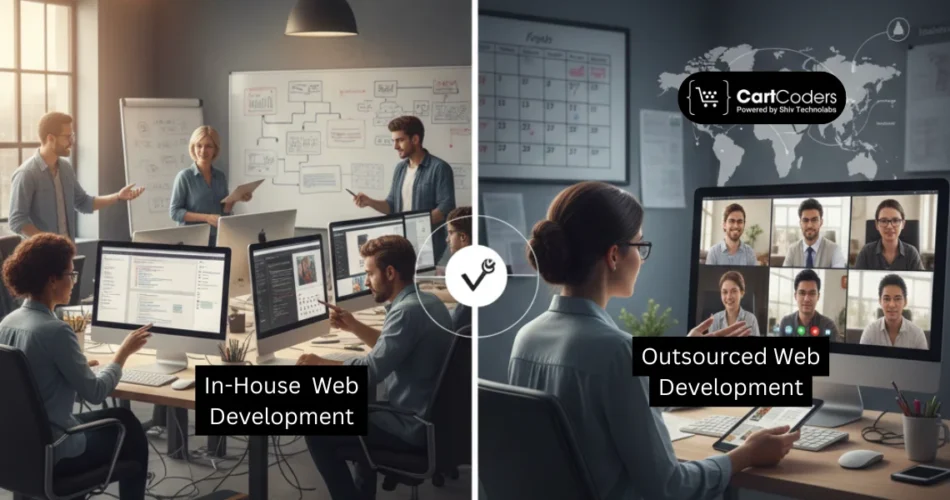
This article differentiates between in-house and outsourced web development. Reading this, agencies can determine which one suits better in various situations, where each one of them performs poorly and why many agencies combine both approaches to expand without compromising quality or losing control over their projects.
Is It Better for Agencies to Build Websites In-House or Outsource Development?
Most agencies hit this crossroads when tight deadlines start eating into profits and pushing back timelines. Having your own developers works when the amount of work coming in stays fairly steady. Going outside makes sense when client demands bounce around, you’re dealing with different platforms, and projects vary wildly.
Plenty of agencies today don’t pick just one way. They handle some work with their own people and send other stuff out depending on how complicated it is, how urgent, or what specific skills it needs. Getting a clear picture of both options is where you start.
What In-House Web Development Means for Agencies
In-house web development involves the employment of full-time developers, and they only serve you, therefore they do all the work-development, maintenance, and tech decisions. You have direct supervision, but you are also tied in to recurrent commitments.
Typical In-House Team Structure
Most agencies with their own teams need a mix of people:
Frontend developers
Backend developers
QA testers
Technical lead or project manager
When the agency gets bigger, you’ll probably need DevOps engineers and security specialists too. This setup means everyone answers to you, but your fixed costs climb.
Types of Projects Agencies Usually Keep Internal
Agencies tend to handle these projects themselves:
Long-term retainer clients
Proprietary platforms or internal tools
Highly customized enterprise solutions
Confidential or compliance-heavy systems
Such projects require a person who is well in touch with the product, who knows the product inside and out, and whose improvement never ends.
Ongoing Responsibilities Beyond Development
Running your own team involves way more than just coding:
Recruitment and onboarding
Salaries and benefits
Performance management
Training and upskilling
Employee retention and attrition handling
All of this keeps going whether you have tons of projects or almost none.
What Outsourced Web Development Means for Agencies
Outsourced web development allows agencies to work with external development teams without losing clients and strategy. Someone else does the actual building, but you still own everything.
How Outsourcing Works in an Agency Setup
Here’s how it usually goes:
The agency engages clients and determines what they require.
The outside team builds and tests everything
Work gets delivered with the agency’s name on it
This allows agencies to manage additional projects without hiring additional staff.
Difference Between Freelancers, Vendors, and White-Label Partners
Freelancers are fine for small jobs but don’t always come through at scale
Vendors complete specific projects but might not bend when you need changes
Clients never know there’s an outside team involved.
In-House vs Outsourced Web Development — High-Level Comparison
Here’s how they stack up:
Aspect
In-House Development
Outsourced Development
Cost structure
Fixed salaries and overhead
Variable project-based cost
Scalability
Slow and limited
Fast and flexible
Skill availability
Limited to hired team
Broad multi-platform access
Management effort
High
Moderate
Risk during slow periods
High idle cost
Low
Speed of execution
Depends on availability
Faster ramp-up
Best suited for
Stable workloads
Fluctuating demand
Cost Comparison — In-House vs Outsourced Development
Money matters most when agencies weigh in-house vs outsourced web development. But it’s not just about paychecks versus invoices. You need to count hiring hassles, people sitting around with nothing to do, what it costs to grow, buying equipment and software, and whether you have breathing room financially down the road. Here’s how the numbers really differ and what agencies need to look at before making a choice.
1. Hiring and Recruitment Expenses
Building your own team means constantly looking for new people as you take on more work or when someone quits. Finding good developers costs a lot and takes forever.
What you’re paying for:
Recruitment agency fees
Interview and screening time
Onboarding and initial low productivity phase
When you outsource, you skip all the hiring headaches and get a team ready to start right away, cutting both obvious and hidden costs.
2. Fixed Salaries vs Variable Project Costs
Your own developers create expenses that don’t change. You pay salaries, benefits, and everything else whether you’re busy or not.
What that means money-wise:
Monthly salary commitments
Payments during low or zero project periods
Limited cost flexibility
Outsourcing makes this a pay-as-you-go scenario where you only pay money for real work, and this makes it easier to manage cash and safeguard what you make.
Plan Your Outsourced Web Development With Specialists
CartCoders helps define scope, roles, and delivery flow.
3. Cost of Training and Skill Upgrades
Technology is constantly evolving, and your in-house staff should be trained on a regular basis. This adds costs on top of what you already pay them.
Training usually costs you:
Learning new frameworks and platforms
Paid courses and certifications
Time lost during upskilling
Outside teams pay for their own training, so you get updated skills without footing the bill for endless education.
4. Infrastructure and Tooling Investment
Your own team needs a complete tech setup, which means ongoing expenses that stick around. You’re typically paying for:
Software licenses and IDE tools
Hosting and staging environments
Testing and security tools
Outside partners already have this infrastructure, so you don’t spend money buying or managing technical tools.
5. Cost of Idle Resources
One of the biggest hidden drains with your own team is when people have nothing to do. When projects dry up, you’re still cutting checks.
The damage includes:
Underutilized developers
Reduced profit margins
Higher operational waste
Outside resources grow or shrink based on how much work you have, so you’re not paying for developers who aren’t doing anything.
6. Billing Transparency and Cost Tracking
Internal development costs get spread across salaries, HR, tools, and overhead, making it tough to know what each project actually costs you.
Problems include:
Complex internal cost allocation
Unclear project margins
Outsourcing provides you with more precise figures in terms of per hour fee, retainers, or set price of a project which is much easier to budget and plan.
7. Long-Term Financial Risk Exposure
Hiring developers locks you into a long commitment. If things change in your business, cutting people loose gets expensive and messy.
What you’re risking:
Severance and legal obligations
Difficulty adjusting team size quickly
Outsourcing reduces long-term risk because you can change how much capacity you need without dealing with employment problems.
8. Overall Cost Efficiency at Scale
For agencies juggling multiple platforms, clients, and work that comes and goes, outsourced web development usually saves more money over time.
Main benefits when you’re growing:
Faster project turnaround
Access to specialized skills without hiring
Improved margin control during growth phases
That’s why many agencies treat outsourcing as a permanent part of how they deliver work, not just a temporary fix.
Risk Factors Agencies Should Consider
Every way of delivering projects comes with risks. Agencies need to spot and handle these problems before they blow up.
Risks of Relying Only on In-House Developers
Depending only on a small internal team can slow you down and leave you vulnerable.
Knowledge concentrated in few individuals
Difficulty scaling during peak demand
Burnout and attrition risks
Risks of Outsourcing Web Development
Outsourcing creates problems if you pick the wrong partner.
Communication gaps
Quality inconsistency
Time zone challenges
Reducing Risks Through Clear Processes
Agencies lower their risks by:
Clear documentation
Defined SLAs
Regular reviews
Structured onboarding
When In-House Development Makes More Sense
In-house web development isn’t old-fashioned or wasteful automatically. For plenty of agencies, it’s still the strongest choice when work flows steadily and having direct control over tech really matters.
This approach works best when the agency can actually keep its internal team busy, and when owning code and systems long-term beats having flexibility right now.
Agencies with Consistent, Predictable Project Volume
When your project pipeline stays steady month after month, having your own team makes perfect sense. You know what’s coming, you can plan capacity, and everyone stays productive. There’s no risk of paying people to sit around. Your developers build familiarity with your processes and client expectations. This consistency lets you maximize what you’re already spending on salaries and benefits without waste.
Agencies Offering Specialized or Proprietary Solutions
If your agency has developed unique technology or offers highly specialized services, keeping everything internal protects what makes you different. Your team understands the nuances that outsiders wouldn’t grasp quickly. You maintain complete control over how things work and evolve. Sensitive business logic stays behind your walls. This ownership ensures competitors can’t access your methods or intellectual property through outside partnerships.
Long-Term Product or Platform Ownership Needs
Building a SaaS product or maintaining a platform over years requires deep, ongoing knowledge. Your own developers gain intimate understanding of architecture, decisions made years ago, and why things work certain ways. They can evolve the product thoughtfully without constantly relearning context. Turnover with outside teams creates knowledge gaps that hurt long-term products. Internal continuity keeps your platform stable and moving forward.
When Outsourced Web Development Works Better
Outsourced web development becomes a real advantage when agencies care most about flexibility, speed, and getting access to different kinds of expertise. This model fits agencies operating in environments where demand shifts constantly and technology needs change from client to client.
Agencies Handling Multiple Platforms and Tech Stacks
Clients today want everything from Shopify stores to custom headless setups to WordPress sites. Hiring specialists for each platform gets expensive fast. Outside partners already have teams skilled across these technologies. You can take on diverse projects without maintaining experts in every stack. This breadth would cost a fortune to build internally, but outsourcing gives you access immediately whenever a client needs something outside your core expertise.
Agencies Focused More on Marketing Than Technology
Some agencies excel at strategy, creative, and driving growth but don’t want to manage developers. Your strength is understanding markets and customer behaviour, not debugging code. Outsourcing allows you to sell what you are actually good at and leave the technical work to be done correctly. You remain client-focused and client outcome-oriented, as opposed to technically oriented teams and systems that are not your business.
Agencies Aiming to Grow Without Expanding Headcount
Growth usually translates to additional human resources, an increase in office area, an increase in overheads, and an increase in management complexity. Outsourcing breaks this pattern. You can double or triple project volume without hiring anyone. Your margins improve because costs scale with revenue instead of running ahead of it. This approach lets small agencies compete with bigger shops without the baggage of managing large internal teams or the financial exposure that comes with it.
Hybrid Model — What Most Growing Agencies Actually Use
Most successful agencies don’t lock themselves into one delivery method. They’ve figured out that mixing both approaches works better than going all-in on either side. Your own people handle the stuff that needs your direct touch, while outside teams pick up everything else. This provides you with the power where it is required and flexibility where it is needed. When demand shoots, you are not holding on, and when things decelerate, you are not losing money. The hybrid model is flexible and adjusts to reality rather than subjecting reality to a single rigid model.
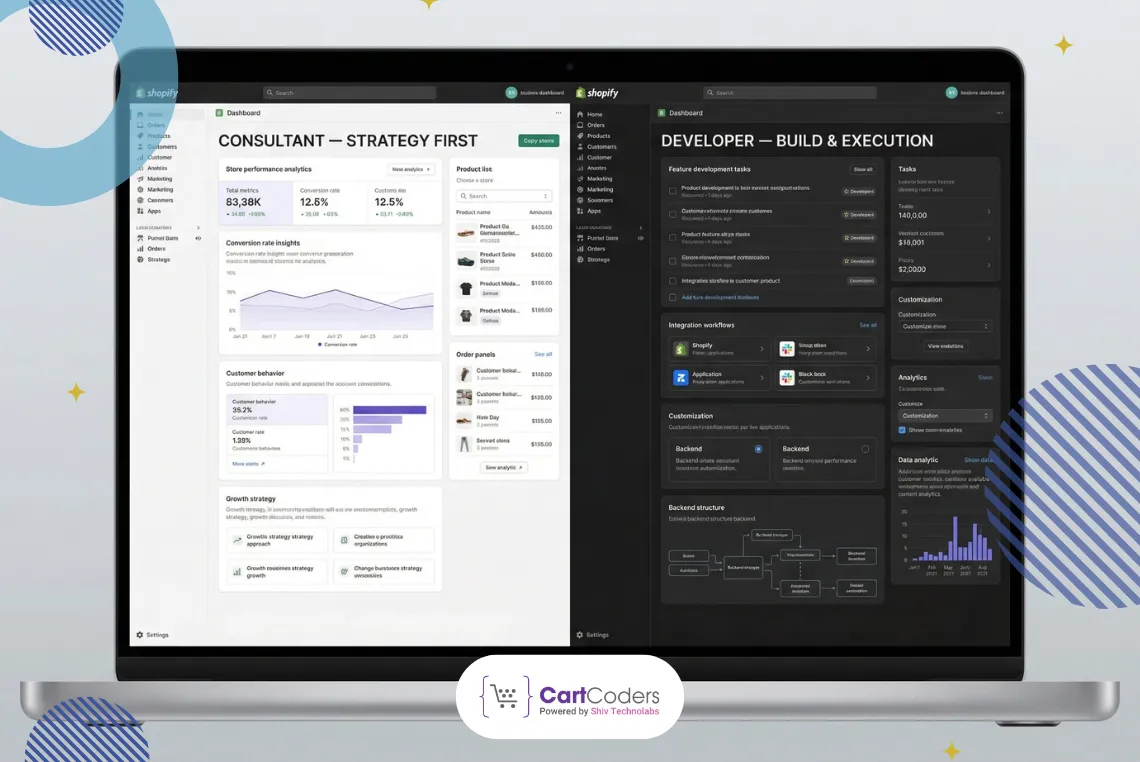
Keeping Strategy In-House and Outsourcing Execution
Your team can decide what clients really require, project mapping, and being in touch all the time. They own quality assurance and make sure everything aligns with expectations. The outside developers build what your team planned. This split keeps you close to clients while letting you scale the heavy lifting. You maintain relationships and strategic control without getting buried in code. Clients see your team leading everything, which protects your reputation and margins.
Using Outsourced Teams for Overflow and Specialized Work
Sometimes three big projects land the same week. Other times you need a developer who knows a specific framework your team doesn’t. Outside partners absorb these spikes without you scrambling to hire. They bring specialized skills for one-off needs. When things calm down, you’re not stuck with extra people. This flexibility turns what would be crises into smooth operations. Your delivering remains the same no matter what hits you.
Long-Term Partner vs Project-Based Outsourcing
The same outside team over and over again would be more effective than contracting various firms on different projects. A long-term partner learns how you work, what quality means to you, and how your clients think. They become an extension of your agency, rather than strangers you manage. Communication gets faster, quality stays consistent, and you waste less time explaining things. Project-based relationships mean starting over constantly, while partnerships build momentum and trust that improve results over time.
How Agencies Decide the Right Model
The right choice depends on several practical factors. Here’s what matters most when agencies evaluate which delivery model fits their situation best.
Project Volume and Predictability
Look at your project pipeline over the past year. Does it stay roughly the same, or does it swing wildly? Consistent work supports keeping developers on staff because you’ll use them fully. When volumes bounce around, you’ll either have people sitting idle or scrambling to meet demand. Outsourcing handles unpredictable patterns better because capacity adjusts to match what’s actually happening instead of what you hoped would happen.
Budget Flexibility
Fixed salaries eat your budget whether you’re profitable that month or not. If cash flow varies or margins are tight, those commitments hurt. Outsourcing converts fixed costs into variable ones that move with revenue. You spend money when you’re making money. This flexibility matters, especially for smaller agencies or those in growth mode where every dollar counts. It’s the difference between surviving slow periods and sweating every payroll.
Delivery Timelines
When clients want something fast, your internal team might already be booked. Outside teams can jump in immediately because they maintain extra capacity across their developers. They ramp up new projects quicker than you can reassign people or hire. If speed matters to your competitive edge or client satisfaction, outsourcing gives you an advantage. Your timelines focus more on project complexity than on resource availability, which clients appreciate.
Internal Technical Leadership
Having a strong technical lead changes everything about outsourcing. They can properly evaluate outside work, communicate requirements clearly, and spot problems early. Without this, you’re flying blind and quality suffers. If your agency lacks technical depth internally, outsourcing becomes riskier. But with good leadership, outside teams become force multipliers instead of question marks. The right person internally makes external partnerships actually work well.
Growth Goals for the Next 12–24 Months
Where do you want to be in two years? If you’re planning aggressive expansion, hiring your way there takes forever and ties up capital. Outsourcing lets you grow revenue without proportional growth in expenses or management complexity. Conservative growth might justify building internal teams slowly. But ambitious targets usually demand flexible delivery models that scale faster than hiring possibly could. Your growth timeline should heavily influence this decision.
Conclusion
No one delivery model works for every agency. The choice between in-house vs outsourced web development depends on how steady your workload is, how your budget works, what you promise clients, and your growth plans. Many agencies win by combining the two approaches in innovative ways.
For agencies looking to scale web projects without hiring developers, CartCoders offers reliable white-label website development services tailored for agencies. With expertise across Shopify, Magento, and custom ecommerce platforms, CartCoders enables agencies to grow faster, deliver consistently, and protect margins.
Frequently Asked Questions (FAQs)
Should marketing agencies outsource web development?
Yes. Outsourcing allows marketing agencies to focus on strategy while ensuring reliable technical delivery.
Does outsourcing web development reduce agency costs?
In most cases, yes. It reduces fixed expenses, hiring costs, and idle resource waste.
Can agencies maintain quality with outsourced developers?
Yes, with experienced white-label partners and clear quality standards.
How do agencies manage deadlines with external teams?
Clear timelines, shared tools, and regular communication ensure alignment.
Is a hybrid model better than choosing one approach?
For most growing agencies, hybrid models offer the best balance.
How long does it take to switch from in-house to outsourcing?
Typically between 1–3 months, depending on documentation and onboarding.
As the CTO at Shiv Technolabs & CartCoders, I am liable for instigating, planning, integrating, and implementing the organization's strategic orientation.
I gather the most significant tech news in addition to sharing the information I gained while serving as the CTO of Shiv Technolabs, a renowned web and mobile app development company. I am pleased to answer questions as a most valuable expert for Shiv Technolabs Private Limited and to share my experience. I offer a keen insider's perspective on technical advancements.
 eCommerce
Solution
eCommerce
Solution








 INDIA
INDIA


 USA
USA
 CANADA
 AUSTRALIA