
White-label web design for eCommerce has become a practical choice for agencies that want to deliver online stores without building everything in-house. As client demand grows for Shopify stores, redesigns, and conversion-focused layouts, many agencies face the same challenge—limited design capacity, rising hiring costs, and tight delivery timelines.
This is where white-label eCommerce web design fits in. It allows agencies to offer store design and build services under their own brand while a specialized partner handles the execution quietly in the background. Your clients see your agency, your process, and your delivery—without knowing a third-party team is involved.


In this guide, we break down how white-label web design works in eCommerce, who it is meant for, what services are included, and how agencies use it to scale without increasing internal overhead. We also cover common risks, pricing models, platform considerations, and what to look for in a long-term white-label partner.
What White Label Web Design Means in eCommerce?
White-label web design in eCommerce is a service model where an external design and build team creates online stores under your agency’s brand name. Your clients never see or interact with the delivery team. From their point of view, everything—communication, timelines, design output, and support—comes from your agency.
In simple terms, you sell eCommerce web design, and a white-label partner does the work quietly in the background.
This model is different from casual outsourcing. In white-label projects, the delivery team follows your brand tone, your workflows, and your client standards. Emails, files, staging links, and documentation can all be shared using your agency identity.
White Label vs Traditional Outsourcing
Many agencies confuse white-label web design services with regular outsourcing, but the intent and structure are not the same.
With traditional outsourcing:
- The external team may be visible
- Clients sometimes interact directly with developers or designers
- Brand control is limited
With white-label web design:
- Your agency stays fully client-facing
- The partner team remains invisible
- Brand ownership stays with you
White-label is built for agencies that care about long-term client trust and repeat business.
White Label vs Referral or Reseller Models
Another common comparison is between white-label services and referral-based models.
In referral or reseller setups:
- You pass the client to another company
- That company owns delivery, and often the relationship
- Your role ends after the introduction
In white-label eCommerce web design:
- You keep full control of the client
- You manage scope, pricing, and timelines
- The white-label team acts as an extension of your agency
For agencies that want predictable revenue and brand consistency, white-label is a more stable option.
Why White Label Fits eCommerce Projects So Well
eCommerce web design is not limited to visuals. It includes product structure, navigation logic, mobile layouts, cart flow, and checkout clarity. These areas require focused experience, especially on platforms like Shopify and Shopify Plus.
White-label partners who work only on eCommerce design already understand:
- Store layout patterns that users expect
- Common mistakes that hurt cart and checkout flow
- Platform-specific design limits and best practices
This allows agencies to deliver reliable results without building deep platform expertise in-house.
Who Uses White Label eCommerce Web Design (and Why)?
White-label eCommerce web design is not limited to one type of business. It is used by agencies and service providers that sell eCommerce solutions but want to avoid the cost, risk, and management effort of building an internal design team.
Below are the most common users of white-label eCommerce web design and the reasons it works for them.
Digital Marketing Agencies
Marketing agencies often manage SEO, paid ads, email campaigns, and content for eCommerce brands. Clients frequently ask the same question:
“Can you also design or redesign our store?”
White-label web design allows marketing agencies to say yes without changing their core business model. They can offer Shopify store design as an added service while staying focused on growth, campaigns, and reporting.
Shopify-Focused Agencies
Agencies that already work with Shopify often reach a capacity limit. New projects come in while existing clients need redesigns, updates, or landing pages.
White-label support helps these agencies:
- Handle more stores at the same time
- Meet tight launch deadlines
- Avoid turning away paid projects
Instead of hiring designers for short-term demand, agencies use white-label teams as flexible support.
eCommerce Consultants and Strategy Firms
eCommerce consultants help brands plan store structure, user flow, and product organization, but execution is not always their strength.
White-label design allows consultants to:
- Offer full delivery after strategy approval
- Keep control over client communication
- Avoid managing designers directly
Clients prefer one accountable partner instead of multiple vendors.
B2B Service Providers and Product Companies
Some B2B companies build portals or platforms that include ordering, pricing rules, or wholesale flows. These projects still need a clean storefront design.
White-label web design helps B2B teams add eCommerce UI without creating a permanent design department.
Growing Agencies That Want to Scale Safely
Many agencies hit a growth point where demand increases faster than team size. Hiring too early increases cost. Hiring too late causes delivery delays.
White-label eCommerce design provides:
- Immediate delivery capacity
- Lower fixed costs
- Easier scaling during busy months
Agencies can grow without locking themselves into long-term payroll commitments.
Sell eCommerce Web Design Without Building a Team
Handle more Shopify projects while we manage design and store build work quietly.


What’s Included in White Label eCommerce Web Design Services?
White-label eCommerce web design covers more than visual styling. It includes page structure, store flow, mobile behavior, and platform-ready layouts that support real buying actions. Agencies should know exactly what is included before offering these services to clients.
Below is a clear breakdown of what agencies usually receive as part of white-label eCommerce web design.
Store Design by Page Type
Most white-label projects include design and build support for key store pages:
- Homepage: The layout focused on products, categories, trust elements, and clear actions.
- Collection or Category Pages: Clean product listing, filters, sorting logic, and navigation clarity.
- Product Detail Pages: Product images, pricing layout, variant selection, reviews, and shipping details.
- Cart and Checkout Pages: Simple structure that reduces confusion and helps users complete orders.
- Content Pages: About, contact, policy, and help pages are styled to match the store.
eCommerce UI Blocks and Components
White-label teams usually handle reusable UI sections that appear across the store:
- Header and navigation menus
- Search bar and results layout
- Product filters and sorting blocks
- Image galleries and thumbnails
- Review sections and trust badges
- Promotional banners and CTAs
These components are built once and reused consistently across the store.
Mobile-First Design Support
Mobile traffic makes up a large share of eCommerce visits, so white-label design always considers mobile behavior.
This includes:
- Clear tap targets
- Easy-to-use menus
- Sticky add-to-cart buttons
- Simple scrolling layouts
- Readable text without zooming
Agencies should always confirm that mobile layouts are part of the scope.
Platform-Specific Design Setup
White-label eCommerce design is usually tied to a platform.
Common inclusions:
- Shopify theme setup or customization
- Shopify Plus layout support
- Headless storefront UI support (when required)
- App-compatible layouts
Design decisions are made with platform limits and features in mind to avoid rework later.
Design Revisions and Review Cycles
A proper white-label setup includes:
- Defined revision rounds
- Clear feedback format
- Page-by-page approval flow
This keeps projects on track and avoids endless changes that affect timelines.
Quality Checks Before Delivery
Before handoff, most white-label partners run checks on:
- Page layout consistency
- Mobile responsiveness
- Broken links or layout issues
- Form and cart behavior
Final review is done by the agency before anything reaches the client.
Typical Deliverables Agencies Receive
Depending on the project, deliverables may include:
- Live store or staging link
- Theme files or access
- Design files (if agreed)
- Set up notes or usage instructions
Ownership and access are always defined upfront.
The White Label eCommerce Web Design Process (Step-by-Step)
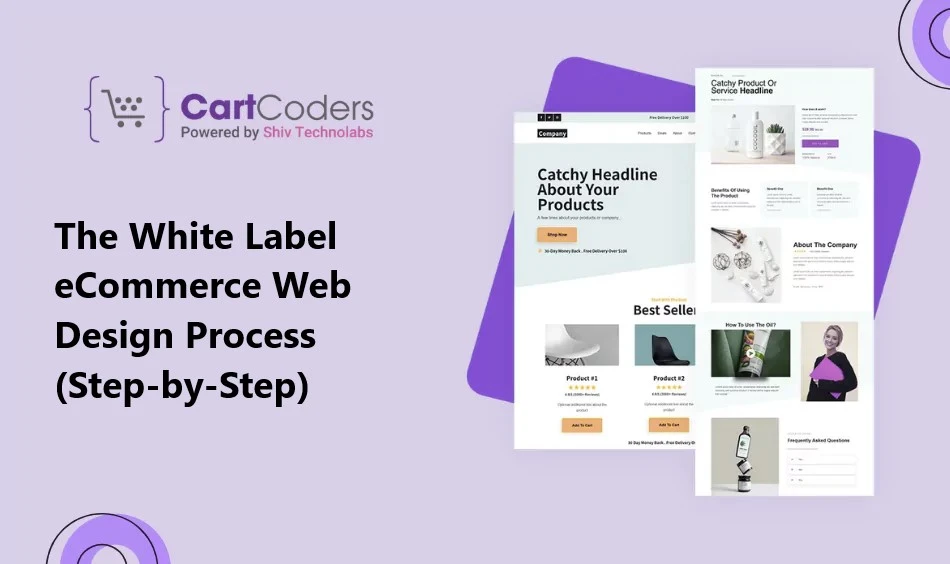
White-label eCommerce web design works best when the process is clear from the start. Agencies stay in control of the client, while the delivery partner follows a defined workflow to avoid delays, confusion, or rework.
Below is a step-by-step breakdown of how most white-label eCommerce projects move from start to finish.
Step 1: Client Intake and Requirement Sharing
The process begins with your agency. You collect all client inputs before involving the white-label Shopify team.
This usually includes:
- Brand assets (logo, colors, fonts)
- Store references or competitor examples
- Platform choice (Shopify, Shopify Plus, etc.)
- Page list and feature needs
- Timeline and priority notes
Clear inputs at this stage prevent repeated revisions later.
Step 2: Layout Planning or Wireframes
Based on project size, one of two approaches is used:
- Direct layout planning for smaller or standard stores
- Wireframes for complex stores, B2B flows, or large catalogs
This step focuses on structure rather than visuals, helping everyone agree on page flow early.
Step 3: Design Execution and Review
Once the structure is approved, the white-label team designs the pages based on:
- Brand guidelines
- Platform limits
- Store goals
Designs are shared with your agency for review. You collect feedback, filter it, and pass it back in one clear round. This keeps communication clean and controlled.
Step 4: Store Build and Theme Setup
After design approval, the build phase begins.
This may include:
- Theme setup or customization
- Page creation and layout setup
- App-compatible sections
- Mobile adjustments
The store is built on a staging environment so your agency can review safely.
Step 5: Testing and Quality Checks
Before client delivery, the white-label team runs checks on:
- Page layout across devices
- Navigation and links
- Cart and checkout behavior
- Forms and basic store actions
Any issues are resolved before the final review.
Step 6: Agency Review and Client Delivery
Your agency reviews the final store, confirms everything matches the agreed scope, and then shares it with the client under your brand.
You decide:
- When the client sees the work
- How feedback is handled
- What changes are approved
Step 7: Handoff or Ongoing Support
After launch, agencies choose between:
- One-time project closure with documentation
- Ongoing design support for updates or new pages
This flexibility makes white-label design suitable for both short projects and long-term clients.
White Label eCommerce Web Design Partner for Agencies – CartCoders
CartCoders works as a quiet delivery partner for agencies that sell eCommerce web design but don’t want the cost or risk of building everything in-house. We operate fully under your brand, follow your process, and stay invisible to your clients.
Why Agencies Choose CartCoders
- Shopify-focused teams with real eCommerce experience
- Predictable timelines and clean handoff
- Flexible models: per project or ongoing support
- No hiring delays or long-term payroll pressure
- One point of contact for smooth coordination
Our goal is simple: help your agency deliver more eCommerce projects without stretching your internal team.
Want to add white-label eCommerce web design under your agency brand? Contact CartCoders and start delivery without changing how your agency operates.
Conclusion
White-label web design for eCommerce gives agencies a practical way to grow without adding delivery pressure. Instead of hiring designers, managing workloads, or turning down projects, agencies can rely on a trusted partner to handle store design and build behind the scenes.
This model works because it keeps ownership where it matters. You manage the client, control pricing, and protect your brand, while the white-label team focuses on execution. With the right process and clear scope, agencies deliver consistent eCommerce results without stretching internal teams.
For agencies working with Shopify and eCommerce brands, white-label web design is not a shortcut. It is a structured way to handle demand, protect margins, and maintain client trust.
CartCoders supports agencies as a long-term white-label partner for eCommerce web design, helping you deliver stores under your own brand without hiring or delivery bottlenecks.
FAQs
White-label web design for eCommerce is a service where an external team designs and builds online stores under your agency’s brand. Your clients only see your agency, not the delivery partner.
In white-label projects, your agency stays fully client-facing and owns communication, pricing, and delivery. The partner team works quietly in the background and never interacts with your client.
Yes. Many agencies use white-label partners to deliver Shopify and Shopify Plus store design while keeping their own branding, workflows, and client relationships.
In most white-label setups, the agency receives full access to the store and agreed design assets. Ownership terms are defined before the project starts.
Yes. It helps small agencies offer full eCommerce design services without hiring designers or managing long-term delivery costs.
Agencies typically add their margin on top of the white-label cost and sell the service as their own, using fixed pricing, monthly support, or project-based models.


