Building an online store involves more than just picking a template and uploading pictures. It is about creating a space where visitors feel comfortable and confident enough to make a purchase.
For a new business owner, the Shopify ecosystem provides the tools needed to build a professional site without requiring deep coding knowledge.
When you start, the focus should be on clarity and function. A flashy website that is hard to use will always perform worse than a simple, clean site that helps customers find what they need.


This guide outlines the path to a successful setup, focusing on the core elements that turn a basic theme into a high-performing storefront.
Essential Tips for Theme Configuration
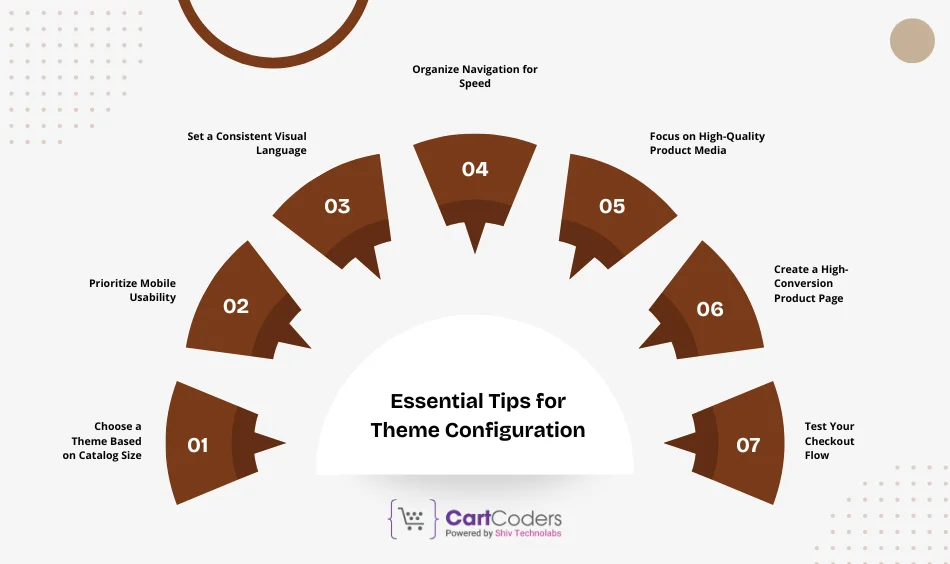
Once you have selected a base template, the following steps will help you customize the layout to match your specific business goals. Focus on these core areas to build a store that is both visually appealing and functionally sound for every visitor.
Choose a Theme Based on Catalog Size
Many new store owners pick a theme because they like the demo images, but the structure of the theme is what matters. If you have five products, a theme designed for a large department store will make your site look empty.
Conversely, if you have a thousand items, a minimalist theme will make it impossible for customers to filter through your stock. Look at the collection page layouts specifically to see how they handle your volume of inventory.
Prioritize Mobile Usability
Most online shopping happens on phones. While you will likely build your site on a laptop, you must check the mobile preview every time you make a change. Large images can slow down mobile loading, and small buttons can be hard to tap.
Ensure that the most important information, like the price and the Add to Cart button, appears early on the screen so users don’t have to scroll forever.
Set a Consistent Visual Language
Consistency builds professional credibility. In the theme settings, define your brand colors and stick to them. Use one color for buttons (your action color) and a neutral palette for backgrounds.
For fonts, choose one for headings and one for body text. Avoid thin or light-colored fonts that are difficult to read against your background. If a customer struggles to read your text, they will leave.
Organize Navigation for Speed
The goal of your menu is to get people to a product page in as few clicks as possible. Avoid using creative or vague names for your menu items.
Instead of Our Universe, use About Us. Instead of Treasures, use Shop All. Use the footer menu for legal pages, tracking links, and social media icons so the top header remains clean and focused on sales.
Focus on High-Quality Product Media
Since customers cannot touch your products, your photos have to do the work. Use a consistent aspect ratio (like 1:1 square) for all product photos so your collection pages look neat.
Include at least one lifestyle shot to show the product in context and one macro shot to show texture or detail. If your theme supports video, a five-second clip of the product in motion can significantly increase trust.
Create a High-Conversion Product Page
The product page is the most important part of your site. Keep the product title and price near the top. Use bullet points for descriptions to make them easy to scan.
If you have different sizes or colors, ensure the images change when a customer selects a different variant. This prevents confusion and reduces the likelihood of returns.
Test Your Checkout Flow
Nothing hurts a business like a broken checkout. Before you go live, run a test transaction. Check if the shipping rates are calculating correctly and if the taxes are applied based on your location.
Make sure the Thank You page provides clear information on what happens next, such as when the customer should expect a tracking number.
Professional Theme Support
Get expert help for any technical issues or layout changes you need.


Preparing Your Content Assets
Before you even open the theme editor, you should have your assets ready. Trying to write copy and edit images while also learning the Shopify interface leads to mistakes.
- Copywriting for Humans: Write your product descriptions in a way that talks to a person, not a search engine. Focus on how the product solves a problem or improves the buyer’s life. Avoid long paragraphs; use short sentences and bold headers to break up the information.
- Image Optimization: Large image files will make your site sluggish. Use online tools to compress your images before uploading them. While Shopify does some optimization, starting with smaller, web-ready files keeps your site fast, which is a major factor in how search engines rank your store.
- Policy Page: A professional store needs clear policies. Shopify provides templates for Privacy Policies, Terms of Service, and Refund Policies. Customize these to fit your specific business needs. Having these visible in your footer tells customers that you are a legitimate business that follows standard commerce rules.
Technical Considerations for New Stores
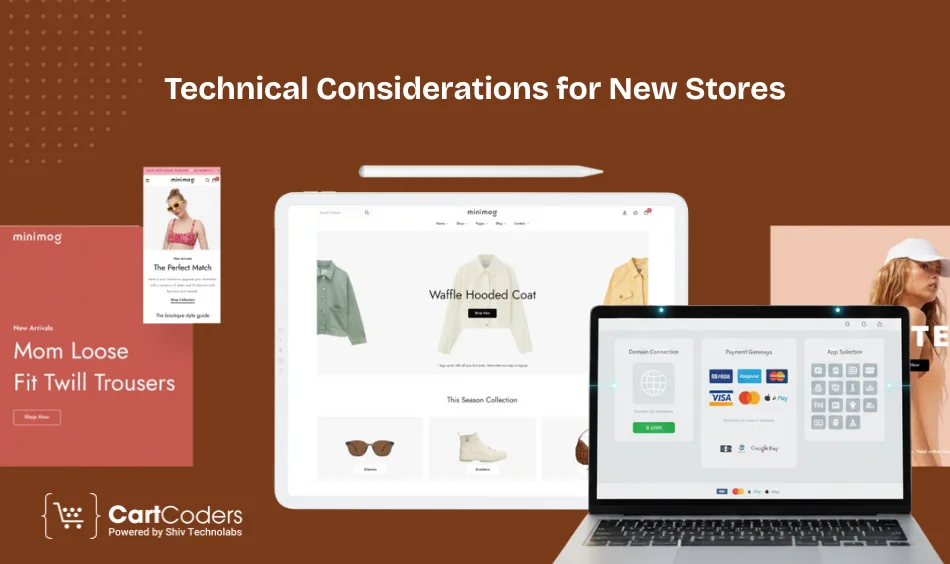
While Shopify handles the hosting, you are responsible for the settings that affect how the site functions for the end user.
- Domain Connection: Using a custom domain (like .com) instead of the default https://www.google.com/search?q=.myshopify.com is vital for brand recognition.
- Payment Gateways: Set up Shopify Payments or a third-party provider early. Ensure you have enabled the payment icons in your footer so customers know which credit cards or digital wallets you accept.
- App Selection: It is tempting to install dozens of apps for pop-ups, timers, and reviews. However, every app adds code to your theme that can slow it down. Start with the bare minimum and only add an app if it solves a specific problem you can’t fix within the theme settings.
Launching and Iterating
Your first theme setup is a starting point, not a final destination. Once the site is live, use the Analytics section in Shopify to see where people are dropping off.
If many people visit the homepage but no one clicks on a product, your hero image might not be clear enough. If people add items to the cart but don’t buy, your shipping costs might be too high.
The beauty of a Shopify theme is that it is flexible. You can change a layout or a color scheme in minutes without starting from scratch. Keep your design simple, focus on the customer experience, and let your products be the star of the show.
The Value of External Feedback
Before you announce your store to the public, it is helpful to have a fresh set of eyes look at your work. A person who has not spent hours staring at the settings will notice things you might have missed.
Ask a friend to try and buy a specific item from your store while you watch. Don’t help them; just observe. If they get stuck on a menu or can’t find the shipping information, you know exactly what needs to be fixed.
This kind of user testing reveals friction points that data alone cannot show. It ensures that when your first real customer arrives, their path to purchase is as smooth as possible.
How CartCoders Simplifies Your Shopify Journey?
Setting up a theme is a great way to start, but sometimes your vision goes beyond the standard settings. This is where professional help makes a difference.
At CartCoders, we specialize in taking the technical weight off your shoulders. Whether you need a custom-built section that your theme doesn’t offer or you want to migrate your existing store from another platform, our team of experts is ready to assist.
We focus on building fast, reliable, and high-converting stores that reflect your brand identity. Instead of spending days trying to fix a layout issue or a coding error, you can focus on what you do best: growing your business.
From custom theme development to technical support, we provide the expertise needed to turn your Shopify store into a professional sales machine.
Conclusion
Setting up your first Shopify theme is a major milestone. By focusing on site speed, mobile usability, and clear navigation, you create a foundation for long-term success. Remember that your website is a living project; you can always adjust and improve as you learn more about your customers.
Take it one step at a time, keep the user experience at the forefront of your decisions, and your storefront will be ready to welcome its first visitors with professionalism and style.
Contact CartCoders today to turn your Shopify theme ideas into a fully functional and high-performing digital storefront.
Frequently Asked Questions
Yes, you can change your theme at any time. When you install a new theme, it stays in your Theme Library as a draft. You can customize it fully without affecting the live store that customers see. Once you are happy with the new look, you simply publish it. However, keep in mind that custom code changes or specific app integrations may need to be moved over manually to the new theme.
No, Shopify is designed for people without coding skills. Most themes use a drag-and-drop editor that lets you move sections, change colors, and upload images with ease. You only need to touch code if you want to make very specific changes that the theme settings do not support. For most new stores, the built-in settings are more than enough.
Less is usually more. A common mistake is trying to show everything at once. Focus on a Featured Collection of 4 to 8 products. This gives the customer a taste of what you offer without overwhelming them. You want to pique their interest so they click through to your collection pages to see more.
Shopify themes use responsive design, which means they automatically move and resize elements to fit the screen they are on. For example, a row of four products on a desktop might become a single column on a phone. This is necessary to make the site usable on small screens. Always check your mobile layout to make sure your most important messages are still visible.


