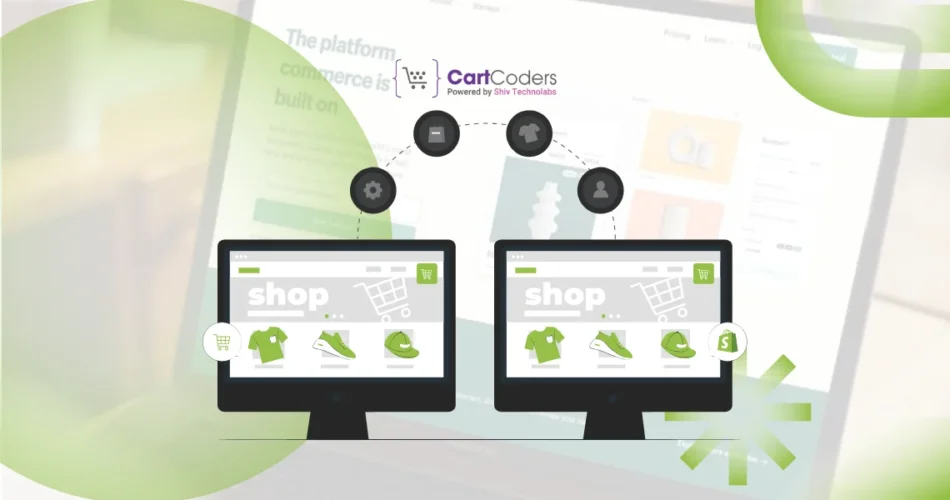
As ecommerce brands grow, they often face bottlenecks in performance, inflexible frontend behaviour, and sluggish release cycles on established platforms such as Magento, Salesforce Commerce Cloud (SFCC) and BigCommerce.
They were designed to support monolithic commerce architectures, with frontend and backend systems closely interconnected, which is why innovation is more difficult and optimisation more challenging. Meanwhile, customer demands have become drastic.
Build High Speed Headless Store On Shopify
CartCoders sets Shopify backend with custom frontend stack.
Google reports a 20% reduction in conversions due to a one-second delay in page load. In the meantime, Statista estimates that global ecommerce sales will exceed the $8 trillion mark by 2027, prompting brands to reconsider performance, flexibility and scalability.
That is why headless Shopify has become the migration option of choice. Decoupling frontend experiences from backend commerce logic enables brands to build storefronts faster, adopt modern development processes and gain greater control over customer experiences.
This guide covers platform-based migration journeys for Magento, Salesforce Commerce Cloud and BigCommerce, data-handling factors and a Shopify headless migration checklist.
What Changes When You Move to Headless Shopify?
Headless Shopify migration is a platform change; it is an architectural change. Understanding what fundamentally changes enables teams to set up migration plans, tools, and internal workflows more effectively.
Separation of Frontend and Commerce Logic
In a headless system, the store’s frontend is not attached to the commerce’s backend. Frontend developers are no longer limited by the rules of backend-rendered themes, unlike the traditional Shopify themes or Magenta templates. This enables autonomous deployments, accelerated iterations and diverse user experiences across web, mobile, and other platforms.
Shopify Admin and Storefront API as the Backend Layer
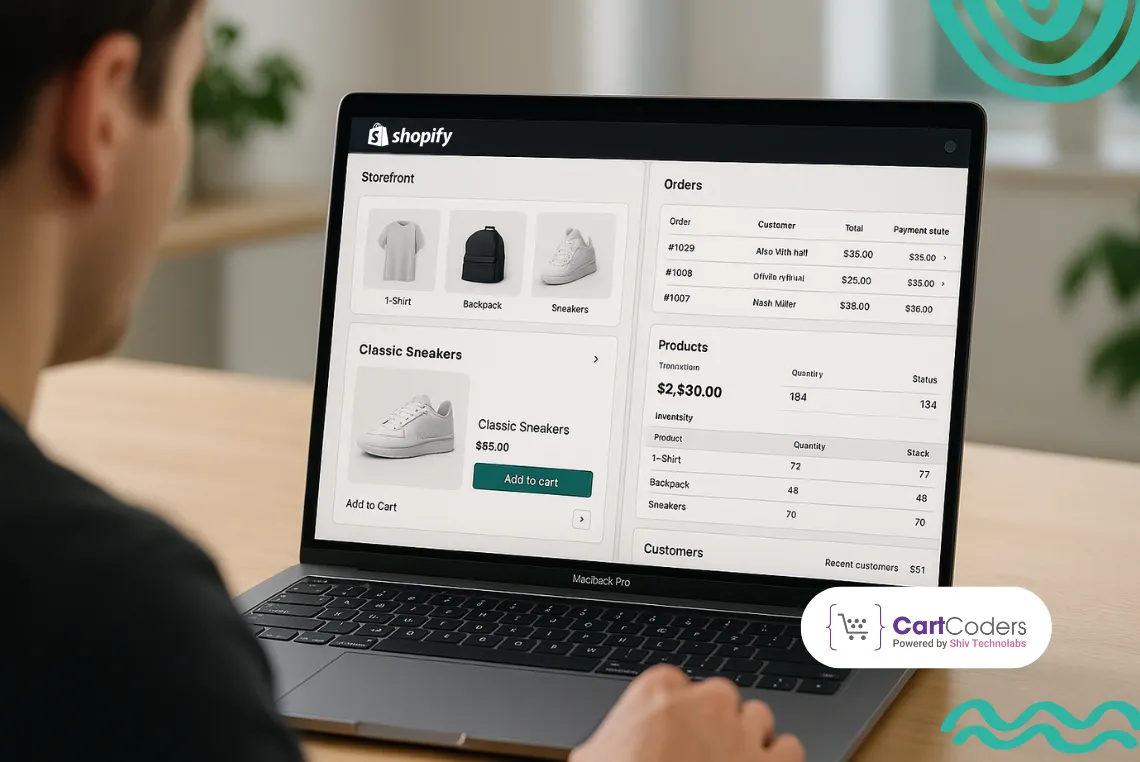
Shopify is turned into a commerce engine as opposed to a templating system.
Admin API manages products, orders, customers, inventory as well as pricing.
Storefront API enables customer-facing commerce functions, such as browsing, carting and initiating a checkout.
This API-first framework is important to scalable headless builds.
Custom Frontend Frameworks
The majority of the headless Shopify storefronts are developed on the basis of modern frameworks including:
Shopify Hydrogen
Next.js
Remix
Vue or custom React stacks
With these frameworks, server-side rendering (SSR), static generation (SSG), and edge deployment can be performed at a high level.
Shopify-Hosted Checkout and Payments
Checkout is Shopify-hosted even in headless mode. This guarantees compliance with PCI, security and reliability at the expense of less development overhead. The customization is done using Shopify checkout extensibility rather than recreating payment logic.
Impact on SEO, Analytics, and Deployment Workflows
Headless Shopify introduces new SEO and analytics considerations. Strategy rendering, URL management, metadata parity and analytics re-implementation should be planned thoroughly. The workflows of deployment also transform to the CI/CD pipelines and environment-driven releases.
Magento to Shopify Migration
Performance problems and complexity of the infrastructure, combined with high maintenance expenses (especially on Magento 2 stores) are some of the most common causes of migration to Shopify.
Magento is highly customizable, and the cost is high. Hosting, caching, indexing, and module conflicts are known to slow down development and create operational overhead. Headless Shopify substitutes this with controlled commerce, back-end and front-end freedom.
Talk To Experts About Shopify Headless Migration
Discuss APIs, frontend stack, and migration flow.
Data Migration Reflections
Magento stores often have complex data models. When migrating Magento 2 to Shopify, normalizing in these teams is required:
Products and build-to-order versions.
Customer records
Order history (often partial)
CMS content and attributes
Magento does not necessarily map data one-to-one, thus this transformation needs to be carried out carefully.
Frontend Rebuild Strategy
Themes in Magento are not reusable. The shopfront will have to be constructed with a headless booby. It is a chance to enhance UX, page speed and eliminate legacies.
SEO and URL Mapping
Magento stores possess heavy URLs. Preserving SEO requires:
301 redirect mapping
Metadata migration
crawl comparison compared to before launching.
When managed properly, brands tend to increase their SEO after the migration.
Salesforce Commerce Cloud to Shopify Migration
Cost, agility and development velocity concerns are the major factors of Salesforce Commerce Cloud to Shopify migration.
Enterprise Architecture Simplification
SFCC is powerful but complex. The process of release is usually based on proprietary tooling and inflexible deployment slots. Shopify Plus has a simplified backend and API extensibility and accelerated the iteration process.
Data and Catalog Migration
Enterprise catalogs have to be planned. Migration usually involves:
Product catalogs that have several price books.
Customer segmentation
Promotions and discounts
Order data where required
Not every SFCC can be map-read, so workflows have to be re-engineered.
Custom Logic and Integrations
The SFCC stores usually depend on bespoke pipelines and integrations. They are re-implemented on headless Shopify using APIs, webhooks and middleware services.
Governance and Security
Shopify Plus supports enterprise-level security while reducing infrastructure load compared to the infrastructure-intensive SFCC model.
BigCommerce to Shopify Migration
Moving to Shopify is typically done by big brands that require a more robust ecosystem and a headless, flexible approach.
Although BigCommerce has been shown to support headless architecture, most brands experience a lack of control over the checkout process, the depth of the ecosystem and scale over the long term. The maturity of the API and partner ecosystem of Shopify can easily favor one side.
Data migration between BigCommerce and Shopify often includes products, customers and selected orders. Historical order migration is not always used to its full extent due to the risks and complexity involved.
Top Shopify Headless Migration Checklist to Follow
The Shopify headless migration checklist is a well-organised plan that ensures nothing critical is overlooked before rolling out.
Backend and Store Setup
Shopify store configuration
Admin API and Storefront API access
Shopify Markets and localization setup
Payment and tax configuration
Frontend and API Layer
Storefront API schema planning
Cart and checkout integration
Customer authentication flow
Search and filtering logic
CMS or content integration
SEO and Analytics Readiness
Redirect validation and crawl testing.
Metadata parity checks
Conversion tracking and GA4 set up.
Rendering strategy selection RS vs SSG
Performance and Security
Edge caching and CDN configuration.
API rate-limit handling
Logging and monitoring of errors.
Must-Follow Testing and Go-Live Strategy for Seamless Migration
Headless Shopify migration passes testing and moves to the go-live stage. A well-developed backend and frontend may cost the company revenue if validation is rushed and launch planning is flimsy. An ordered testing and release plan will guarantee accurate data, stable checkout and SEO, and mitigate risk throughout the transition.
Data Accuracy Validation
The integrity of the data across all environments should be verified before launching. This involves ensuring that all migrated entities work as expected in Shopify.
The major validation checks involve:
Title of products, variants, prices and inventory precision.
Collection logic and merchandising rules.
Consistency in tax, currency and localization.
Customer accounts and login functionality
The cost of fixing data discrepancies found after launch is much more costly, particularly when orders have begun to roll.
Checkout and payment testing
The most important business-critical feature of a headless Shopify installation is the checkout process. Although checkout is hosted on Shopify, it should be end-to-end tested with the headless storefront.
Testing should cover:
Cart to checkout handoff
Multiple payment methods
Discount codes and promotions.
Tax and shipping fees.
Failure to pay and re-tries.
This stage will make sure that the revenue does not suffer immediately the traffic is diverted to the new storefront.
Performance and Load Testing
The need to increase speed frequently leads to the implementation of headless architecture, which shall be justified in practice. Performance testing is conducted to ensure the storefront is fast during peak traffic. This phase usually involves:
Page benchmarking of major templates.
API response time measurement.
Stress testing of high congestion conditions.
Cache behavior validation
Bottlenecks are identified in advance of launch to avoid customer experience problems during peak demand.
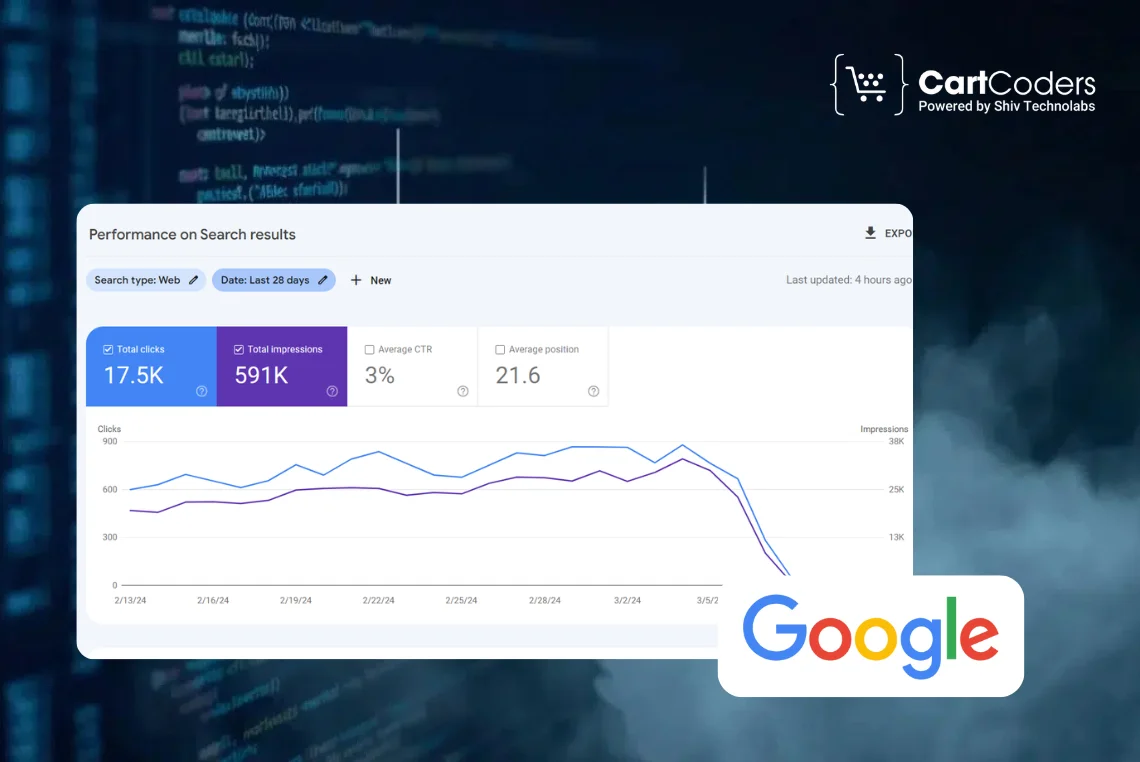
SEO Crawl Comparison Pre and Post Launch
Redirect setup is not all that is needed in SEO protection. A crawl comparison confirmed that search engines treat the new site the same as the old site.
This involves:
Crawling of the legacy site and the headless site.
URL comparison of availability and indexability.
Verifying metadata parity
Monitoring canonical and hreflang signals.
Any potential gaps discovered here are supposed to be corrected before DNS cutover to prevent loss of ranking.
Rollback and Contingency Planning.
Despite extensive testing, unforeseen problems may arise post-launch. A rollback plan ensures the business can roll back safely if needed.
An effective contingency plan consists of:
DNS rollback readiness
Storefront backup availability.
Surveillance of alerts during launch window.
Excellent responsibility on quick solutions.
This strategy reduces idle time and provides the stakeholders with assurance in the process of transition.
Controlled Go-Live Execution
An effective launch is well planned and timed. To minimize risk, many brands opt to use low-traffic windows and rollouts.
Best practices include:
Opening in the low season.
Tracking of orders and logs online.
Technical teams are on standby.
Gradually building up exposure to traffic.
Controlled go-live turns migration into a predictable change of operations into an event that was risky.
Common Migration Mistakes to Avoid
An experienced team can make mistakes that may cost them a lot during migration.
Unnecessary History Data Migration: Moving all the historical orders adds no value and risk.
Ignoring Deep URL Redirects: Redirection may cause loss of traffic and a drop in SEO.
Unnecessarily Rebuilding Checkout Logic: Shopify checkout is to be embraced, not reinvented.
Incomplete Analytics Setup: Performance measurement is not possible once it is lost in the tracking data.
Skipping Phased Rollouts: Big box stores can do with gradual openings as opposed to big bang openings.
Planning a Headless Shopify Migration?
Moving Salesforce Commerce Cloud, Magento, or BigCommerce to a headless Shopify would require more than just data transfer. The design of the architecture, API, search engine optimization, verification of performance and long-term scalability planning contribute to the success of migration.
CartCoders focuses on headless migrations to Shopify that prioritise performance, stability, and growth. Our team is knowledgeable of platform-specific constraints, Storefront API behavior and the SEO risks that can so frequently come to an untidy migration.
Why Brands Choose CartCoders
Experts in Magento, SFCC and BigCommerce migrations.
Headless architecture specialists and Shopify Plus.
Migrations using CartCoders have limited downtime, risk management and quantifiable performance improvements.
Conclusion
The process of migrating away from Magento, Salesforce Commerce Cloud, or BigCommerce to headless Shopify is not a platform modification but a strategic architecture decision. Each platform is associated with its own challenges, which should be addressed with a solid plan, attentive data manipulation, and strict testing.
Only when properly implemented, Headless Shopify supports faster storefronts, flexible frontend experiences, and modern deployment workflows. There is experience where it counts.
CartCoders assists brands in making complicated migrations without hesitation. Our team will deliver long-term performance, scalability, and growth for your headless Shopify migration, from architecture planning to SEO-safe launches.
Frequently Asked Questions (FAQs)
What is the process of migrating between Magento and headless Shopify?
It involves store auditing, data normalization, front-end rebuild, API integration, SEO planning, and pre-launch testing.
Is the migration of Magento 2 to Shopify appropriate when dealing with large catalogs?
Yes, however, variant mapping, product normalization and performance testing should be thought out.
Is Salesforce Commerce Cloud substitutable with Shopify in enterprise stores?
Shopify Plus meets most enterprise requirements, but non-standard workflows need to be reviewed early.
Which are the key processes of BigCommerce to Shopify migration?
The audit, data export, frontend setup, redirect planning, testing and staged deployment.
What is the process of BigCommerce to Shopify data migration?
APIs or scripts are used to migrate products, customers and selected orders.
What can a Shopify headless migration checklist be used to do?
It guarantees the backend’s readiness, the frontend’s stability, SEO safety, and performance validation.
Does Shopify without a head influence SEO?
SEO may gain under the proper conditions of rendering and redirects, yet it may lead to ranking decrease under an improper setup.
Is it possible to do customization of checkout with headless Shopify?
Shopify still hosts checkout, and it is customized using extensions.
What is the average time of headless migration of Shopify?
The timescale depends on the size of the data, the number of integrations and the complexity of the front end.
Does it need historical order data in the course of migration?
Usually not, the majority of brands only have the migrated recent or active order data.
Which APIs are deployed in the process of headless migration in Shopify?
Admin API, backend data and Storefront API, frontend commerce.
In what circumstances should headless Shopify be used?
Where UX is more individualized, like high-traffic stores, or in multi-channel commerce strategies.
As the CTO at Shiv Technolabs & CartCoders, I am liable for instigating, planning, integrating, and implementing the organization's strategic orientation.
I gather the most significant tech news in addition to sharing the information I gained while serving as the CTO of Shiv Technolabs, a renowned web and mobile app development company. I am pleased to answer questions as a most valuable expert for Shiv Technolabs Private Limited and to share my experience. I offer a keen insider's perspective on technical advancements.
 eCommerce
Solution
eCommerce
Solution








 INDIA
INDIA


 USA
USA
 CANADA
 AUSTRALIA