Mobile business in the GCC has changed to a convenience to culture. Shoppers in fashion houses have become accustomed to having everything at the touch of a button: bilingual services, instant payment, and blistering delivery. It is reported that online shopping via mobile devices already constitutes over 50% of all eCommerce transactions in the Middle East, and this figure continues to increase.
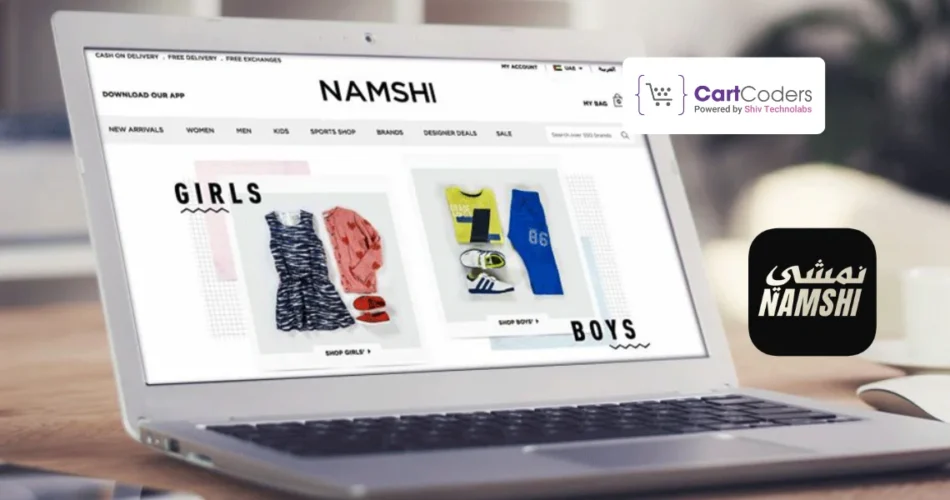
This change is exactly what happened to Namshi. Developing a Namshi-like eCommerce website has made online fashion retail a localized and mobile-first experience, customized to the preferences of the UAE and Saudi Arabia. Namshi did not just sell products; it offered convenience and cultural knowledge through two language interfaces, regional payment options, etc.
Build a Fashion Store Like Namshi
Arabic, RTL, filters, checkout—all included
In this blog, we are going to determine why Namshi is a model of eCommerce success in the GCC, discuss the specific actions that need to be taken to build a similar site, a cost breakdown, and explain how CartCoders can assist your fashion brand to establish the next big online fashion brand in the region.
What Makes Namshi a Benchmark for Fashion eCommerce
Namshi is a unique product; it’s not flashy, but it knows its market. Its design, structure, and integrations are tailored to how GCC users browse, pay, and trust. We shall examine the backgrounds that render Namshi an example to be emulated in the development of eCommerce websites KSA.
User-Focused Design
The user experience of Namshi is designed to be simple. The site has a simple layout, huge imagery, and few texts to ensure easy navigation. Discovery is natural through smart filtering options, which include Shop by Brand, Shop by Category, and Shop by Trend. This usable design is not merely beautiful, but it has a direct influence on the conversion. Customers locate their desired items more quickly, spend more time browsing, and make more purchases.
Dual-Language and Regional Currency
Bilingual functionality is important in the GCC. The Arabic and English versions of Namshi are not translations but complete RTL and LTR designs that naturally flow to each audience. The prices are displayed in AED to UAE customers and SAR to Saudi customers. This generates instant trust and creates a local experience that is not imported.
App and Web Integration
Namshi does not consider its webpage and application as a single product. They are both synchronized such that one can shop with one gadget and process the checkout with another. Cart information, favorites, and order history remain the same both on the web and mobile. The eCommerce application and web integration in the UAE provide a seamless shopping experience, ensuring users are not interrupted during their purchases.
Flexibility in Payments and Deliveries
Namshi is aware of the payment preferences in the region. It provides a combination of Buy Now Pay Later services such as Tabby and Tamara, conventional card payment, and the always popular Cash on Delivery. The deal is closed by fast shipping using regional partners. Namshi cleared the final obstacle to trust and convenience by accommodating how users would like to pay and receive their products.
A combination of these pillars makes Namshi the roadmap of any brand that wants to establish a strong, mobile-first, fashion-oriented eCommerce presence in the GCC.
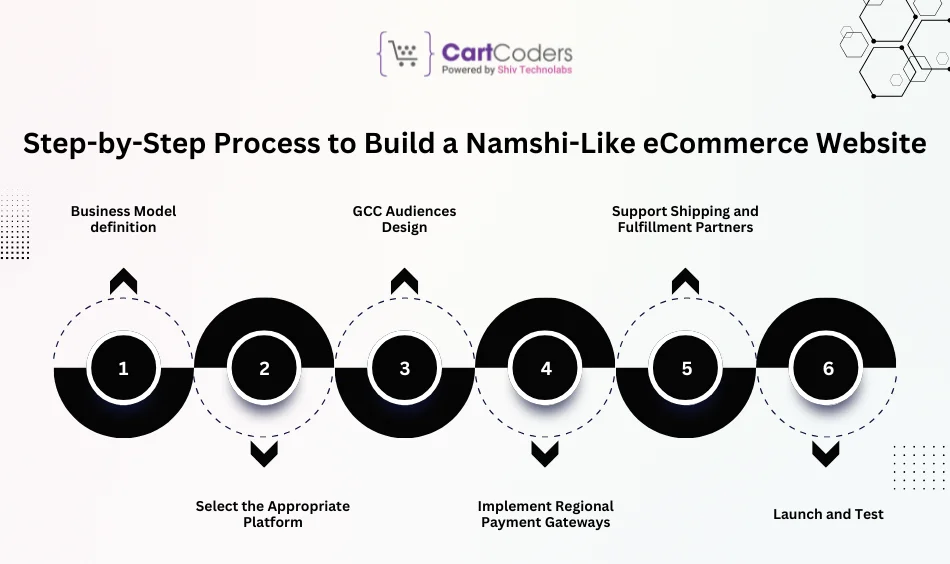
Step-by-Step Process to Build a Namshi-Like eCommerce Website
The development of a Namshi-type eCommerce platform needs to be straightforward, well-planned, and technically accurate. We shall go through the key steps in the development of the eCommerce site.
Step 1: Business Model definition
Start by defining your model. Will you be a B2C brand selling directly to consumers, or a marketplace with several brands and sellers? A good number of successful GCC fashion platforms combine the two, having core inventory and external vendors sell under the same digital roof. This blended model is scalable and diverse without carrying too much inventory.
Step 2: Select the Appropriate Platform
When you have a clear picture of your model, either use Shopify or a custom build. The following is a comparison to make a decision:
Aspect
Shopify
Custom Build
Launch Time
2–3 weeks
6–10 weeks
Customization Level
Medium
High
Maintenance
Low (managed)
Developer-dependent
Scalability
Great for SMEs & mid-size brands
Ideal for enterprise control
Integrations
Built-in app ecosystem
API-driven, fully custom
Cost Range
$3,000–$6,000
$7,000–$12,000
In case of urgent market penetration, Shopify is a perfect solution. Custom development is the best choice for advanced control, integrations, and long-term scaling. We create both at CartCoders, advising clients on the most suitable approach to address their goals and budgets.
Step 3: GCC Audiences Design.
Design will make your store either welcoming or exasperating. Mobile-first layout, sophisticated designs, and easy navigation are what GCC audiences want. Assist RTL in the Arabic language, keep the grids tidy, and highlight groups such as New Arrivals or Shop by Brand. As more than 75% of GCC shoppers shop through their mobiles, mobile responsiveness and light performance should be more important than intricacy.
Step 4: Implement Regional Payment Gateways
The conversion is determined by your checkout experience. Add payment systems that GCC clients are familiar with Tabby, Tamara, Apple Pay, PayFort, and Mada. Cash on Delivery is still significant in KSA. With every extra gateway, it becomes increasingly more credible and flexible, which minimizes the problem of cart abandonment and provides more trust.
Step 5: Support Shipping and Fulfillment Partners
It is necessary to be integrated with trusted shipping APIs. The major logistics partners in the area are Aramex, SMSA, DHL Express, and Fetchr. Such integrations will automate the creation of labels, tracking, and notifications, reducing mistakes and speeding up deliveries, which is essential for fashion consumers concerned with speed.
Step 6: Launch and Test
Test before rolling out. User Acceptance Testing (UAT) in both Arabic and English versions. Test responsiveness on devices and browsers, speed up websites, and conduct an SEO audit. Simulate real-world checkout and make sure your platform complies with your local regulations before launching.
By going through these six steps, you will ensure that your Namshi-like platform not only looks right but also works perfectly with GCC audiences.
Tech Stack for a Namshi-Like eCommerce Website
Behind every high-performing eCommerce platform is a solid technology stack. Here’s what typically powers a Namshi-like setup:
This technology base is a trade-off of scalability, flexibility, and performance. The selection of modern tools, such as React and headless Shopify, will provide quick loading, a clean UI transition, and hassle-free maintenance. At CartCoders, we develop a scalable eCommerce platform for GCC, shaping the digital future in the UAE and globally.
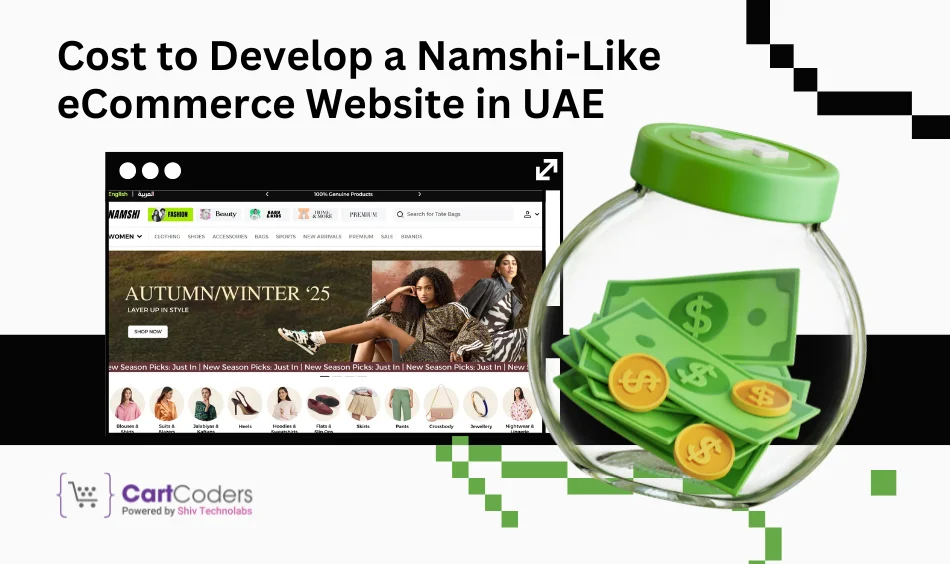
Cost to Develop a Namshi-Like eCommerce Website in UAE
Budgets vary, but the range below gives a realistic snapshot of what a quality GCC-ready eCommerce build costs.
Feature / Phase
Estimated Cost (USD)
UI/UX Design
$1,500 – $3,000
Frontend and Backend Development
$4,000 – $7,000
Payment and Shipping Integrations
$800 – $1,500
QA and Launch
$700 – $1,200
Total Estimated Cost
$7,000 – $12,000
The last cost is based on the scope. A basic Shopify with bare essentials would cost around $7000, whereas the advanced layout in custom code, including all marketplace capabilities and localization, could cost up to $12000 or more. The trick is in the clarity; what needs to be done must be outlined first, and new things added as needed. Knowing how much an eCommerce site will cost to develop in the UAE assists in budgetary planning.
Localization and Compliance Essentials
Your eCommerce site should be local to attract the GCC audiences. Localization refers not only to language but also extends to visuals, pricing, laws, and infrastructure.
Arabic and English (RTL and LTR Layouts)
Provide full bilingual capability to users. Your design in Arabic should not only be an auto-translation but should also be read correctly. Spacing, placement, and menus should be adjusted. The left-to-right nature of English should not be broken by changing the consistency of design.
Multi-Currency (AED and SAR Pricing)
Show currency as of the region AED UAE, SAR KSA. Automated conversion wherever feasible. Clear pricing in the local currency instills confidence and will limit the checkout process.
VAT and Invoice Automation
Both the UAE and KSA have VAT laws that require legitimate invoices. Computerize VAT, use the proper tax rate, and produce compliant electronic invoices. Automation of this step eliminates mistakes in compliance and develops long-term credibility.
Local Hosting for Speed and SEO
Host on the GCC or deploy CDN nodes that serve the UAE and Saudi audiences directly. Hosting locally enhances the speed of the site, user experience, and search visibility because the search engines prefer speedy responses in the region.
Data and Privacy Compliance
Compliance with local legislation on data protection and consumer protection laws is required. Secure storage, clear Arabic and English privacy policies, as well as management of user rights. This not only helps in avoiding legal tussles but also increases consumer confidence.
These localization and compliance requirements ensure that your platform is regionally and operationally sound.
Why Choose CartCoders for Building the Next Namshi for the GCC
CartCoders is a leading eCommerce website development company specializing in various tech stacks like Shopify to develop stunning online store. Now you are aware of the structure. Now comes the execution. Namshi, a type of eCommerce web development, is not only about the use of technology but also about knowledge, local understanding, and the accuracy of implementation. That is what CartCoders is.
Shopify and Custom Builds knowledge
CartCoders has become the best at walking the fine line between Shopify’s breakneck speed and the ability to build tailored frameworks for enterprise control. We guide you through the process of choosing the appropriate model based on the brand’s growth objectives and technical needs.
Want Namshi Features Without Their Stack?
We recreate the experience with custom backend
Target GCC Fashion eCommerce
We have been in the GCC market. Since the bilingual installation up to regional gateways and local compliance, we have developed numerous eCommerce websites for UAE and KSA brands that consistently perform in regional conditions.
Scalable and High-performance architecture
Our growth strategy will ensure that during brand sales, festivities, or the launch of a new brand, your platform can withstand the increase in traffic. Our technologies are tested, fast, reliable, and sustainable.
App and Web Synchronization
The switching of devices is smooth among consumers today. The team responsible for your mobile application and web platform will ensure they are fully integrated with synchronized carts, orders, and user accounts. Such continuity would retain users and keep them loyal.
End-to-End Service Delivery
CartCoders does not simply code, but we plan, design, test, deploy, and maintain. With the concept of continuous optimization, our specialists make your site adapt to your business.
Are you going to create your own Namshi-type eCommerce site? CartCoders today and your UAE or KSA project. We are experts in transforming digital concepts into performing and marketable eCommerce outlets for fashion and retail brands.
Conclusion
The success of a Namshi-style eCommerce site is due to its near-integration with the GCC market. Bilingual design, local payment gateways with trusted assurance, logistics, and easy performance on mobile are not a choice, it is the pillar. The steps of developing the right eCommerce site will ensure that your site provides UAE and KSA shoppers with what they should see on the first day.
We deliver these expectations at CartCoders. Our team creates, develops, and optimizes fashion eCommerce environments that compete with the largest players in UAE. Regardless of your intentions to build a Shopify store or a fully custom eCommerce solution, we can assist you in creating, developing, and launching a store that works not only in terms of appearance but also in terms of business.
CartCoders is your development partner if you want to create the next Namshi-like eCommerce experience in the GCC. Visit us today and start turning your vision into a successful online fashion shop.
As the CTO at Shiv Technolabs & CartCoders, I am liable for instigating, planning, integrating, and implementing the organization's strategic orientation.
I gather the most significant tech news in addition to sharing the information I gained while serving as the CTO of Shiv Technolabs, a renowned web and mobile app development company. I am pleased to answer questions as a most valuable expert for Shiv Technolabs Private Limited and to share my experience. I offer a keen insider's perspective on technical advancements.
 eCommerce
Solution
eCommerce
Solution






 INDIA
INDIA


 USA
USA
 CANADA
 AUSTRALIA