Checkout: payments, taxes, shipping rates, fraud checks, and address rules
Data: SKUs, variants, images, pricing, customer accounts, order history
Integrations: ERP, CRM, OMS, PIM, email, reviews, loyalty, support desk
Tracking: analytics events, ad pixels, conversion values, attribution rules
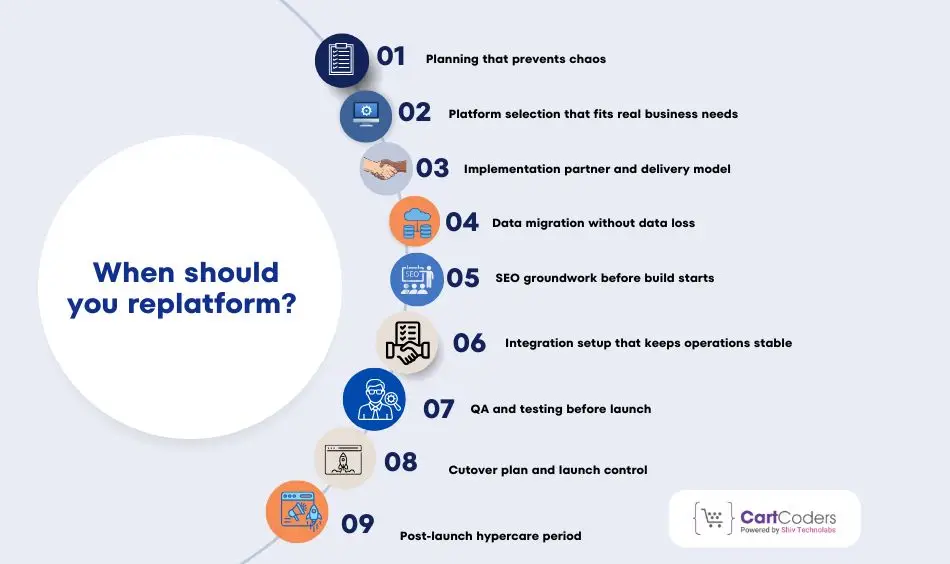
When should you replatform?
Replatforming costs time and focus. Do it when the current platform blocks growth or adds risk.
Use these signals to judge timing.
Clear signs your current platform holds you back
Speed and stability issues:- Pages load slowly, checkout fails, or uptime drops during campaigns. Your team spends time on fixes instead of progress.
Hard limits on catalog and content:- You struggle with large catalogs, complex variants, bundled products, or custom pricing. Your team uses workarounds for simple tasks.
Checkout limits:- You cannot support your payment methods, tax setup, shipping rules, or promo logic. Small changes take weeks.
Integration pain:- Your ERP, CRM, or OMS sync breaks. Inventory shows wrong counts. Orders get stuck. Support tickets spike.
High total cost of running the store:- You pay for many add-ons, custom patches, and agency fixes. The platform bill is only one part of the spend.
When a fix beats a full move
Sometimes you can avoid a platform change.
You only need a new theme and better content structure
You need app cleanup and tighter tracking
You need better hosting, caching, or CDN setup
You need process changes in merchandising and QA
If those fixes solve the root issue, hold the move. If core limits remain, plan a replatform.
Define success before you touch data
Teams fail when they start with tasks instead of outcomes. Set targets first, then plan work.
Pick KPIs by team
Marketing
Organic sessions to top landing pages
Conversion rate by channel
Paid tracking accuracy and ROAS confidence
Merchandising
Time to launch products and promos
Search and filter usage
Add-to-cart rate on key categories
Operations
Inventory accuracy across locations
Order routing success rate
Refund and return cycle time
Customer support
Checkout-related tickets
“Where is my order” volume
Account login success rate
Tech
Release frequency
Critical bug rate
Site speed scores and error logs
Create a baseline
Pull numbers from the last 60–90 days. Use a stable period, not peak season only. You will compare post-launch results against this baseline. That keeps the project honest.
Phase 1: Planning that prevents chaos
Planning decides the result. It protects timelines, SEO, and customer trust.
Build the right team and roles
Assign owners early. Put names on tasks, not job titles.
This register becomes your launch checklist later.
Phase 2: Platform selection that fits real business needs
Platform choice shapes every future decision. A poor fit creates workarounds. A strong fit reduces daily friction.
Start with requirements, not brand names.
Define requirements in plain terms
Split requirements into three groups. Keep wording simple and testable.
Must-have
Catalog size support and variant rules
Checkout flow control
Payment and tax support for your regions
Inventory sync with your core system
Basic SEO control (URLs, metadata, redirects)
Nice-to-have
Built-in search and filters
Content editing without dev help
Promotion rules and bundles
Multi-store or multi-currency support
Future needs
New regions or brands
B2B pricing and accounts
Headless or API-first builds
Advanced reporting
Write each item as a result, not a feature. Example: “Merch team can schedule promos without code.”
Compare platforms using real scenarios
Avoid generic comparison charts. Use your own store cases.
Test these scenarios with each platform:
Add a product with complex variants
Run a site-wide discount with exclusions
Handle partial refunds and exchanges
Sync inventory across two locations
Edit a landing page tied to ads
Ask vendors to show these flows live. Demos reveal limits fast.
Check ecosystem depth
Most stores depend on add-ons. The platform should support your stack.
Review:
Payment gateways and fraud tools
Tax and shipping providers
ERP, CRM, OMS connectors
Email and SMS tools
Review and loyalty systems
Check update history and support quality. An add-on that breaks often becomes a hidden cost.
Decide build approach early
Your build style affects speed and cost.
Common approaches:
Theme-based build with light custom work
Custom storefront with platform APIs
Hybrid setup with custom PDPs only
Match approach to team skills and roadmap. Avoid overbuilding on day one.
Phase 3: Implementation partner and delivery model
Many teams need outside help. Choose carefully.
When to bring an implementation partner
Use a partner if:
You lack in-house platform experience
You run complex integrations
You face a fixed launch window
You need parallel workstreams
If your team knows the platform well, keep work internal. Control stays higher that way.
How to evaluate partners
Look beyond case studies.
Ask about:
Similar store size and region
Data migration experience
SEO-safe launch history
Post-launch support model
QA and testing process
Request references tied to replatforming, not just design.
Set clear delivery rules
Define how work moves from idea to live.
Agree on:
Sprint length and demo cadence
Change request process
Bug severity levels
Launch freeze window
Ownership after go-live
Clarity here prevents late surprises.
Phase 4: Data migration without data loss
Data issues cause the most stress. Treat migration as a product, not a task.
Map data before moving anything
Create a mapping document.
For each data type, define:
Source field
Target field
Format rules
Required or optional
Default values
Cover:
Products and variants
Images and media
Categories and attributes
Customers and addresses
Orders, refunds, returns
Clean data at the source when possible. Bad data moved faster stays bad.
Decide what to migrate
You do not need everything.
Common choices:
All products and active variants
Customers from last 2–5 years
Orders from last 1–3 years
Archive older orders outside the store
Balance reporting needs with performance and cost.
Plan migration runs
Never migrate once.
Use three runs:
Test run to validate mapping
QA run to check counts and logic
Final run close to launch
After each run, reconcile numbers.
Check:
Product counts
Variant counts
Customer totals
Order totals
Inventory levels
Fix gaps before the next run.
Handle customer accounts with care
Passwords often cannot move between platforms.
Prepare a reset plan:
Clear messaging
Simple reset flow
Support scripts for issues
This step affects trust. Plan it early.
Phase 5: SEO groundwork before build starts
SEO protection starts before design work.
Capture an SEO baseline
Export:
Top pages by traffic
Top queries and landing pages
Backlinked URLs
Index coverage status
Save this snapshot. You will compare after launch.
Create a URL mapping file
List every existing URL.
For each one:
New URL destination
Redirect type
Status check
Aim for one-to-one mapping. Avoid chains and loops.
Flag risky changes
Mark pages with:
High traffic
Strong links
Revenue impact
Protect these pages first. Design around them if needed.
Phase 6: Integration setup that keeps operations stable
Integrations move money, stock, and customer data. One break can stop orders.
Treat integrations as core features, not add-ons.
List all live data flows
Use a simple flow view. Start from order placement.
Track how data moves:
Cart → checkout → payment
Order → ERP or OMS
Inventory → storefront
Fulfillment → customer email
Refund → payment gateway → accounting
This view shows hidden gaps early.
Payments and checkout flows
Checkout issues cause instant revenue loss. Test deeply.
Cover:
All payment methods
Authorization and capture rules
Partial refunds and exchanges
Failed payment retries
Fraud checks and holds
Test with real cards in sandbox and live modes. Do not rely on happy-path tests only.
Tax and shipping logic
Tax errors create compliance risk. Shipping errors cause support load.
Validate:
Tax rules by region
Exemptions and overrides
Shipping zones and rates
Carrier label creation
Tracking updates back to the store
Run test orders for every region you sell to.
ERP, CRM, and OMS sync
These systems drive fulfillment and reporting.
Confirm:
Order push timing
Inventory sync frequency
Status updates and cancellations
Returns and refunds flow
Error handling and retries
Log failures clearly. Silent errors cause damage.
Phase 7: QA and testing before launch
Testing prevents chaos at launch. Plan it in layers.
Build a full test plan
Cover all roles.
Functional tests
Browse, search, filter
Add to cart and checkout
Account creation and login
Order confirmation emails
Regression tests
Existing features after each change
Core flows after app updates
Load tests
Traffic spikes
Concurrent checkouts
Search response time
Security tests
Admin access rules
Payment handling
Data exposure risks
Test analytics and tracking
Tracking issues hide problems.
Verify:
Page view events
Add-to-cart events
Checkout steps
Purchase and revenue values
Ad platform signals
Match numbers with test orders. Fix gaps before launch.
Content and UX checks
Review every page type.
Check:
Images and media
Pricing display
Filters and sorting
Mobile layout
Error messages
Use real devices. Desktop checks alone miss issues.
User acceptance sign-off
Define clear rules.
Each team signs off on:
Their KPIs
Their workflows
Known gaps with acceptance
No sign-off means no launch.
Phase 8: Cutover plan and launch control
Launch day needs a script. Avoid last-minute decisions.
Prepare for cutover
Before launch:
Freeze content and catalog changes
Pause non-critical jobs
Final data sync
Lower DNS TTL
Confirm certificates and CDN rules
Share a launch timeline with owners and times.
Execute launch steps
Follow the order.
Typical flow:
Switch storefront traffic
Run smoke tests
Place real orders
Confirm payment capture
Check order sync and emails
Log every result. Do not assume success.
Keep a rollback plan ready
Know when to roll back.
Define:
Failure triggers
Rollback steps
Decision owner
Communication plan
A clear rollback plan reduces panic.
Phase 9: Post-launch hypercare period
The first weeks matter most.
Monitor daily signals
Track:
Order volume
Payment success rate
Inventory accuracy
Page speed
Error logs
Review dashboards twice a day at first.
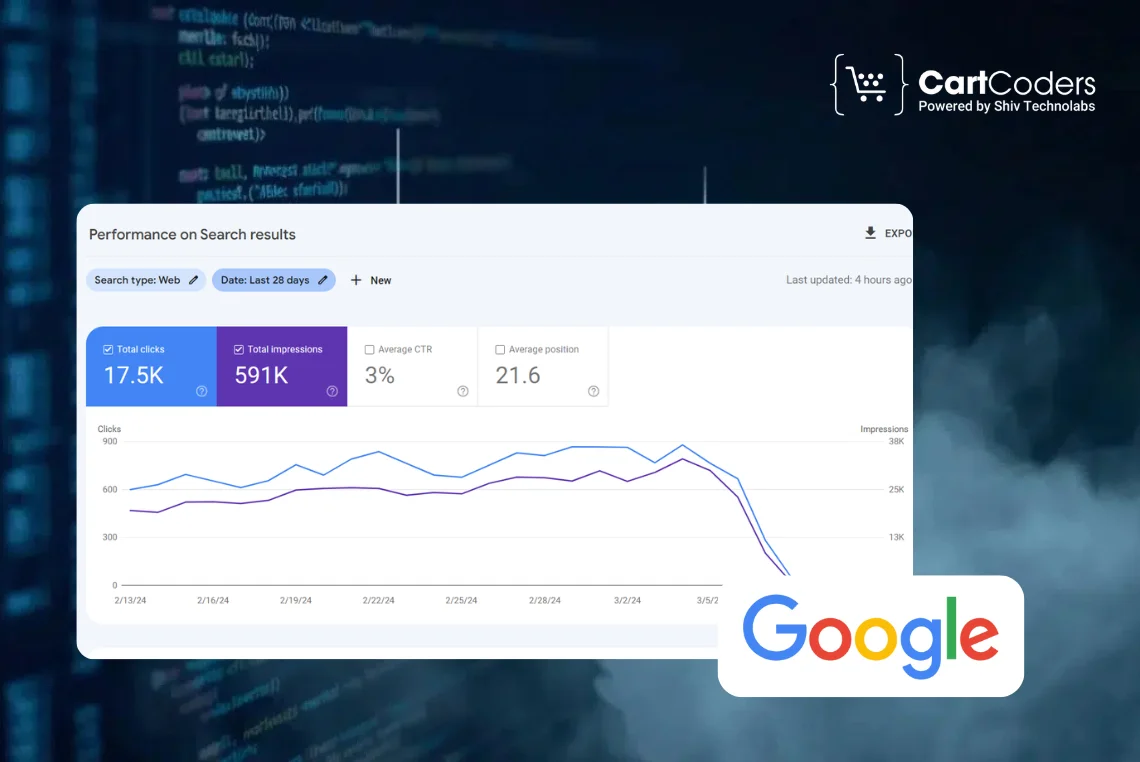
SEO checks after launch
Watch:
Index coverage
Redirect errors
Traffic drops on key pages
Ranking changes
Fix issues fast. Delays increase loss.
Support and bug triage
Set severity levels:
Blocker
High
Medium
Low
Fix blockers same day. Schedule others in short cycles.
Plan the next release window
List features you delayed on purpose.
Examples:
Advanced promotions
Personalization rules
New payment options
This keeps momentum steady.
Common replatforming mistakes to avoid
Teams repeat the same errors.
Skipping data cleanup
Underestimating SEO work
Testing only happy paths
Launching without rollback plans
Ignoring analytics validation
Avoiding these saves weeks.
Final checklist before calling the project done
Confirm:
All orders flow end to end
Inventory matches across systems
Payments settle correctly
Tracking reports real revenue
Support team has scripts and access
When these hold steady, the store is ready.
Long-term results, costs, and decision clarity in ecommerce replatforming
Replatforming does not end at launch. The real outcome shows over the next months. This phase decides whether the move pays off or becomes technical debt.
Strong teams measure impact, control cost, and plan what comes next.
Realistic ecommerce replatforming timelines
Timelines vary based on complexity, not ambition. Stores fail when they copy timelines from smaller builds.
Timeline ranges by store size
Small to mid stores (up to 5,000 SKUs):- These projects often finish in 10–14 weeks. They involve fewer integrations and simpler data.
Growing catalogs (5,000–50,000 SKUs):- Expect 14–22 weeks. Data cleanup, ERP sync, and QA add time.
Large or multi-region stores (50,000+ SKUs):- Projects run 24–36 weeks or more. Multiple warehouses, currencies, and teams slow delivery.
These ranges assume clear scope and weekly progress checks.
What increases timeline risk
Several factors stretch delivery fast.
Late changes in requirements
Poor product data quality
Unclear ownership between teams
Heavy third-party dependency
Missing test coverage
Strong planning reduces all five.
Ecommerce replatforming cost: what teams often miss
Platform fees are only one line item. The real cost lives elsewhere.
Main cost drivers
Build and integration work:- Custom checkout logic, ERP sync, and third-party tools add effort.
Data preparation:- Cleaning SKUs, variants, and pricing takes time. Ignoring this causes repeat fixes later.
SEO and tracking protection:- Redirect planning, audits, and post-launch monitoring require focus.
QA and launch support:- Testing cycles and bug fixes extend beyond launch day.
Post-launch stabilization:- Most stores need 30–60 days of fixes after go-live.
Teams that plan only for build costs overspend later.
How to protect revenue after launch
Launch success does not guarantee revenue stability. Early weeks matter most.
Monitor the right signals daily
Track these without delay:
Checkout completion rate
Payment failure rate
Inventory sync accuracy
Top landing page traffic
Order confirmation email delivery
These signals reveal problems before revenue drops.
Control checkout changes
Avoid major checkout experiments in the first month. Stability comes first. Introduce new logic only after data confirms consistency.
Prepare support teams before launch
Support teams need answers on day one.
Provide:
Password reset scripts
Order issue handling steps
Known limitations and workarounds
Clear escalation paths
Prepared support teams protect brand trust.
B2B, wholesale, and complex store realities
Not all stores follow a simple DTC model.
B2B-specific risks
B2B stores often include:
Account-based pricing
Approval workflows
Credit terms
Purchase orders
Manual invoicing steps
Test these flows with real users. Edge cases appear fast in B2B.
Multi-store and global setups
Global stores add more risk.
Validate:
Currency rounding rules
Region-based taxes
Shipping logic per zone
Language-specific content
Test region by region. Never assume global parity.
Common mistakes that reduce replatforming value
Teams repeat the same errors across projects.
Rushing launch without rollback plans
Skipping redirect validation
Ignoring analytics accuracy
Moving bad data without cleanup
Treating launch as the finish line
Avoiding these saves months of recovery.
When replatforming delivers strong ROI
Replatforming works best when goals stay clear.
It delivers value when:
Teams ship changes faster
Checkout errors drop
SEO traffic stays stable
Operations gain visibility
Tech debt shrinks
If these do not improve, review execution, not the platform alone.
How CartCoders supports ecommerce replatforming projects
Replatforming requires more than development hours. It needs planning, execution, and control.
CartCoders helps brands move platforms without revenue loss or SEO damage.
Our teams handle:
Platform selection guidance
End-to-end data migration
SEO-safe URL and redirect planning
ERP, CRM, and OMS integrations
QA-led launch control
Post-launch stabilization support
We work with growing and high-volume stores that cannot afford downtime. CartCoders focuses on clean execution, not rushed delivery.
Final decision checklist before committing
Before you move, answer these questions:
Does the current platform block growth?
Does it slow daily operations?
Does it increase risk during traffic spikes?
Does it force constant workarounds?
If most answers are yes, replatforming makes sense. Plan it carefully. Execute it with discipline. Protect what already works. That is how ecommerce replatforming creates long-term value.
As the CTO at Shiv Technolabs & CartCoders, I am liable for instigating, planning, integrating, and implementing the organization's strategic orientation.
I gather the most significant tech news in addition to sharing the information I gained while serving as the CTO of Shiv Technolabs, a renowned web and mobile app development company. I am pleased to answer questions as a most valuable expert for Shiv Technolabs Private Limited and to share my experience. I offer a keen insider's perspective on technical advancements.
 eCommerce
Solution
eCommerce
Solution










 INDIA
INDIA


 USA
USA
 CANADA
 AUSTRALIA