

Agencies do not usually slow down because leads stop coming in. They slow down because delivery starts falling behind demand. That is where white label Shopify development becomes useful. It gives digital agencies a practical way to take on more Shopify work, keep client ownership, and maintain delivery quality without building a much larger in-house team.
When this model works well, the client still sees your agency leading the project. Your team handles strategy, communication, pricing, and approvals. The backend partner works quietly in the background, which helps your agency stay flexible while keeping the client experience consistent.
- White label Shopify development helps agencies deliver more Shopify work without adding full-time delivery overhead.
- Your agency remains client-facing, while the backend team handles implementation and support.
- This model works best when Shopify demand is growing, timelines are tight, and hiring does not feel like the best next move.
- It is especially useful for agencies managing redesigns, migration work, app-related requests, and ongoing store improvements.
- The biggest value is not only extra capacity. It is a more stable delivery system.
What Is White Label Shopify Development?
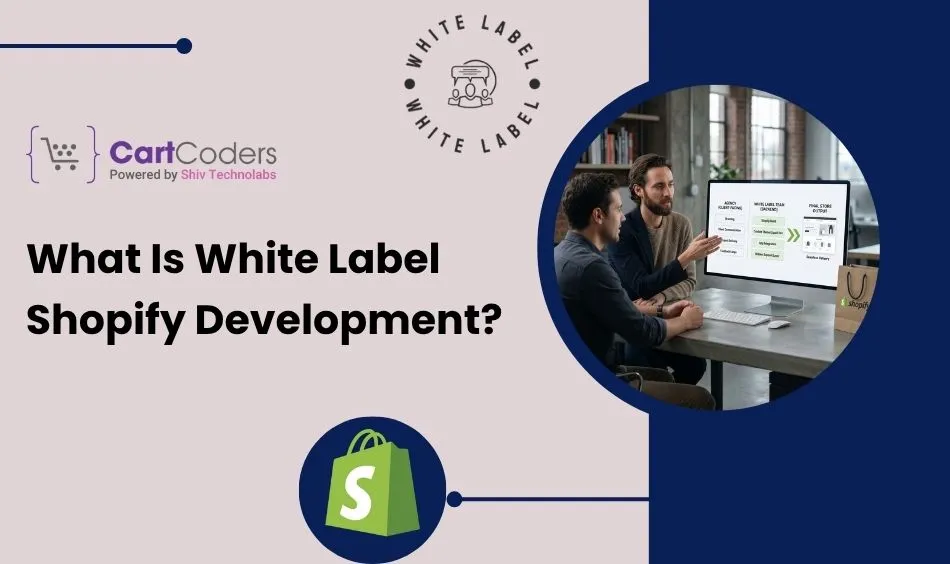
White label Shopify development is a service model where a Shopify-focused team completes work for an agency, while the agency presents that work under its own brand. The client interacts with your team, not the development partner. From the client’s point of view, your agency is still fully leading the project.
That is why this model works well for agencies. It does not weaken your role in the relationship. It protects it. Your team keeps ownership of discovery, project direction, approvals, and communication, while the technical work is handled behind the scenes.
This setup is often confused with general outsourcing, but the two are not the same. Outsourcing can be loose, one-off, and disconnected from the agency’s workflow. White label delivery works best when the partner fits into your process and supports your agency like an extension of your delivery team. Agencies comparing the two models often start by reading about outsourcing Shopify work.
Why Agencies Use White Label Shopify Development
Most agencies do not start with white label delivery. They move toward it after the same operational pressure begins showing up across multiple projects.
- The first pressure is volume. A small team may comfortably handle one or two Shopify projects at a time, but things change quickly when redesigns, support requests, launch work, and backend changes begin overlapping. Capacity starts deciding which projects move forward smoothly and which ones get delayed.
- The second pressure is speed. Shopify clients are often working around active promotions, product launches, seasonal demand, or growth targets. They do not want long waiting periods for storefront updates or technical fixes. Even strong agencies begin to feel strain when delivery cannot keep pace with the needs of their clients.
- The third pressure is complexity. A project may begin with theme edits or storefront changes, then move into app-level functionality, custom workflows, or platform-specific technical requirements. That is usually the stage where agencies begin thinking more seriously about custom Shopify apps and the kind of backend support needed to handle that work properly.
- The fourth pressure is staffing risk. Bringing in more people sounds like the obvious answer, but one new hire does not automatically create a dependable delivery system. Shopify work usually needs more than code. It often includes design interpretation, QA, testing, coordination, revisions, and post-launch support.
Why Hiring White label Shopify Agency Alone Does Not Solve the Problem
Hiring can help, but it also creates fixed cost and slower movement. Recruitment, onboarding, internal training, and review cycles take time. That means agencies often start paying for capacity before that capacity is fully usable.
Freelancers solve a different kind of problem. They can be helpful for short tasks, urgent edits, or one-off requests, but they do not always solve the deeper issue of repeatable delivery. The challenge is not only getting tasks done. It is keeping output steady across multiple projects, multiple clients, and tight timelines.
That is why agencies often compare different delivery models before deciding how to scale.
| Delivery model | Cost structure | Flexibility | Main challenge | Best fit |
| In-house team | Fixed monthly cost | Low to medium | Slower to scale and harder to adjust during quiet periods | Agencies with steady Shopify demand every month |
| Freelancers | Variable | Medium | Context loss, uneven availability, and inconsistent output | Small tasks and short-term overflow |
| General outsourcing | Variable | Medium | Often needs heavier supervision and may not fit the agency process well | Lower-complexity work where process matters less |
| White label Shopify development | Flexible and tied to active work | High | Success depends on choosing the right partner and defining process clearly | Agencies that want scale with stronger brand control |
The reason white label Shopify development stands out is simple. It lets the agency keep control of the client relationship while making delivery easier to scale.
How White Label Shopify Development Works Step by Step
A strong white label setup should feel structured from the start. It should not feel like passing tasks to random developers. It should feel like the agency has a dependable delivery team working in the background.
Step 1: Discovery and alignment
The first step is not development. It is alignment. The partner needs to understand what kind of Shopify work your agency handles, how your team scopes projects, how communication is managed, what your quality standards look like, and where your current delivery pressure sits.
This matters because the wrong fit creates more management work instead of less. A good fit makes the partner feel almost invisible in the best way.
Step 2: Choosing the right working model
Some agencies need project-based delivery for store builds or redesigns. Others need monthly retained support because Shopify work keeps coming in every week. Agencies with a stronger ongoing pipeline may prefer a dedicated backend team that stays close to their workflow.
The right structure depends on how your pipeline behaves. If the work is occasional and fixed in scope, project pricing may make sense. If the work is recurring, a monthly capacity model usually makes planning easier.
Step 3: Scope transfer and planning
Once a project is approved, your agency passes the brief, assets, deadlines, and technical notes to the backend team. A clear scope at this stage affects everything that follows. When scope is vague, revisions increase, timelines stretch, and margins get weaker.
This becomes especially important on migration-led projects. Migration work often looks manageable until redirects, product data, collection logic, customer records, and launch checks start piling up. That is why teams handling those projects often rely on a practical migration checklist before the technical work begins.
Step 4: Design and development execution
This is where the backend team handles the actual work. Depending on the project, that can include storefront implementation, theme changes, custom sections, app setup, custom functionality, QA, speed-related fixes, and launch support.
This is also the stage where agencies begin to feel the difference between having extra hands and having a real backend system. Instead of constantly asking whether the internal team has room, they can focus more on project quality, communication, and timelines.
Step 5: Internal review and QA
A white label model should not remove agency control. It should strengthen it. Before anything reaches the client, your team should review the work and make sure it matches the brief, design direction, and expected user experience.
This stage usually covers responsiveness, layout checks, app behavior, browser testing, cart flow, and launch readiness. The smoother this phase becomes, the more reliable the overall delivery model feels.
Step 6: Client delivery under your brand
Once the work is reviewed and approved, your agency delivers it to the client under its own name. The client continues to see your team leading the project, managing communication, and taking ownership of the final outcome. This is an important part of the model, because the relationship stays with your agency while the backend partner remains invisible.
This stage may also include feedback collection, final revisions, launch coordination, and any walkthrough needed for the client. The smoother this handoff feels, the more natural the white label setup becomes from the client’s point of view.
Step 7: Ongoing support and future work
After launch, the same partnership can continue for support, improvements, and future Shopify work. Many clients need more than a one-time build. They may require landing pages, app updates, design changes, bug fixes, CRO work, or technical adjustments as the store grows.
This stage matters because it turns one project into a longer-term delivery system. Instead of finding new resources every time work comes in, your agency already has backend support that understands the project, the client, and the workflow.
Which Shopify Deliverables Work Best in a White Label Model?
White label Shopify development is not limited to basic store setup. It works best when the agency is handling work that is recurring, detail-heavy, or operationally sensitive.
- Store redesigns are one common fit. These projects often involve theme updates, section changes, layout adjustments, and pre-launch testing. They usually need steady coordination, but they do not always justify expanding the internal team.
- Migration work is another strong fit. It is time-sensitive, detail-heavy, and easy to get wrong when the process is loose. Agencies handling platform change projects often find that the pressure is less about writing code and more about managing the many moving parts around the move.
- App-related work is also a natural fit. Many agencies are comfortable with storefront and design-led work, but once the project moves into custom workflows or store-specific functionality, backend support becomes more important. That is often the point where the project begins to outgrow standard delivery methods.
- Ongoing support is another strong fit. Many Shopify clients do not stop at launch. They need landing pages, merchandising updates, campaign support, app changes, and technical fixes on a regular basis. A white label model works well here because it gives the agency a dependable way to support those requests without rebuilding the team every time demand rises.
What Does White Label Shopify Development Cost for Agencies?
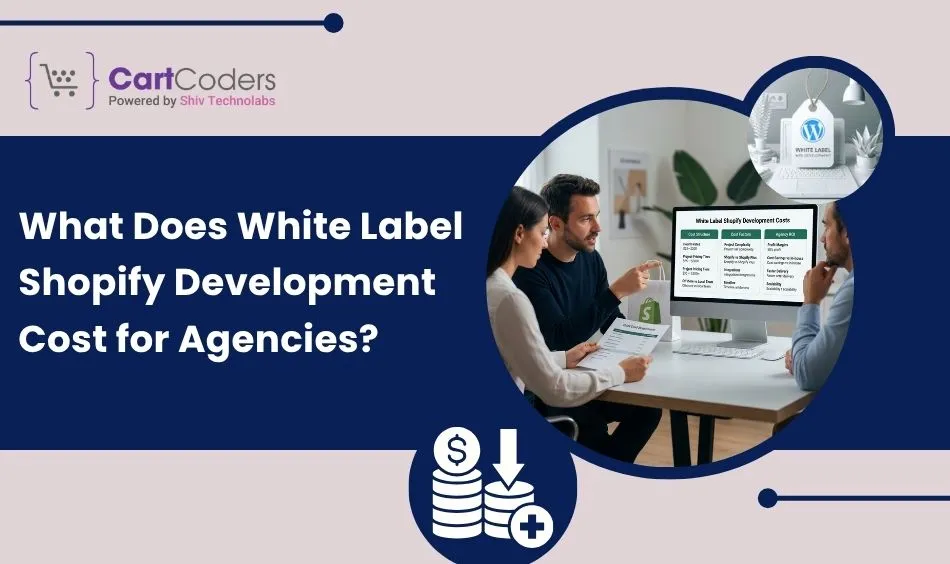
This is the part many blogs avoid, but it matters if the title promises costs.
The honest answer is that white label Shopify development does not come with one flat rate. Agencies usually pay based on the delivery model, project scope, technical depth, and turnaround speed. A partner handling simple theme edits will not price work the same way as a team handling migrations, app-led functionality, or ongoing backend support across multiple accounts.
That said, agencies usually work within a few common cost bands.
| Work type | Typical white label cost range |
| Monthly white label support plan | $799 to $3,999 per month |
| Dedicated Shopify developer | Around $2,500 per month |
| Shopify store setup | $1,500 to $8,000 |
| Custom Shopify store build | $10,000+ |
| Theme customization | $1,500 to $8,000 |
| App integration | $500 to $6,000 per integration |
| ERP or logistics integration | $8,000+ |
| WooCommerce to Shopify migration | $3,000 to $12,000 |
| Magento to Shopify migration | $7,000 to $25,000 |
These are not fixed prices. They are practical ranges that help agencies estimate backend delivery cost before setting their own client pricing.
A small Shopify task or limited support scope may sit at the lower end. A custom build with integrations, testing, and post-launch work will sit much higher. Once the project includes migration, ERP connections, or custom functionality, cost rises because the delivery work becomes more technical and more sensitive to errors.
What changes the cost most?
| Cost factor | Why it changes pricing |
| Design complexity | More unique templates, custom sections, and UI needs increase build time |
| Functional depth | Custom workflows, app logic, and store-specific behavior add planning and testing |
| Migration scope | Product, customer, redirect, and collection handling increases backend work |
| Integration needs | ERP, 3PL, CRM, and logistics connections usually raise technical effort and QA time |
| Timeline pressure | Faster turnaround often needs tighter scheduling and stronger resource focus |
| Ongoing support | Post-launch fixes, updates, and retained hours increase total delivery commitment |
White label cost vs hiring cost
| Model | Typical cost pattern | Main cost risk |
| In-house hiring | Fixed monthly salary, overhead, onboarding, and management time | High risk during slow periods |
| Freelancers | Lower upfront cost, but variable output and availability | Medium to high |
| White label Shopify development | Project-based, monthly, or dedicated backend cost | Lower risk when scope and process are clear |
The main difference is not only the number. It is how the cost behaves. Hiring creates fixed overhead before delivery becomes stable. White label Shopify development usually keeps cost closer to actual sold work, which makes it easier for agencies to protect margins.
What Agencies Actually Gain From the Right Partner
The right white label partner does more than add task capacity. It improves how the agency operates.
- The first gain is consistency. When the same backend team supports multiple projects, they begin understanding your review style, communication patterns, and quality expectations. That reduces repeated onboarding and cuts down on avoidable mistakes.
- The second gain is service confidence. Your agency can discuss larger or more technical Shopify work without feeling boxed in by current internal limits. That does not mean saying yes to everything. It means having more room to say yes to the right projects.
- The third gain is margin visibility. When delivery is structured well, project scoping becomes easier to manage. Better backend planning usually leads to cleaner pricing, less rework, and fewer surprises during execution.
- The fourth gain is time. Agencies are often strongest when they stay focused on sales, client trust, UX direction, growth planning, and conversion strategy. A stable backend system gives them more space to stay in that role.
When White Label Shopify Development Makes Sense for Agencies
White label Shopify development is a strong fit when the agency already has Shopify demand but delivery capacity is beginning to limit growth. It works well when the team is turning down good-fit work, timelines are getting harder to maintain, or clients are asking for technical support beyond the original project.
It also makes sense when the agency wants to widen its service mix without hiring too early. Some teams begin with design, paid media, SEO, or brand work and only later need deeper Shopify delivery support. In those cases, white label delivery becomes a practical bridge between strategy-led work and more technical execution.
It is less useful when Shopify work is too occasional to justify a real backend process, or when the agency has no interest in staying close to the delivery side. This model works best when the agency still wants to own the client experience.
How to Choose the Right White Label Shopify Partner
Choosing the wrong partner creates more friction than it removes. That is why the decision should be based on fit, not only cost.
Look first at platform depth. The partner should understand how Shopify projects actually behave, not only how to complete isolated tasks. That includes theme logic, implementation detail, QA habits, and launch readiness.
Then look at workflow fit. A strong white label partner should work inside your process, not force a second operating model onto your team. If communication or handoff already feels heavy during early discussions, that usually gets worse once real work begins.
It also helps to look at range. Agencies rarely stay inside one neat service line. Projects move from redesigns into migration, from theme updates into app-level decisions, and from launch work into ongoing improvements. A partner who can support that range is usually easier to build with over time.
When Delivery Capacity Starts Holding Growth Back
Some agencies reach a point where sales are moving, client demand is steady, and the real issue is no longer positioning. It is delivery capacity. That is usually when a dedicated backend partner starts making sense.
CartCoders works with agencies that want to keep client ownership while adding dependable Shopify execution in the background. For teams already at that stage, the next step is usually reviewing how a white label Shopify agency partnership works in practice.
Conclusion
Agencies rarely lose momentum because they stop winning business. They lose momentum because delivery becomes harder to scale.
White label Shopify development gives agencies a more stable way to grow. Your team keeps the client, the brand, the pricing, and the direction. The backend partner supports delivery in the background, which makes it easier to accept more work, maintain quality, and keep internal pressure under control.
For agencies that want to grow Shopify revenue without building a much larger in-house team, this is not a shortcut. It is a cleaner operating model.
FAQs
White label Shopify development is a model where a Shopify-focused team handles technical execution behind the scenes, while the agency remains client-facing and delivers the work under its own brand.
The agency manages strategy, communication, pricing, and approvals. The backend partner handles implementation, QA, and delivery support.
It depends on how steady demand is. If Shopify work changes month to month, a white label model usually gives more flexibility than hiring too early.
Redesigns, migration projects, custom app work, launch support, recurring improvements, and backend-heavy client requests are all strong fits.
It depends on the work type. Smaller monthly white label plans usually start around $799, dedicated developer models are often around $2,500 per month, store setup and theme customization commonly fall in the $1,500 to $8,000 range, and migration or integration-heavy work can go much higher.
Usually when project demand is growing, timelines feel stretched, and the current team can no longer absorb new work comfortably.
The agency keeps ownership of the client relationship, project scope, approvals, and final delivery. The backend team works in support of that process.
Yes. It is often a strong fit for migration work because those projects are detail-heavy and time-sensitive.
No. Smaller agencies also use it when they want to add Shopify delivery capacity without building a full in-house technical team on day one.


