
Being involved in an online store is fun, but you’ll also experience difficulties as you go along. You control the stock of products, deal with orders, oversee the stock count and handle account management. All of these steps would be time-consuming and not very organized if completed manually.
This task can be handled more efficiently with the aid of an eCommerce ERP.
The term ERP means Enterprise Resource Planning. It allows your company’s sales, stocks, shipping and other activities to be managed in a single system. Online stores experience a major shift due to this.
Connect Your eCommerce with ERP Systems
We integrate your store with ERP tools to sync products, orders, and inventory in real time.


With the right ERP for your eCommerce business, you can save time, reduce mistakes, and grow faster. About 53% of e-commerce stores now use ERP tools to manage operations better.
In this guide, we aim to explore the top eCommerce ERP platforms, outline their capabilities, identify their benefits, and help you choose the best for your store.
If you are just starting or need an upgrade, this guide can help.
What Is an eCommerce ERP?
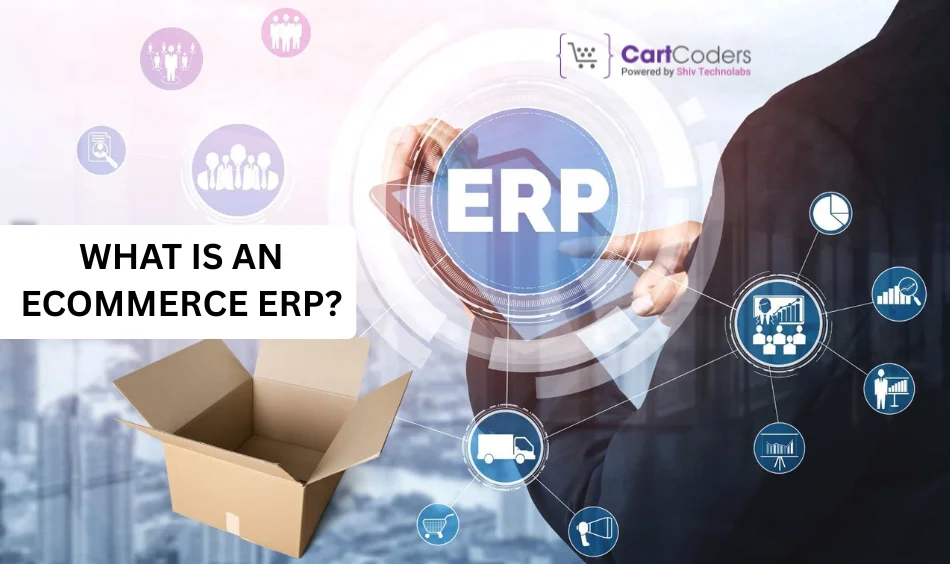
eCommerce ERP software enables you to run your online store by connecting your sales platform to all your back-end processes. This includes:
- Order management
- Inventory tracking
- Shipping and logistics
- Accounting
- Customer management
With ERP integration with eCommerce, all your systems talk to each other. This saves time and avoids errors.
If a product is sold, your ERP automatically accounts for the inventory and generates and issues the required documents, and sends the shipment.
Key Features to Look For
Before choosing a platform, here are the top features to check in any eCommerce ERP solution:
- Real-time Inventory Updates
- Multi-channel Order Management
- Automated Accounting and Invoicing
- Customer Relationship Management (CRM)
- Shipping and Logistics Integration
- Mobile and Cloud Access
- Easy ERP integration with Shopify and other platforms
Now, look at the top eCommerce ERP platforms offering these features.
Top 6 eCommerce ERP Platforms
Below are some leading eCommerce ERP Platforms that streamline your business operations:
1. NetSuite ERP
NetSuite is a popular cloud ERP trusted by many growing e-commerce businesses.
Key Features:
- Unified dashboard for sales, finance, and inventory
- Real-time analytics and reports
- Supports global operations
Pros:
- Works well for medium to large businesses
- Offers high flexibility
- Handles multiple currencies and languages
Best For
Stores with complex operations or international customers.
2. Odoo
Odoo is an open-source ERP with a strong suite of tools for online stores.
Key Features
- Inventory and warehouse management
- CRM and sales tracking
- Integration with many eCommerce platforms
Pros:
- Very customizable
- Affordable for small businesses
- Offers both free and paid versions
Best For:
Startups or small online shops need flexible features.
3. SAP Business One
SAP Business One is made for small to medium businesses but backed by the power of SAP.
Key Features:
- Centralized order and inventory system
- Real-time financial tracking
- Advanced reporting tools
Pros:
- Scalable as you grow
- Trusted by global companies
- Strong security
Best For
Shops are looking for long-term ERP growth and strong reporting.
Unify Online Sales with ERP Integration
Manage everything from one place—orders, returns, and inventory across channels.
4. Microsoft Dynamics 365
Microsoft’s Dynamics 365 is a mix of ERP and CRM in one package.
Key Features:
- AI-based insights
- Cloud and desktop access
- Seamless Microsoft 365 integration
Pros
- Great user interface
- Easy for teams already using Microsoft tools
- Built-in marketing features
Best For
Mid- to large-sized eCommerce stores that want a built-in CRM.
5. Acumatica
Acumatica is a modern, cloud-based ERP built for eCommerce.
Key Features
- Inventory, sales, and shipping sync
- Strong multi-channel support
- Scalable cloud system
Pros
- Mobile-friendly
- Easy API integrations
- Strong support for online stores
Best For:
Growing online businesses want flexibility and modern features.
6. QuickBooks Commerce
Formerly known as TradeGecko, QuickBooks Commerce is great for managing stock and orders.
Key Features
- Real-time stock updates
- Multi-channel order syncing
- Integration with accounting tools
Pros
- Simple to use
- Great for small stores
- Quick setup
Best For:
Small online stores or sellers are using QuickBooks already.
Benefits of Using ERP for an Online Store
Let’s quickly recap the main benefits of eCommerce ERP software:
- Saves Time– No more entering data twice
- Reduces Errors– Systems talk to each other
- Improves Inventory Control– Know what’s in stock anytime
- Boosts Customer Satisfaction– Faster and smoother order handling
- Supports Business Growth– Scales with your store
Businesses that use ERP grow 35% faster, on average, than those without it.
ERP Integration with Shopify
If you run your store on Shopify, make sure the ERP you choose supports ERP integration with Shopify. This allows:
- Real-time sync of orders and inventory
- Centralized control of multiple sales channels
- Automated reporting and accounting
Many ERPs support Shopify, but proper setup is key.
How to Choose the Best ERP for eCommerce
Use this checklist to pick the right ERP for your online store:
- Fits your store size and goals
- Easy to use with your current systems
- Works well with your eCommerce platform (Shopify, WooCommerce, etc.)
- Has good customer support
- Offers room to grow as your store grows
Still not sure? Let the experts help.
Get the Right Shopify ERP Integration with CartCoders
Choosing the best ERP is essential, but getting it to work with your online store is even more critical.
That’s where CartCoders comes in.
We are Shopify experts and offer smooth Shopify ERP integration. Whether you run a small store or a large eCommerce business, their team helps you:
- Choose the right ERP
- Set up integration
- Customize workflows
Train your team
CartCoders ensures your ERP for an eCommerce business works smoothly—no bugs, no delays.
They don’t just connect tools—they help you run a better business.
Final Words
Choosing the right eCommerce ERP can transform your online store. With one system to manage everything—from orders to accounts—you save time and grow faster.
Some well-known examples of platforms are NetSuite, Odoo and Acumatica. The most useful ERP for your company is the one that matches your business and works with your sales system.If you use Shopify and want the best ERP setup, CartCoders is your go-to partner. Their team makes ERP integration with Shopify fast, easy, and stress-free.


