
Running a Shopify store requires tools that simplify management and improve efficiency. Shopify marketplace apps help sellers expand their reach by allowing multichannel selling across various platforms. These apps help manage inventory, process orders, and improve sales performance.
With the right Shopify marketplace solutions, businesses can connect their stores with platforms like Etsy, eBay, Walmart, and Amazon. This blog highlights the best Shopify marketplace apps for sellers, helping them choose the right tools for growth.
Shopify Marketplace Apps: Basics
Shopify marketplace apps integrate online stores with third-party platforms, allowing sellers to sync their Shopify store with multiple marketplaces. These apps enable businesses to list products on different platforms, track inventory, and manage orders from a single dashboard.
Using Shopify multi-vendor marketplace apps, sellers can add multiple vendors to their stores, automate commission calculations, and handle payments smoothly. These tools also improve customer engagement by ensuring accurate order processing and timely shipping updates.
Key Features to Look for in a Shopify Marketplace App
Choosing the right Shopify marketplace app is crucial for businesses looking to expand through multichannel selling. The right app should simplify operations, improve efficiency, and allow businesses to sync Shopify store with multiple marketplaces without complications. Below are the key features to look for when selecting the best Shopify marketplace apps for sellers.
- Multi-Platform Integration
The app should support selling on multiple platforms like Amazon, eBay, Walmart, and Etsy, allowing centralized management.
Also Read: How to Build a Website Like Amazon: Steps, Features, and Costs
- Real-Time Inventory Sync
Automatic stock updates across platforms prevent overselling or stockouts, ensuring smooth operations.

- Bulk Product Listing
A good app enables bulk uploads and edits, saving time when managing large inventories.
- Automated Order Management
Orders from different marketplaces should sync into one dashboard, streamlining fulfillment and reducing manual work.
- Pricing and Discount Controls
The ability to set different prices and promotions for each marketplace helps sellers stay competitive.
- User-Friendly Dashboard
A simple interface with sales reports and analytics helps sellers track performance easily.
- Multi-Vendor Support
For marketplace owners, the app should manage multiple sellers, commissions, and order distribution efficiently.
- Shipping and Fulfillment Integration
Built-in support for major shipping carriers ensures faster deliveries and tracking updates.
Selecting the right Shopify marketplace app can make multichannel selling more manageable while helping businesses scale efficiently. By focusing on these essential features, sellers can ensure a smooth marketplace experience while reaching more customers across multiple platforms.
Also Read: The Pros and Cons of Shopify Marketplace Connect: An In-Depth Review
15 Best Shopify Marketplace Apps for Multichannel Selling

Expanding a Shopify store beyond a single platform is essential for increasing sales and reaching a larger audience. The best Shopify marketplace apps for sellers help connect stores to multiple marketplaces like Amazon, eBay, Walmart, and Etsy while managing inventory, orders, and pricing from a single dashboard. Let’s discuss the top Shopify marketplace apps for multichannel selling for different businesses.
1. Etsy Marketplace Integration
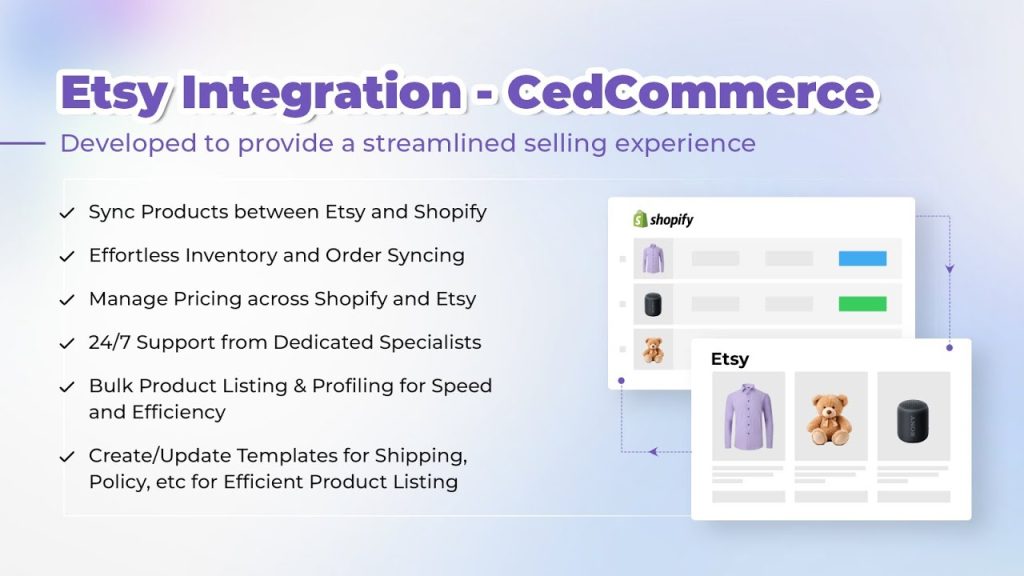
This app helps Shopify store owners list and sell products on Etsy, a popular marketplace for handmade, vintage, and craft items. It simplifies product synchronization, order management, and inventory tracking between Shopify and Etsy, saving time and reducing errors.
Key Features of Etsy Marketplace Integration
- Automatically syncs products, orders, and inventory between Shopify and Etsy.
- Supports bulk product uploads and updates for faster listing management.
- Provides real-time pricing adjustments to stay competitive.
- Offers advanced customization options for product listings.
Who Should Use It?
- Shopify store owners selling handmade, vintage, or creative products.
- Businesses looking to sync Shopify store with multiple marketplaces for wider exposure.
2. Suite for Google Shopping Feed
This app allows Shopify sellers to list their products on Google Shopping, improving product visibility and driving more traffic to their store. It automates product feed management and syncs Shopify inventory with Google Ads and Merchant Center.

Key Features of Google Shopping Feed
- Supports bulk product uploads to Google Shopping for faster listings.
- Automates pricing, inventory updates, and product feed optimization.
- Integrates with Google Ads to create targeted shopping campaigns.
- Provides detailed analytics and performance tracking.
Who Should Use It?
- Businesses looking to increase sales through Google Shopping ads.
- Sellers who want to automate product feed management and stay competitive.
3. Multi Vendor Marketplace
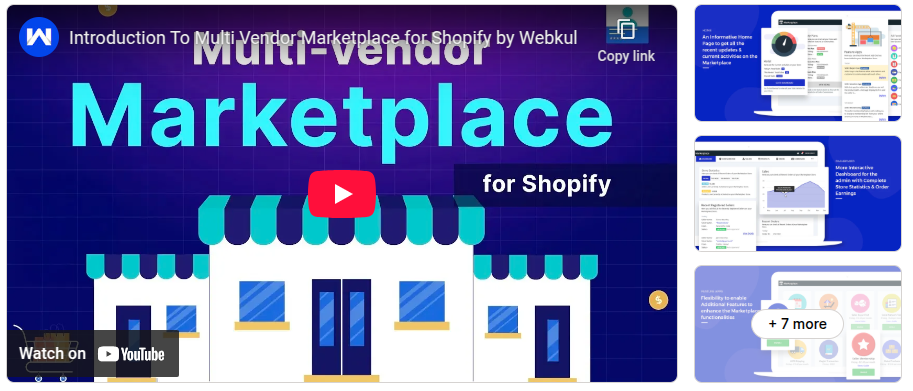
This multi-vendor Shopify marketplace app allows store owners to create their online marketplace. It helps manage multiple sellers, commissions, and product listings within a single Shopify store.
Key Features of Multi Vendor Marketplace
- Allows multiple sellers to list their products on a single Shopify store.
- Provides commission management tools for automated payouts.
- Custom dashboards for vendors to manage their sales and products.
- Supports automated order routing and inventory synchronization.
Who Should Use It?
- Store owners who want to create a Shopify marketplace with multiple vendors.
- Businesses looking to expand into multi-seller operations.
4. Walmart Integration
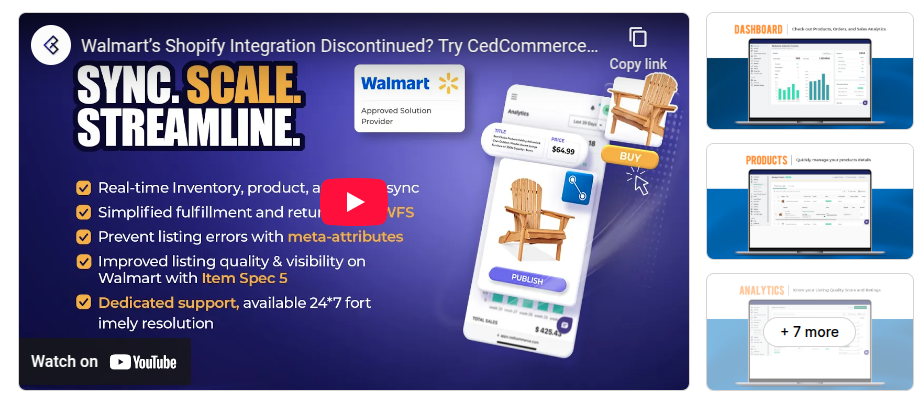
This app helps sellers list and sell products on Walmart Marketplace, one of the largest online retailers in the U.S. It automates inventory updates, pricing, and order management between Shopify and Walmart.
Key Features of Walmart Integration
- Syncs Shopify store with Walmart, updating stock levels in real time.
- Supports bulk product uploads and optimized listings.
- Provides automated pricing adjustments based on competition.
- Centralized order tracking and fulfillment management.
Who Should Use It?
- Shopify sellers looking to expand sales on Walmart Marketplace.
- Businesses needing automated order fulfillment and inventory sync.
5. Fruugo Marketplace Integration
Fruugo is an international eCommerce marketplace that allows Shopify sellers to reach global customers. This integration helps sellers list products in multiple currencies and languages, expanding international sales.
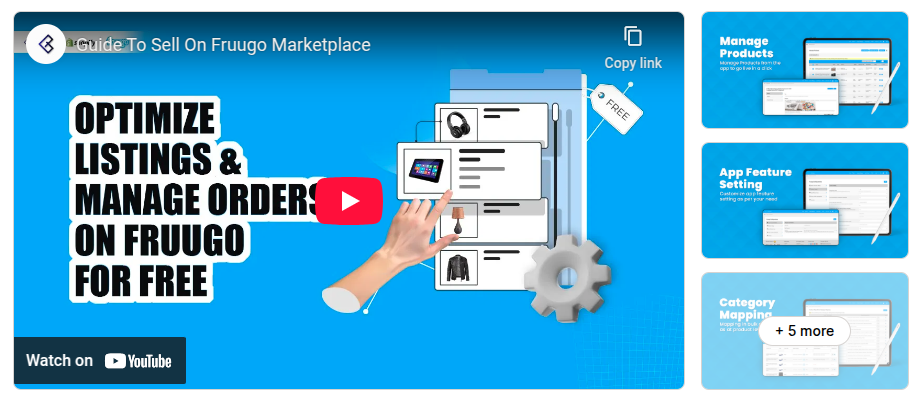
Key Features of Fruugo Marketplace Integration
- Supports multi-currency and multi-language product listings.
- Automates inventory and order synchronization with Fruugo.
- Provides real-time analytics on sales performance.
Who Should Use It?
- Shopify sellers looking to expand into international markets.
- Businesses offering globally relevant products.
6. Multi Seller Marketplace
This multi-vendor Shopify marketplace app allows store owners to convert their Shopify store into a multi-seller marketplace. Vendors can list their products, manage orders, and handle their inventory independently.
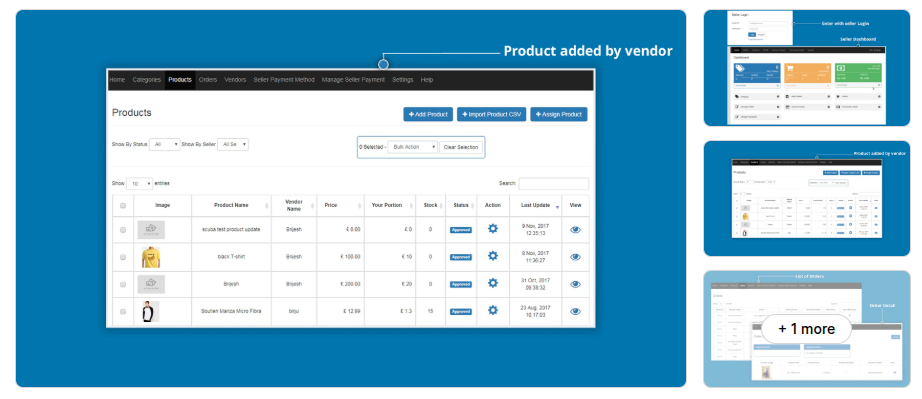
Key Features Multi Seller Marketplace
- Supports multiple sellers and product categories.
- Customizable commission structures for vendors.
- Automated order distribution to respective vendors.
- Vendor dashboard for independent store management.
Who Should Use It?
- Store owners looking to create a Shopify marketplace with multiple vendors.
- Businesses seeking commission-based selling models.
7. Newegg Marketplace Integration
Newegg is a well-known electronics and tech-focused marketplace. This integration allows Shopify sellers to list their products on Newegg while managing orders and inventory from one place.

Key Features Newegg Marketplace Integration
- Sync Shopify store with Newegg for real-time inventory updates.
- Bulk product uploads for faster listings.
- Automated order fulfillment and tracking.
Who Should Use It?
- Shopify sellers focused on electronics and tech products.
- Businesses looking to expand into niche marketplaces.
8. Koongo: Sell on Marketplaces
Koongo helps Shopify sellers list products on multiple marketplaces, including eBay, Amazon, and Google Shopping. The app simplifies feed management, making it easier to adjust pricing, inventory, and product data across different sales channels.
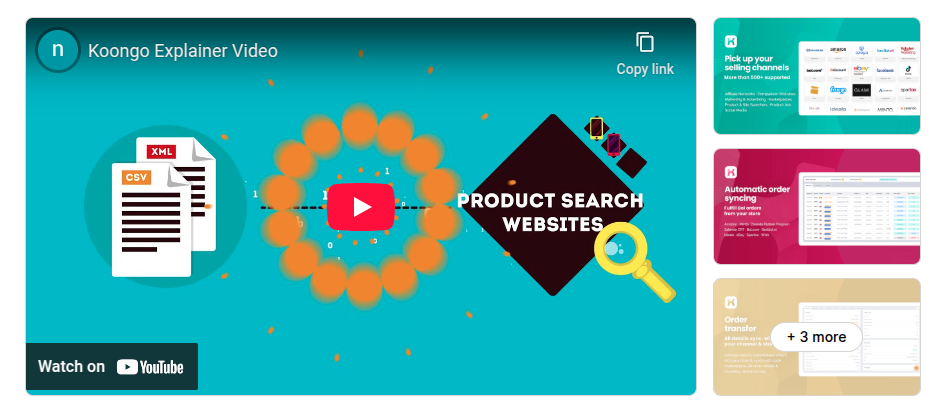
Key Features Koongo
- Supports over 100 marketplaces worldwide.
- Automated feed updates for accurate inventory and pricing.
- Allows dynamic price adjustments based on competitors.
Who Should Use It?
- Businesses selling on multiple international marketplaces.
- Shopify sellers who need automated price and inventory updates.
9. Catch Marketplace Integration
Catch Marketplace is an Australian-based eCommerce platform. This integration allows Shopify sellers to list products on Catch, manage inventory, and sync orders automatically.

Key Features:
- Bulk product listing for faster setup.
- Real-time inventory updates to avoid overselling.
- Centralized order management for Shopify and Catch.
Who Should Use It?
- Shopify sellers targeting Australian customers.
- Businesses looking to expand into regional marketplaces.
10. Wish Marketplace Integration
Wish is a global marketplace known for affordable and trendy products. This app connects Shopify stores to Wish, simplifying product listings and order fulfillment.
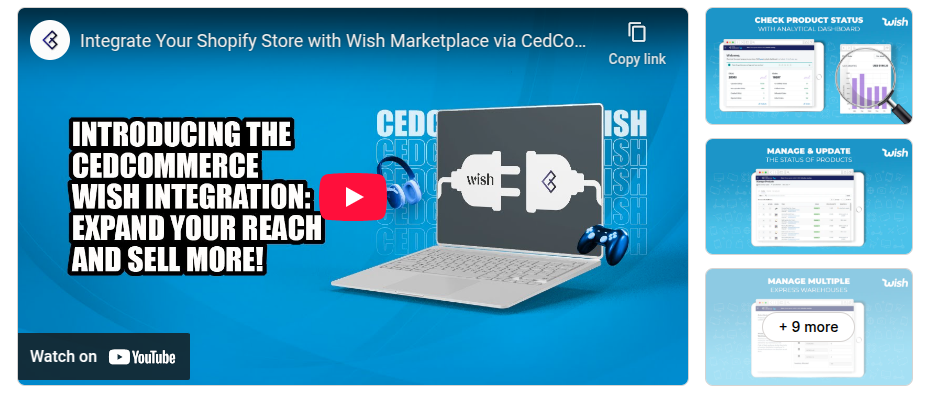
Key Features:
- Bulk product uploads and automated pricing updates.
- Real-time order syncing to manage Shopify and Wish sales.
- Supports discounts and promotions for Wish customers.
Who Should Use It?
- Businesses selling low-cost, high-volume products.
- Shopify sellers looking to increase international sales.
11. Omnivore for Marketplaces
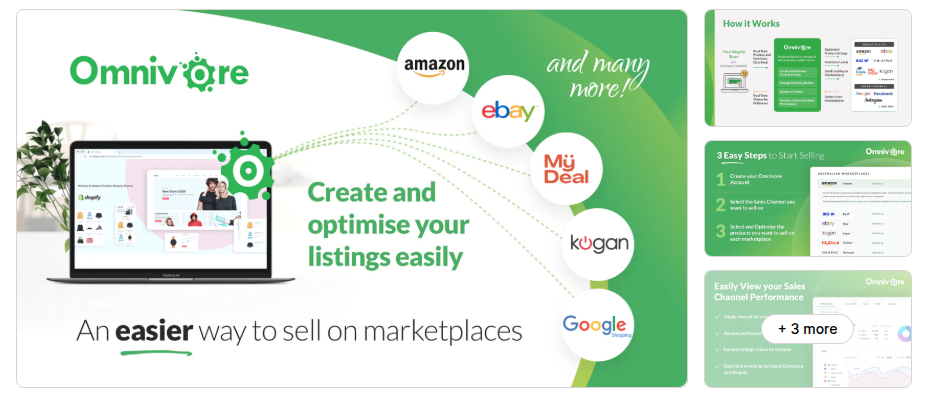
Omnivore connects Shopify stores to multiple marketplaces, helping sellers manage listings, pricing, and order fulfillment efficiently.
Key Features:
- Supports integration with eBay, Amazon, and more.
- Dynamic pricing adjustments to stay competitive.
- Centralized order tracking across all platforms.
Who Should Use It?
- Shopify businesses selling on multiple marketplaces.
- Sellers who need automated pricing and inventory control.
12. CedCommerce eBay Integration
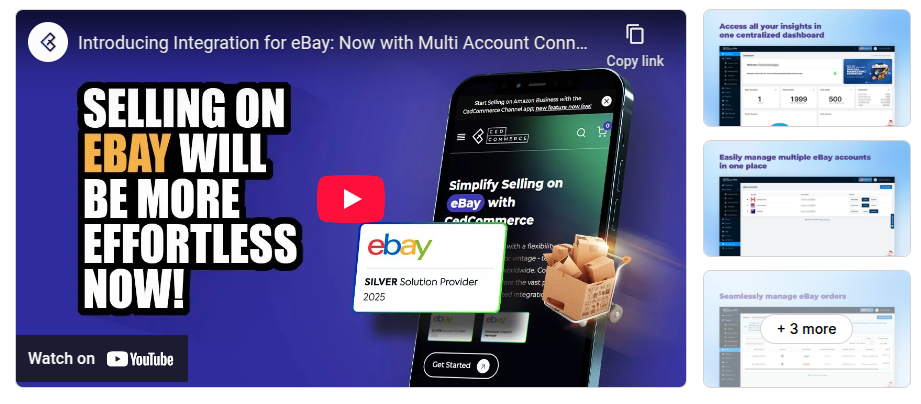
This app allows Shopify sellers to list and sell products on eBay, automating inventory management and order fulfillment.
Key Features:
- Real-time sync for products and orders.
- Supports bulk product uploads to eBay.
- Custom pricing settings for eBay listings.
Who Should Use It?
- Shopify sellers looking to expand sales on eBay.
- Businesses needing automated inventory updates.
13. Sellbrite
Sellbrite helps Shopify sellers expand their reach by listing products on Amazon, Walmart, eBay, Etsy, and other marketplaces. It simplifies multichannel selling, allowing businesses to manage inventory and orders from a single platform.
Key Features:
- Sync Shopify store with multiple marketplaces, ensuring accurate stock levels.
- Automated inventory and order management across all connected platforms.
- Bulk listing and editing tools for easy product management.
- Reporting and analytics to track performance across channels.
Who Should Use It?
- Shopify sellers managing multiple marketplaces.
- Businesses looking to automate order fulfillment and inventory control.
14. Nembol
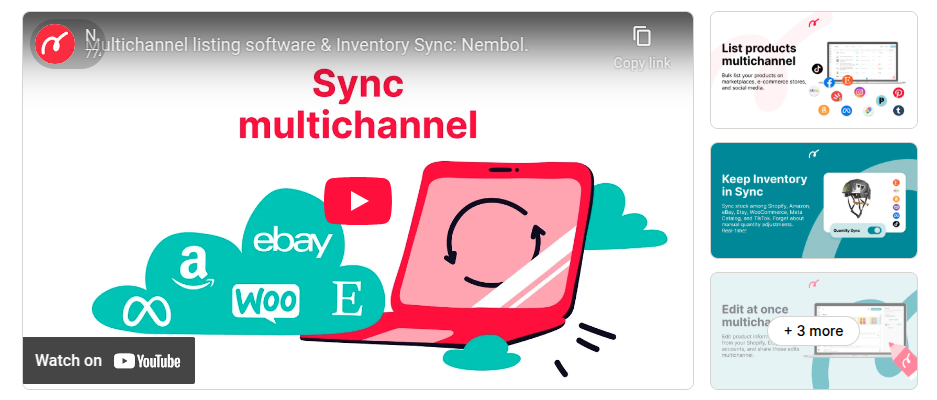
Nembol allows sellers to list and manage products across multiple platforms, including Shopify, Amazon, eBay, and Facebook. It automates inventory updates, making it ideal for businesses handling large product catalogs.
Key Features Nembol
- Auto-sync inventory across Shopify and other marketplaces.
- Bulk product listing with a single upload.
- Cross-platform product linking for improved visibility.
- SEO-friendly product descriptions to boost rankings.
Who Should Use It?
- Shopify businesses needing quick multi-platform product management.
- Sellers looking to improve inventory accuracy.
15. Shoppingfeed
Shoppingfeed connects Shopify stores to over 1,000 sales channels, including Amazon, eBay, Walmart, Google Shopping, and Facebook Marketplace. It automates product feed management, ensuring accurate listing updates.
Key Features Shoppingfeed
- Multi-platform product feed automation for accurate listings.
- Real-time inventory and order synchronization across all sales channels.
- AI-driven pricing optimization for better sales performance.
- Advanced reporting tools to track marketplace performance.
Who Should Use It?
- Shopify businesses expanding to multiple marketplaces.
- Sellers needing automated listing and order syncing.
These 15 best Shopify marketplace apps for sellers make multichannel selling easier by automating inventory, pricing, and order management. Selecting the right Shopify marketplace app depends on business goals, marketplace preferences, and operational needs.
Also Read: Top Ideas for Shopify Marketplace Development
How to Choose the Right Marketplace App for Your Shopify Store

With the growing demand for multichannel selling, Shopify store owners need the right tools to expand their reach across multiple platforms. The best Shopify marketplace apps for sellers provide automation, inventory management, and seamless order processing across different sales channels. However, choosing the right Shopify marketplace app requires careful evaluation of various factors.
1. Compatibility with Your Business Model
Some Shopify marketplace solutions cater to multi-vendor stores, while others focus on individual sellers. Choose an app that aligns with your selling strategy.
2. Integration with Multiple Platforms
If your goal is multichannel selling, select an app that supports multiple marketplaces. Ensure the app provides real-time inventory syncing.
3. Pricing and Features
Compare top Shopify apps for multichannel selling to find one with the best pricing and features. Some apps offer free trials, helping sellers test functionalities before committing.
4. Ease of Use
A Shopify multi-vendor marketplace app should have a simple interface. Look for apps with automation tools to save time.
5. Customer Support
Choose an app that provides reliable customer support for troubleshooting integration issues.
Also Read: Expert Guidance: Choosing the Right Shopify Marketplace Development Partner
Take Your eCommerce Business to the Next Level with Shopify Marketplace!
CartCoders specializes in creating feature-rich, high-converting Shopify marketplaces designed to grow your online business.


Why Choose CartCoders for Shopify Marketplace Development?
Creating a successful Shopify marketplace requires expert development, seamless integration, and ongoing support. CartCoders is a trusted Shopify Marketplace development company offering tailored Shopify marketplace solutions to help businesses scale effortlessly.
- Specialized in multi-vendor Shopify marketplace apps.
- Custom-built solutions for marketplace automation, vendor management, and multichannel selling.
- Experience in integrating Amazon, eBay, Walmart, Etsy, and Google Shopping with Shopify.
- Helps businesses sync Shopify store with multiple marketplaces.
- Builds scalable marketplace solutions to support growing businesses.
- 24/7 customer support for technical assistance.
- Ensures fast-loading Shopify marketplaces for improved user experience.
CartCoders provides expert Shopify marketplace development servicestailored to business needs. Whether you’re creating a multi-vendor Shopify marketplace app or integrating with global platforms, their custom solutions ensure smooth operations and long-term success.
Conclusion
Using Shopify marketplace apps allows sellers to expand into multichannel selling with minimal effort. The apps listed above help businesses sync Shopify store with multiple marketplaces while ensuring efficient inventory and order management.
Choosing the best Shopify marketplace apps for sellers depends on business needs, ease of integration, and marketplace compatibility. CartCoders offers tailored Shopify development solutions, making it easier for sellers to manage Shopify marketplace solutions effectively. Reach out to CartCoders now!


