

Finding the right Shopify headless commerce expert can make a big difference when your online store needs more speed, flexibility, and custom buying experiences.
Headless commerce sounds technical, but the idea is simple. Your Shopify backend manages products, orders, payments, and inventory. Your frontend gives shoppers a fast, custom, and modern experience across web, mobile, apps, and other channels.
The real challenge starts when you need someone who understands both sides.
A good Shopify headless expert should know Shopify, APIs, storefront architecture, performance, SEO, checkout flow, and user experience. The wrong choice can lead to slow pages, broken integrations, high development costs, and a store that becomes hard to manage.
This guide will help you understand what a Shopify headless commerce expert does, what skills to look for, which questions to ask, and how to choose the right partner for your business.
Quick Answer
A Shopify headless commerce expert connects Shopify’s back end to a custom front end built with frameworks like Next.js, Gatsby, or Shopify Hydrogen. They handle API integrations, performance architecture, and front-end delivery. Hiring one gives your store faster page loads, total design flexibility, and the ability to sell across multiple digital channels from a single Shopify back end. Expect to pay $40 to $180 per hour depending on location and experience.
Why Should You Hire Shopify Headless Commerce Experts from CartCoders?

CartCoders has been a prominent and trusted Shopify developer worldwide for many years. We provide a wide range of Shopify services, including headless commerce development. With the help of our expert team, we have been able to accelerate customer retention by creating headless shopify websites and enabling them to sell through new digital channels.
Our headless eCommerce developers are excellent at using APIs to connect Backend and Front-end. Smooth data transfer to various Front-end channels is done, and it gives a great user experience. Our experts in headless commerce have worked across different domains for various purposes and business sizes.
Here are some of the most important reasons why you should hire headless commerce developers from CartCoders:
- Using the Shopify Hydrogen and Oxygen frameworks based on React, they can develop Shopify headless ecommerce stores.
- Backend and Front-end separation experience
- Mastering the development of Shopify API as per Shopify guidelines
- An expert in managing the construction of a headless system.
- Specialists in creating custom design Front-end interfaces that will precisely reflect your brand identity.
- Different skills, fast execution and speed-up work
- Skilled with all Shopify APIs to ease accessibility and manipulation of Shopify objects
- Strong scalability, quality assurance, and after-sales support
- Efficiently help you add custom functional layers or even rebuild it from ground zero
- Good at finding any security issues and preventing them through using business customization options offered by Shopify’s headless commerce
- Ongoing improvement of their proficiency by our experienced Shopify developers, who are constantly working to overcome new-age tech challenges for clients
Tips to Hire Dedicated Headless Commerce Experts
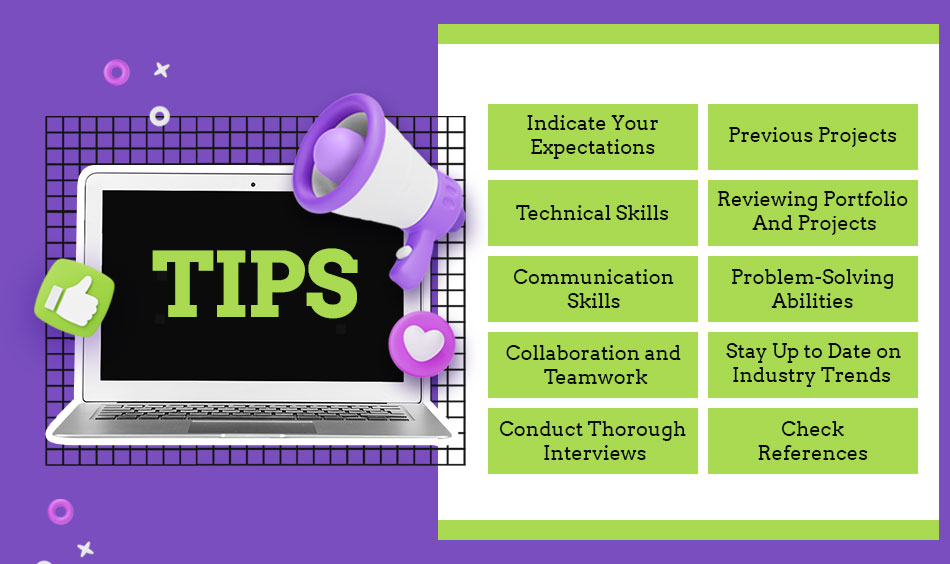
Due to flexible and scalable benefits, headless commerce has been a topic for discussion in the e-commerce industry. If you want your project to be successful, hiring experts who have worked on headless commerce projects for many years is important. The following are some things that should be done:
- Indicate Your Expectations:- To start with, one may ask oneself what they want from their project; this is known as understanding the most essential skills necessary for building headless commerce such as JavaScript and React, GraphQL, CMS experience on Contentful or Strapi.
- Previous Projects:- Has done anything like this in the past? Remeber coders who know how to build both backends and frontends to create headless.
- Technical Skills:- These candidates’ CVs should be checked to see if they have any experience in ecommerce platforms, API integration capabilities, and microservices architecture knowledge. Always follow the latest frameworks and keep a solid background in web development
- Reviewing Portfolio And Projects:- Candidates’ portfolios will help you understand what they have done before. Check out those times when headless commerce is used, there are new creative solutions or seamless integration made among others that indicate their capability and innovativeness in this area.
- Communication Skills:- Any development project requires effective communication. Anyone that you bring on board should be eloquent enough to express themselves, understand what you want for your project and work in harmony with others.
- Problem-Solving Abilities:- Headless commerce projects often come with unique challenges. This strategy allows you to evaluate the candidate’s ability to problem solve on behalf of others.
- Collaboration and Teamwork:- It usually takes a front-end team working together with the back-end one to develop headless commerce. Look for those who can easily fit into cross-functional teams and those who will be beneficial throughout the entire project.
- Stay Up to Date on Industry Trends:- This is because it changes constantly as new ideas are coming up occasionally. So, make sure that applicants know about any recent developments in this area, as well as emerging best practices or any new technologies around this area.
- Conduct Thorough Interviews:- They should put each applicant through an exhaustive interview process to assess their technical know-how, problem-solving abilities, and capacity to work harmoniously with your company staff. Including members of the development team in these discussions may be useful.
- Check References:- Therefore, you need to contact the referees provided by candidates to confirm what they say about their past working history and standing among colleagues if a job seeker’s previous bosses or customers provide detailed accounts of his/her reliability, dedication, or competence.
Best Platforms to Hire Shopify Headless Commerce Developer
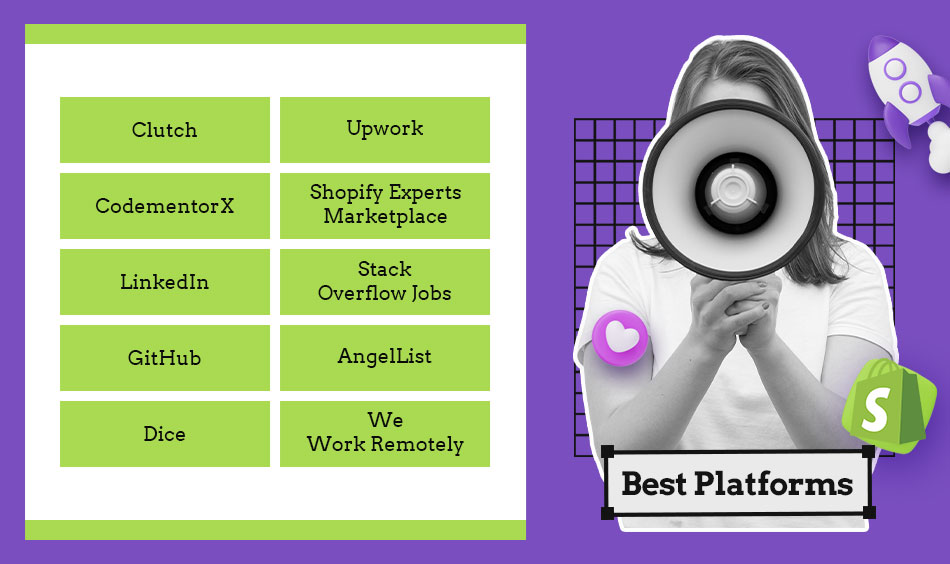
Numerous platforms specialize in the needs of e-commerce businesses in hiring Shopify Headless Commerce Developers. The following are some of the best platforms for locating skilled Shopify Headless Commerce Developers:
- Clutch: Among all platforms, Clutch is one of the best places to hire Shopify Headless Commerce Developers. With a comprehensive directory of customer feedback and rankings, Clutch simplifies the selection process. Its open reviews enable businesses to make informed decisions, ensuring they get access to exceptional developers who can perform excellently on Shopify Headless Commerce projects.
- Upwork: Upwork is a widely known marketplace that brings together employers and freelancers worldwide. There are experienced Shopify Headless Commerce Developers with different expertise and charging rates.
- CodementorX: This site links entrepreneurs with experienced developers. There are Shopify Headless Commerce Developers who have specialized in JavaScript and React, among other relevant technologies.
- Shopify Experts Marketplace: When you want to find Shopify developers who have worked with headless commerce, the best search platform is Shopify’s experts’ marketplace. Different ways exist for filtering developers based on their skill set and expertise.
- LinkedIn: If you need to search for Shopify Headless Commerce Developers by skills in LinkedIn, it is a renowned professional online community that can help. You may use commerce development groups and communities that would assist you in linking up with professionals.
- Stack Overflow Jobs: Alternatively, Stack Overflow Jobs is designed for developers actively looking for job offers. You may post job listings for Shopify Headless Commerce Developers here or talk directly to candidates with the desired skills indicated on their profiles.
- GitHub: Although GitHub is not a conventional hiring platform, it can be used as a great tool to find developers involved in headless commerce projects. The reviews from repositories and contributions will guide one in finding potential applicants.
- AngelList: AngelList is an online service that matches start-ups with potential employees. There are guys out there who want to work with young and growing e-commerce firms like yours – find Shopify Headless Commerce Developers among them!
- Dice: Dice is a platform that allows tech professionals to connect. You can post job listings and look for candidates with relevant skills and experience, such as Shopify Headless Commerce Developers.
- We Work Remotely: We Work Remotely is an online platform focusing on remote job availability. You can find experienced Shopify Headless Commerce Developers who have previously worked in a distributed environment.
How Much Does Shopify Headless Commerce Cost?
Cost depends on three main factors: developer location, experience level, and project complexity. Here is a realistic breakdown based on current market rates.
Freelancer Hourly Rates
Entry-level headless developers with limited portfolio depth charge $25 to $55 per hour. Mid-level developers with two to four completed headless projects charge $55 to $100 per hour.
Senior-level experts with strong portfolios and multi-channel headless builds charge $100 to $180 per hour. US and UK-based freelancers tend to sit at the higher end. India and Eastern Europe-based developers with equivalent skills often charge 40 to 60 percent less.
Agency Project Pricing
A full headless Shopify build through an agency typically runs from $15,000 to $80,000 depending on scope. A basic headless migration from a standard Shopify theme to a Hydrogen storefront starts around $15,000 to $25,000.
A full headless build with custom CMS integration, multi-currency support, and performance optimization ranges from $35,000 to $80,000. Ongoing retainer agreements with a headless Shopify agency average $2,000 to $8,000 per month for support and iteration.
What Affects the Cost?
The number of front-end channels (web, mobile app, kiosk), CMS complexity, third-party integrations (ERP, PIM, loyalty platforms), and whether you need Shopify Plus checkout customizations all push costs higher. Starting with a clear scope document before requesting quotes will give you more accurate pricing.
Why CartCoders Handles Shopify Headless Builds Differently?
CartCoders has delivered headless Shopify projects across retail, fashion, health, and B2B sectors. Our team builds headless stores using Shopify Hydrogen, Next.js, and Gatsby depending on your specific performance and content needs.
We do not hand you a generic headless template. Every build starts with your business goals, your existing tech stack, and your customer experience requirements. Our developers handle full API integration, CMS setup, performance tuning, and post-launch support.
Whether you need to migrate a standard Shopify store to a headless setup or build a new headless storefront from scratch, CartCoders delivers production-ready results.
Bottom Line
In search of expertise in Shopify headless commerce development, you should be able to use platforms like Clutch, which are rich in diversity. For your decision-making process, the clarity with which customers rate their services will help you choose among them. Therefore, it is important to engage CartCoders when recruiting Shopify Headless Commerce Experts to ensure smooth sailing and quality outcomes.
Therefore, they are the right choice because they have performed well in e-commerce sites due to their technical expertise and customer-oriented mindset.
Successful digital buying mandates choosing CartCoders since it has uncoupled commerce engines from content front ends by removing complexity, inhibiting a good customer experience while limiting business innovation.
FAQs
A Shopify headless commerce expert builds storefronts that separate the Shopify back end from the customer-facing front end. They use frameworks like Hydrogen, Next.js, or Gatsby to deliver custom front-end experiences powered by Shopify’s commerce engine through APIs.
In standard Shopify, the theme controls both the design and the commerce logic. In a headless setup, Shopify handles only the commerce back end. A completely separate front-end application controls the design, content, and user interface. This gives you far more control over performance and user experience.
No. Headless commerce is available on all Shopify plans through the Storefront API. However, Shopify Plus gives you access to additional checkout customization options and higher API rate limits, which matter for complex headless builds.
A straightforward headless migration from a standard Shopify theme typically takes 6 to 12 weeks. A full custom headless build with CMS integration and multi-channel setup takes 3 to 6 months. Timeline depends on scope, integrations, and content requirements.
Yes. CartCoders offers a dedicated Shopify to headless migration service. Your product data, customer records, and order history stay in Shopify. Only the front end changes. Migration timelines depend on theme complexity and the number of third-party apps you use.
Shopify Hydrogen with Oxygen hosting is the recommended path for most new headless Shopify projects. If you have an existing Next.js team or specific performance requirements, Next.js with the Storefront API is a strong alternative. The right choice depends on your team’s skills and your content architecture.
Headless commerce adds complexity and cost. For stores with standard product catalogs and modest traffic, a well-optimized standard Shopify theme usually performs better per dollar spent. Headless makes the most sense when you need custom front-end experiences, multi-channel selling, or performance at high traffic volume.
Ask to see at least two live headless Shopify stores from their portfolio. Test those stores in Google PageSpeed Insights. Ask them to explain their API architecture decisions on a past project. A 30-minute technical conversation reveals more than any CV.


