
The eCommerce customer journey is more than a checkout process. It represents every touchpoint from awareness to loyalty. Each stage reflects how customers notice, interact, and decide to buy from an online store.
Personalizing the customer journey in eCommerce brings great transformation. Instead of one-size-fits-all experiences, shoppers see offers, products, and messages that match their unique needs.
According to McKinsey, 71% of consumers expect personalized interactions, and 76% get frustrated when brands miss this expectation. [Data Source: McKinsey]
This blog covers 15 ways to personalize the eCommerce customer journey. From product recommendations to post-purchase engagement, these ideas help brands create relevant and meaningful experiences.


What Is the eCommerce Customer Journey?
The eCommerce customer journey describes the steps customers take before, during, and after a purchase. These stages are:
- Awareness: A customer discovers a product or brand.
- Consideration: They compare products, read reviews, and weigh options.
- Purchase: The shopper places an order.
- Retention: Post-purchase service, rewards, and engagement keep them coming back.
Each stage requires tailored communication. Without personalization, customers may feel disconnected. Personalized experiences guide them smoothly through the journey, increasing satisfaction and lifetime value. To design such experiences, many brands work with a trusted USA-based Shopify development company, which specializes in building customer-focused eCommerce solutions.
Why Personalization Matters in eCommerce?
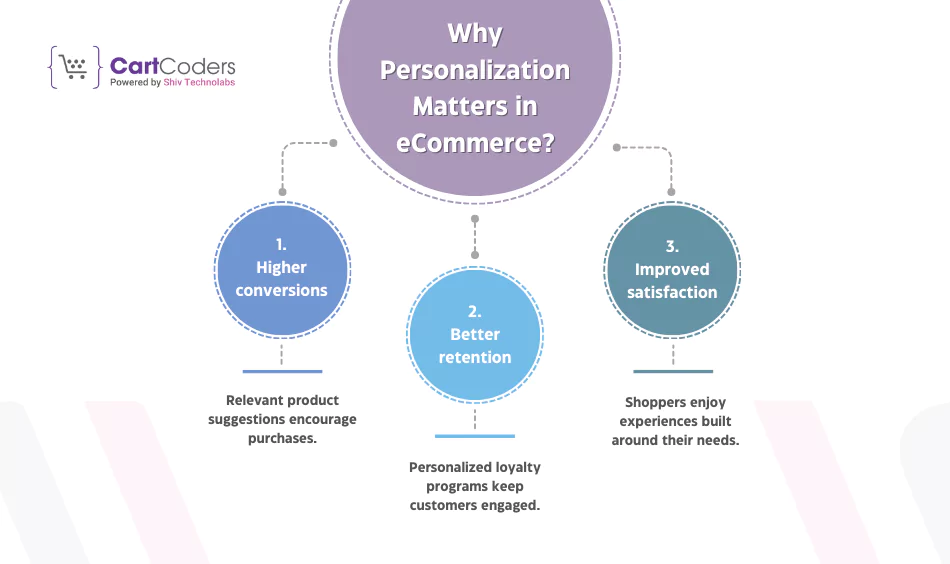
Personalization shapes customer trust and buying decisions. It shows that a brand values its customers as individuals. Some clear benefits include:
- Higher conversions: Relevant product suggestions encourage purchases.
- Better retention: Personalized loyalty programs keep customers engaged.
- Improved satisfaction: Shoppers enjoy experiences built around their needs.
A report by Epsilon found that 80% of customers are more likely to buy from brands offering personalized experiences. Businesses ignoring personalization risk losing sales and long-term relationships.
15 Ways to Personalize the eCommerce Customer Journey
The eCommerce customer journey includes every step shoppers take, from discovering products to becoming loyal buyers.
Personalization makes this journey more relevant and effective. Customers expect brands to know their preferences and respond with tailored experiences.
1. Personalized Product Recommendations
Show items based on past purchases or browsing behavior. A customer buying sneakers may appreciate recommendations for socks, water bottles, or gym gear. Such suggestions increase cross-sell opportunities and encourage larger cart sizes.
2. Customized Homepages
Return visitors should not see generic content. Display categories or offers based on earlier activity. For example, show trending electronics to someone browsing gadgets. This makes the homepage customized, fresh, and relevant.
3. Dynamic Email Campaigns
Emails remain powerful but only when relevant. Create campaigns using browsing history, cart activity, or wishlists. Examples include abandoned cart reminders, new arrivals in favorite categories, or seasonal discounts tailored to preferences.
4. Loyalty-Based Offers
Show appreciation for loyal customers. Offer exclusive discounts, early access to sales, or free shipping. Recognition builds stronger emotional connections. Customers who feel valued are more likely to return and spend more.
5. Personalized Search Results
Generic search results waste time. Prioritize products based on shopping patterns. For instance, highlight eco-friendly items for sustainability-focused buyers. Relevant results reduce friction and shorten the decision-making process.
6. AI-Powered Chat Support
Chatbots improve customer support and personalization. They recommend products in real time while answering questions. A skincare query could lead to moisturizer or serum suggestions. AI-driven conversations make shopping interactive and supportive.
7. Segmented SMS Campaigns
SMS campaigns must be precise. Segment customers by interests, purchase frequency, or spending habits. Send discount alerts to budget-conscious shoppers or new arrivals to loyal customers. Short, targeted messages keep customers engaged without spamming.
8. Location-Based Personalization
Geography influences buying choices. Tailor promotions to local needs. A clothing brand could promote winter jackets in Canada and summer wear in Florida. Location-aware personalization makes offers timely and practical.
9. Personalized Discounts and Coupons
Generic offers often go unnoticed. Send personalized coupons for birthdays, anniversaries, or specific buying habits. If a customer often buys coffee pods, offer discounts on new flavors. This increases relevance and repeat orders.
10. Browsing-Based Retargeting
Retargeting ads should feel helpful, not pushy. Show products recently viewed or related accessories. For example, highlight laptop bags for a customer browsing laptops. Gentle reminders encourage return visits and purchase completion.
11. Personalized Checkout Experience
Checkout is where many carts are abandoned. Simplify the process with stored payment options, loyalty rewards, or custom delivery timelines. Customers appreciate a checkout tailored to their preferences and buying history.
Must Read: Ways to Customize Checkouts on Shopify
12. User-Generated Content Personalization
Highlight reviews and testimonials aligned with customer interests. If a shopper browses hiking gear, showcase reviews from outdoor enthusiasts. Social proof personalized to the context builds credibility and trust.
13. Personalized Packaging and Post-Purchase Touchpoints
Make packaging part of the journey. Include thank-you notes, personalized coupons, or care tips. Follow up with post-purchase emails offering guides or product suggestions. Such touches strengthen relationships and encourage repeat buying.
14. Data-Driven Upselling and Cross-Selling
Use purchase data for smarter upselling. A camera buyer may need lenses, bags, or tripods. Suggesting relevant add-ons increases order value while enhancing the buying experience. Avoid random suggestions that feel irrelevant.
15. Personalized Loyalty Programs and Re-Engagement Campaigns
Generic loyalty programs lack appeal. Create personalized rewards based on frequency, categories, or milestones. Send re-engagement offers if activity drops. A tailored program keeps customers active and strengthens long-term loyalty.
Turn Shoppers Into Loyal Buyers
Personalize checkout, loyalty programs, and packaging for post-purchase engagement.


Key Challenges in Personalizing the Customer Journey
While personalization offers clear benefits, businesses face several challenges. Addressing them is crucial for success.
1. Data Privacy Concerns
Collecting and analyzing customer data raises privacy questions. Customers want personalization but also expect transparency. Brands must respect privacy by clearly explaining what data they collect and how it is used. Compliance with data protection laws builds trust.
2. Technology Limitations
Not all businesses have access to advanced tools. Smaller eCommerce stores may struggle with implementing AI-driven personalization or complex integrations. Choosing scalable solutions helps overcome these barriers.
3. Balancing Personalization with Trust
Excessive personalization can feel intrusive. Customers may dislike brands that track every action too closely. The balance lies in offering helpful suggestions without crossing privacy boundaries. A well-timed email reminder is welcome, but constant notifications can frustrate users.
4. Cost of Implementation
Personalization requires investments in tools, talent, and data systems. For small businesses, the cost may feel high. However, starting small with affordable personalization techniques—like email segmentation or personalized discounts—can still deliver results.
5. Measuring Effectiveness
Tracking the success of personalization is not always easy. Metrics such as conversion rate, repeat purchase rate, and customer lifetime value must be monitored closely. Without clear measurement, businesses may not know if personalization is working.
Best Practices for Implementing Personalization
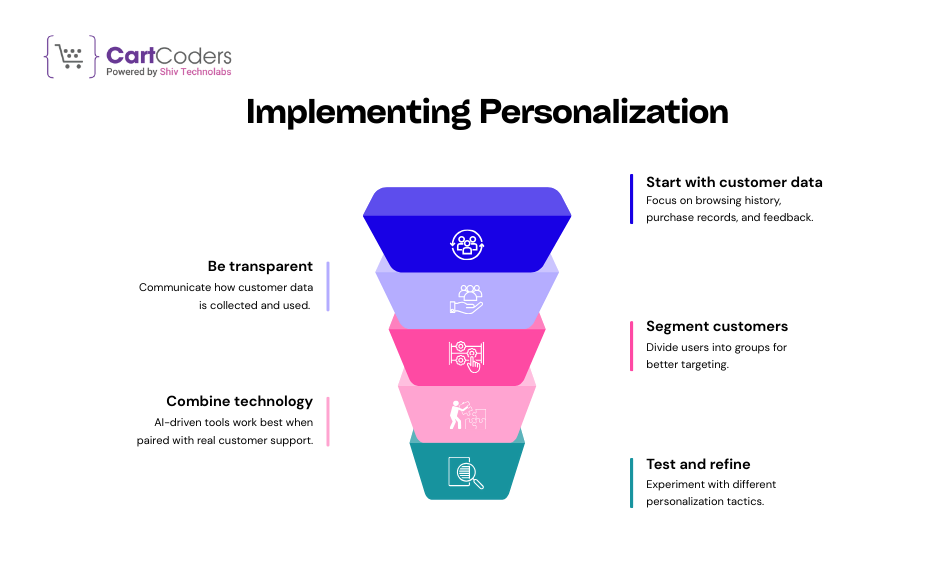
Personalization requires a thoughtful approach. Here are key practices:
- Start with customer data insights: Focus on browsing history, purchase records, and feedback.
- Segment customers: Divide users into groups for better targeting.
- Test and refine: Experiment with different personalization tactics. Track results and adjust strategies.
- Combine technology with human touch: AI-driven tools work best when paired with real customer support.
- Be transparent: Communicate how customer data is collected and used. Transparency builds trust.
These practices help businesses personalize without overwhelming customers or violating their privacy.
How CartCoders Helps With eCommerce Personalization?
Personalization requires both strategy and execution. At CartCoders, we specialize in building eCommerce solutions that put customers first. Our Shopify developers craft tailored experiences through custom themes, AI integrations, and loyalty solutions that strengthen the eCommerce customer journey.
We have worked with subscription stores, marketplaces, and D2C brands, helping them design customer journeys that increase sales and retention.
Whether it’s personalized product recommendations, custom checkout flows, or advanced loyalty systems, our team builds solutions aligned with your business needs.
By combining technical expertise with a customer-focused approach, CartCoders makes personalization practical and results-driven.
Let’s Turn Visitors into Buyers!
The eCommerce customer journey is a path shaped by customer expectations. Personalization turns that path into an engaging experience, making every stage—from awareness to loyalty—more effective.
We covered 15 actionable strategies, from personalized product recommendations to data-driven loyalty programs. Businesses that act on these methods see stronger connections, higher conversions, and greater retention.
If you’re ready to create personalized eCommerce experiences, CartCoders can help. Our expertise in Shopify development ensures your store reflects your customers’ unique needs.
Contact CartCoders and make a unique eCommerce customer journey!


